
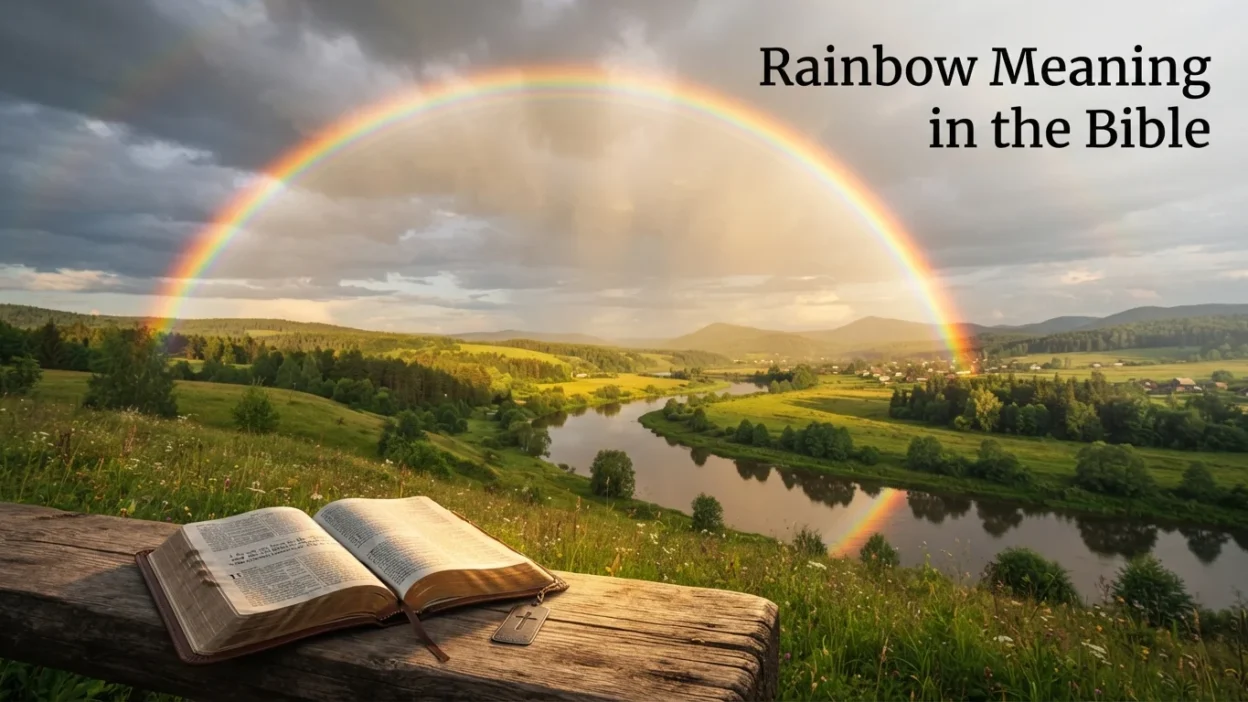
The rainbow meaning in the Bible is deeply connected with God’s faithfulness, mercy, covenant, and hope. Unlike many modern interpretations, the Bible gives the rainbow a specific spiritual significance through the story of Noah and the great flood. After the waters receded, God placed the rainbow in the clouds as a sign of His covenant with Noah, his descendants, and every living creature. This makes the rainbow one of the most recognizable symbols of God’s promises in Scripture.
Understanding the rainbow meaning in the Bible can encourage believers who are going through difficult seasons. A rainbow appears after rain, making it a powerful reminder that storms do not last forever. Biblically, it points beyond beauty in nature to God’s character—His faithfulness, mercy, and commitment to His promises. The rainbow also appears in other important biblical visions, adding layers of spiritual meaning to this beautiful symbol.
Quick Answer: What Is the Rainbow Meaning in the Bible?
The rainbow meaning in the Bible is primarily a symbol of God’s covenant, faithfulness, mercy, and promise. In Genesis, God places the rainbow in the clouds as a reminder of His covenant after the flood. Spiritually, it can represent hope after hardship, God’s presence, and confidence in His promises.
What Does a Rainbow Mean in the Bible?
The central meaning of the rainbow in Scripture is God’s covenant promise. In Genesis 9, after the flood, God establishes a covenant with Noah and all living creatures. He says that the rainbow will appear in the clouds as a sign of this covenant.
The rainbow is therefore more than a beautiful natural phenomenon. Within the biblical story, it becomes a visible reminder of God’s promise and faithfulness.
| Biblical Symbol | Meaning |
|---|---|
| Rainbow | Sign of God’s covenant |
| Clouds | Reminder of God’s presence and glory |
| Water | Judgment and cleansing in the flood story |
| Light | Hope and divine faithfulness |
| Covenant | God’s promise and commitment |
The rainbow can remind believers that God remembers His promises even when circumstances seem uncertain.
The Origin and History of the Rainbow Symbol
Rainbows have fascinated people throughout human history. Ancient cultures often developed their own explanations and stories about rainbows. However, the biblical account gives the rainbow a distinctive meaning within the story of God’s relationship with humanity.
In Genesis, the rainbow is introduced after the flood. God establishes a covenant with Noah and promises that the earth will not again be destroyed by a flood of this kind. The rainbow serves as a visible sign of that promise.
This biblical account gives the rainbow a unique place in Christian thought. It transforms an ordinary natural phenomenon into a reminder of divine faithfulness.
| Aspect | Biblical Significance |
|---|---|
| Historical setting | After Noah’s flood |
| Main biblical passage | Genesis 9 |
| Person connected to it | Noah |
| Purpose | Sign of God’s covenant |
| Main theme | Faithfulness and promise |
The history of the rainbow in Scripture therefore begins with a covenant and continues through later biblical visions.
The Rainbow in the Story of Noah
The most important biblical reference to a rainbow appears in the story of Noah.
According to Genesis, humanity had become deeply corrupt, and God judged the earth through a great flood. Noah, however, was instructed to build an ark and was preserved along with his family and representatives of the animal world.
After the floodwaters disappeared, God made a covenant with Noah. The rainbow became the visible sign of this covenant.
This is significant because the rainbow appears after the storm. The biblical story therefore connects the rainbow with a transition from judgment to mercy, destruction to preservation, and fear to hope.
For Christians, the story can serve as a reminder that God’s purposes continue even after seasons of difficulty.
What Does the Rainbow Represent Spiritually?
The spiritual meaning of a rainbow can be understood through several important biblical themes. The rainbow meaning in the Bible points first to God’s faithfulness, but it can also inspire reflection on hope, mercy, renewal, and peace.
Here are some spiritual interpretations:
- Faithfulness: God remains true to His promises.
- Covenant: The rainbow represents God’s commitment.
- Hope: Light can appear after a dark season.
- Mercy: The rainbow follows a story of judgment and preservation.
- Renewal: The world after the flood represents a new beginning.
- Peace: The rainbow can remind believers of God’s promise of preservation.
- God’s glory: Later biblical visions connect rainbows with heavenly glory.
These meanings are rooted in biblical themes rather than superstition. The rainbow is not a magical object. Instead, it points the believer toward the God who makes and keeps promises.
Spiritual Meaning of the Rainbow: Symbolic Interpretation
The spiritual symbolism of the rainbow is especially powerful during difficult times.
1. A Symbol of Hope After the Storm
A rainbow usually appears when sunlight interacts with water droplets after or during rain. Symbolically, this makes it a powerful picture of hope emerging from hardship.
For Christians, seeing a rainbow can serve as a reminder that a difficult season does not define the whole story. God’s faithfulness remains even when circumstances are challenging.
2. A Symbol of God’s Faithfulness
The rainbow in Genesis is directly connected with God’s covenant. It reminds believers that God’s promises are not dependent on changing human circumstances.
3. A Symbol of Renewal
After the flood, Noah’s world was changed. The rainbow appeared as humanity entered a new chapter. This makes it a fitting symbol of fresh beginnings and spiritual renewal.
4. A Symbol of God’s Mercy
The rainbow follows the flood, a story involving divine judgment. Its appearance emphasizes God’s mercy and His promise concerning the future of the earth.
5. A Symbol of Divine Glory
In Ezekiel and Revelation, rainbows appear in heavenly visions. These passages connect the rainbow with God’s majesty, glory, and heavenly presence.
The spiritual meaning is therefore broader than simply “hope.” It includes covenant, faithfulness, mercy, glory, and divine promise.
The Rainbow in Other Parts of the Bible
The rainbow does not appear only in Genesis. It is also mentioned in prophetic and apocalyptic visions.
In Ezekiel 1:28, the prophet describes a vision of God’s glory and compares the appearance surrounding the divine presence to a rainbow in the clouds after rain.
In Revelation 4:3, John describes a rainbow resembling an emerald around the throne of God. Another significant reference appears in Revelation 10:1, where a mighty angel is described with a rainbow above his head.
| Biblical Book | Rainbow Reference | Main Theme |
|---|---|---|
| Genesis | Rainbow after the flood | Covenant |
| Ezekiel | Rainbow-like appearance | God’s glory |
| Revelation | Rainbow around God’s throne | Heavenly majesty |
| Revelation | Rainbow above an angel | Divine authority and glory |
These references suggest that the rainbow can symbolize more than God’s promise to Noah. It can also be associated with divine glory and the majesty of God’s presence.
Rainbow Meaning in Genesis 9
Genesis 9 provides the clearest explanation of the rainbow’s biblical meaning.
God establishes His covenant with Noah and says that the rainbow will serve as a sign of that covenant. Whenever the rainbow appears, it becomes a reminder of God’s promise.
This passage is central to understanding the rainbow meaning in the Bible. It teaches that the rainbow is connected to God’s character rather than merely human emotion.
The rainbow is therefore a biblical symbol of a God who remembers His covenant and remains faithful to His word.
Rainbow Symbolism: Covenant, Promise, and Hope
Three of the strongest ideas connected with the rainbow are covenant, promise, and hope.
A covenant is a serious commitment or agreement. In the story of Noah, God makes a covenant involving Noah, his descendants, and every living creature.
The rainbow becomes the visible sign of this promise. It points toward God’s faithfulness and reminds humanity of His commitment.
For modern Christians, this symbolism can inspire confidence. When life feels uncertain, the rainbow may remind believers to trust in God’s promises rather than allowing fear to control them.
Rainbow Meaning in Christian Culture Today
In Christian culture, rainbows are often used in artwork, church decorations, children’s Bible materials, devotional illustrations, and inspirational messages.
Many Christians see a rainbow as a symbol of hope and God’s promises. It may appear in artwork featuring Noah’s ark or in messages about overcoming difficult seasons.
However, the meaning of the rainbow can vary depending on cultural context. The biblical meaning should be distinguished from other modern uses and interpretations.
For Christians studying Scripture, the most important biblical associations remain God’s covenant, faithfulness, mercy, and glory.
Why Do People Search for the Rainbow’s Biblical Meaning?
People search for the rainbow meaning in the Bible for many different reasons. Some may have recently seen a rainbow and wondered whether it has a spiritual significance. Others may be studying the story of Noah or exploring biblical symbolism.
Common reasons include:
- Looking for biblical signs of hope.
- Studying the story of Noah.
- Understanding God’s covenant.
- Exploring spiritual symbolism.
- Interpreting biblical dreams or visions.
- Finding encouragement during difficult times.
- Understanding the meaning of rainbows in Christian art.
The biblical answer is ultimately centered on God’s promises rather than superstition.
Common Misconceptions About the Biblical Rainbow
One common misconception is that every rainbow is a direct supernatural message from God. The Bible does not teach that believers must interpret every rainbow as a specific personal prophecy.
Another misconception is that the rainbow is only a symbol of hope. While hope is an appropriate spiritual application, the biblical meaning is more specific: it is primarily connected with God’s covenant and faithfulness.
A third misconception is that the Bible teaches rainbows are magical signs. Scripture does not present the rainbow as an object with supernatural power. Instead, it functions as a sign pointing toward God’s promise.
| Common Belief | Biblical Perspective |
|---|---|
| Every rainbow is a personal prophecy | Not specifically taught |
| Rainbow is a magical object | No |
| Rainbow represents only hope | It also represents covenant and faithfulness |
| Rainbow is directly connected to Noah | Yes |
| Rainbow can symbolize God’s glory | Yes, in later biblical visions |
Understanding these differences helps keep biblical interpretation grounded in Scripture.
Rainbow vs. Other Biblical Symbols
The Bible contains many symbols, and each has its own meaning. Comparing the rainbow with other biblical symbols can help clarify its unique significance.
| Symbol | Biblical Meaning | Key Association |
|---|---|---|
| Rainbow | Covenant and faithfulness | Noah |
| Olive branch | Peace and new beginnings | Noah |
| Dove | Peace and God’s Spirit | Flood story and Gospels |
| Light | Truth and God’s presence | Throughout Scripture |
| Water | Judgment, cleansing, and life | Multiple biblical contexts |
The rainbow is unique because its clearest biblical purpose is tied directly to God’s covenant after the flood.
What Does Seeing a Rainbow Mean Spiritually?
For a Christian, seeing a rainbow can be an opportunity for spiritual reflection. It may remind you of God’s faithfulness and encourage you to trust Him during uncertain circumstances.
However, the Bible does not instruct believers to treat every rainbow as a personal prediction of future events. Instead, the biblical symbolism invites people to remember God’s character.
When you see a rainbow, you might reflect on questions such as:
- Am I trusting God’s promises?
- Do I remember God’s faithfulness during difficult seasons?
- How can I show mercy to others?
- Am I placing my hope in God?
In this sense, a rainbow can become a meaningful reminder without becoming a superstition.
What Does the Rainbow Symbolize in Christianity?
In Christianity, the rainbow is often associated with God’s covenant, faithfulness, mercy, hope, and glory.
Its connection to Noah makes it a powerful symbol of God’s promise. Its appearance in Ezekiel and Revelation adds another dimension by connecting it with God’s heavenly glory.
The rainbow meaning in the Bible therefore combines both covenant and divine majesty. It reminds believers that God is faithful to His promises and worthy of trust.
Final Thought
The rainbow meaning in the Bible is a beautiful reminder of God’s covenant, faithfulness, mercy, and glory. Beginning with the story of Noah, the rainbow became a visible sign of God’s promise and a lasting symbol of hope after the storm. Later biblical visions connect rainbow imagery with God’s heavenly presence and majesty. For Christians today, a rainbow can inspire meaningful reflection on God’s character and promises.
While it should not be treated as a magical sign or automatic personal prophecy, its biblical symbolism remains powerful. When dark clouds give way to light, the rainbow can remind us that God is faithful, His promises matter, and hope can follow even the most difficult seasons.
FAQs
1. What is the main biblical meaning of a rainbow?
The main biblical meaning of a rainbow is God’s covenant and faithfulness, especially the covenant He made with Noah after the flood.
2. What does the rainbow symbolize spiritually?
Spiritually, a rainbow can symbolize God’s faithfulness, covenant, mercy, hope, renewal, and glory.
3. Where is the rainbow first mentioned in the Bible?
The rainbow is first mentioned in Genesis 9, following the story of Noah’s flood and God’s covenant with Noah.
4. Does the rainbow represent God’s promise?
Yes. In Genesis, God uses the rainbow as a sign of His covenant and promise concerning the earth.
5. Is a rainbow a sign from God?
The Bible gives the rainbow a specific covenant meaning. However, Scripture does not teach that every rainbow should be interpreted as a personal supernatural message.
6. What does a rainbow mean after a storm?
From a Christian symbolic perspective, a rainbow after a storm can remind believers of hope, God’s faithfulness, and His promises. Its strongest biblical meaning is connected with God’s covenant with Noah.
7. Does the rainbow appear elsewhere in the Bible?
Yes. Rainbow imagery also appears in Ezekiel and Revelation, where it is associated with God’s glory, heavenly visions, and divine majesty.