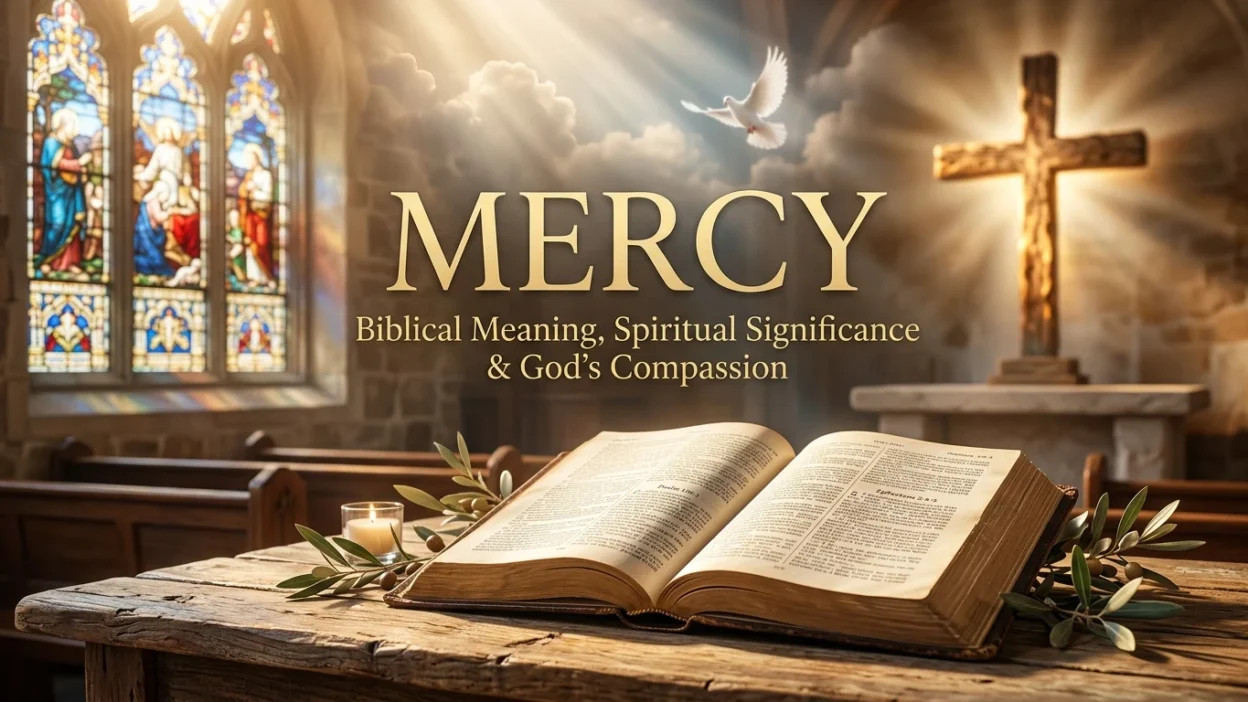
Understanding mercy meaning in the Bible helps us discover one of the most beautiful qualities of God’s character.
Throughout Scripture, mercy is shown as God’s loving compassion toward people, even when they deserve judgment.
From the Old Testament to the New Testament, mercy meaning in the Bible reveals God’s willingness to forgive, restore, and guide those who trust Him.
Many people search for mercy meaning in the Bible to better understand biblical teachings, strengthen their faith, or explore the deeper spiritual message behind this important word.
If you are studying Scripture, preparing a Bible lesson, or seeking encouragement, learning about mercy can transform the way you view God’s love and your relationship with others.
Quick Answer
Mercy meaning in the Bible refers to God’s compassionate love, forgiveness, and kindness shown toward people despite their sins or failures. It reflects His desire to forgive, heal, restore, and offer grace instead of punishment to those who repent and trust Him.
What Does Mercy Mean in the Bible?
The mercy meaning in the Bible goes beyond simply feeling sorry for someone. In biblical terms, mercy is God’s compassionate action toward those who are suffering, guilty, or in need.
Mercy means withholding deserved punishment while extending forgiveness, love, and help. It demonstrates God’s deep compassion and His desire to restore broken relationships rather than condemn people.
Throughout the Bible, mercy is closely connected with:
- Compassion
- Forgiveness
- Kindness
- Patience
- Love
- Restoration
- Faithfulness
Mercy is not weakness. Instead, it is a powerful expression of God’s holy love and justice working together.
Mercy Meaning at a Glance
| Feature | Details |
|---|---|
| Biblical Meaning | Compassion shown instead of deserved punishment |
| Hebrew Word | Hesed, Rahamim |
| Greek Word | Eleos |
| Represents | God’s love, forgiveness, kindness |
| Main Theme | Compassion and restoration |
| Spiritual Symbol | Hope, grace, forgiveness |
Origin and History of Mercy in the Bible
The idea of mercy has existed since the earliest pages of Scripture.
In the Old Testament, the Hebrew words Hesed and Rahamim describe God’s faithful love, compassion, and covenant kindness toward His people.
Hesed often refers to God’s loyal and unfailing love, while Rahamim expresses deep compassion similar to a parent’s love for a child.
In the New Testament, the Greek word Eleos continues this theme by describing God’s mercy revealed through Jesus Christ.
From Genesis to Revelation, mercy remains one of God’s defining characteristics.
Origin Table
| Aspect | Information |
|---|---|
| Hebrew Words | Hesed, Rahamim |
| Greek Word | Eleos |
| Old Testament Focus | Covenant love and compassion |
| New Testament Focus | Mercy through Jesus Christ |
| Central Message | God’s forgiveness and restoration |
Mercy in the Old Testament
The Old Testament repeatedly describes God as “merciful and gracious.”
God showed mercy by:
- Forgiving His people after repentance.
- Protecting Israel despite repeated disobedience.
- Providing guidance through His prophets.
- Remaining faithful to His covenant promises.
- Showing compassion to the weak, poor, widows, and foreigners.
One of the clearest themes is that God’s mercy never depends solely on human perfection. Instead, it flows from His faithful and loving character.
Many Psalms celebrate God’s mercy as everlasting, reminding believers that His compassion never fails.
Mercy in the New Testament
The New Testament reveals God’s mercy most clearly through the life and ministry of Jesus Christ.
Jesus demonstrated mercy by:
- Healing the sick.
- Forgiving sinners.
- Welcoming outcasts.
- Feeding the hungry.
- Giving His life for humanity’s salvation.
His teachings encourage believers to show mercy to others just as God has shown mercy to them.
The parables of Jesus repeatedly highlight forgiveness, compassion, and restoration as central themes of God’s kingdom.
Spiritual Meaning of Mercy in the Bible
The spiritual significance of mercy reaches far beyond forgiveness alone.
Spiritually, mercy represents God’s heart toward humanity. It reminds believers that no one earns salvation through perfect behavior. Instead, God freely offers forgiveness, hope, and new life to those who trust Him.
Mercy also teaches Christians to extend compassion to others. Just as God forgives His people, believers are called to forgive, love, and care for those around them.
Symbolic Interpretation of Mercy
Mercy symbolizes:
- God’s unfailing love
- Forgiveness after repentance
- New beginnings
- Healing from spiritual brokenness
- Hope during difficult times
- Compassion toward others
- Restoration of relationships
For many Christians, mercy serves as a daily reminder that God’s love is greater than human failure and that His compassion never runs out.
Why Is Mercy So Important in Christianity?
Mercy is one of the foundations of the Christian faith.
Without God’s mercy, humanity would remain separated from Him because of sin. Through His mercy, however, people are offered forgiveness, reconciliation, and eternal hope.
Mercy is important because it:
- Reflects God’s character.
- Makes forgiveness possible.
- Encourages humility.
- Inspires compassion.
- Builds stronger relationships.
- Brings peace and healing.
The Bible teaches that those who receive God’s mercy should also become people who show mercy to others in their daily lives.
Why Do People Search for “Mercy Meaning in the Bible”?
Many people search for mercy meaning in the Bible because they want a deeper understanding of one of the Bible’s most frequently mentioned themes.
Some are studying Scripture and want to understand how mercy differs from grace or forgiveness. Others are seeking comfort during difficult seasons and hope to discover how God’s mercy applies to their personal lives.
Parents may also search for the meaning of the name Mercy, while Bible teachers and students often explore its Hebrew and Greek origins to gain richer insight into God’s character.
Regardless of the reason, understanding biblical mercy helps believers appreciate God’s compassion and encourages them to live with greater kindness, forgiveness, and love.
Mercy Compared with Grace and Forgiveness
Although these biblical terms are closely related, they have different meanings. Understanding their differences helps clarify the mercy meaning in the Bible.
| Term | Meaning | Main Focus |
|---|---|---|
| Mercy | God withholds deserved punishment | Compassion |
| Grace | God gives undeserved blessings | Unmerited favor |
| Forgiveness | God removes the guilt of sin | Restoration |
| Justice | Giving what is deserved | Fairness |
Together, mercy, grace, forgiveness, and justice reveal the fullness of God’s perfect character.
Cultural and Modern Usage of Mercy
Today, the word mercy is widely used both inside and outside Christian communities. It appears in everyday conversations, literature, music, and charitable organizations.
Many parents choose Mercy as a baby name because it represents kindness, compassion, and faith. Churches often emphasize mercy in sermons, Bible studies, and outreach ministries, encouraging believers to care for those in need.
The idea of mercy also inspires hospitals, charities, and humanitarian organizations whose missions reflect compassion and service to others.
Even in modern society, mercy continues to symbolize hope, empathy, forgiveness, and unconditional love.
Common Misconceptions About Mercy
Several misunderstandings exist regarding mercy meaning in the Bible.
Mercy Means Ignoring Sin
This is incorrect. God’s mercy does not overlook sin. Instead, it provides a path for forgiveness while upholding His holiness and justice.
Mercy Is the Same as Grace
Mercy and grace work together, but they are not identical. Mercy withholds deserved punishment, while grace provides blessings that people do not deserve.
Mercy Is Only for Certain People
The Bible teaches that God’s mercy is available to everyone who sincerely turns to Him in faith and repentance.
Mercy Is a Sign of Weakness
Biblical mercy is not weakness. It reflects strength, compassion, patience, and God’s desire to restore broken lives.
Practical Lessons We Learn from Mercy
The Bible encourages believers not only to receive mercy but also to practice it daily.
Practical ways to show mercy include:
- Forgiving those who hurt you.
- Helping people in need.
- Showing patience with others.
- Speaking with kindness.
- Offering encouragement instead of criticism.
- Caring for the lonely, sick, and vulnerable.
Living a life of mercy reflects God’s love and strengthens relationships within families, churches, and communities.
Bible Verses That Highlight Mercy
Many passages throughout Scripture emphasize God’s mercy. Some of the most well-known include:
- Psalm 103:8 – The Lord is compassionate, gracious, slow to anger, and abounding in steadfast love.
- Lamentations 3:22–23 – God’s mercies are new every morning.
- Micah 6:8 – Believers are called to love mercy and walk humbly with God.
- Matthew 5:7 – “Blessed are the merciful, for they shall receive mercy.”
- Ephesians 2:4–5 – God is rich in mercy and gives believers new life through Christ.
These verses show that mercy is woven throughout the entire biblical story.
Why Mercy Still Matters Today
The message of mercy remains just as relevant today as it was in biblical times.
In a world often marked by conflict, judgment, and division, mercy encourages compassion, reconciliation, and hope. It reminds believers that every person needs forgiveness and that extending kindness can transform lives.
Whether in families, workplaces, churches, or communities, practicing mercy reflects the heart of God and builds stronger relationships.
Understanding mercy meaning in the Bible helps Christians live with greater humility, patience, and love toward others.
Final Summary
The mercy meaning in the Bible reveals God’s compassionate character and His desire to forgive, restore, and care for His people. Rooted in the Hebrew words Hesed and Rahamim, and the Greek word Eleos, mercy is a central theme throughout both the Old and New Testaments.
From God’s covenant faithfulness to the saving work of Jesus Christ, mercy demonstrates that God’s love is stronger than human failure. It calls believers to receive His forgiveness with gratitude and to extend that same compassion to others.
Final Thought
The beauty of mercy meaning in the Bible is that it offers hope to everyone. God’s mercy is not earned through perfect behavior but freely given because of His unfailing love.
Throughout Scripture, mercy restores broken hearts, forgives sins, and strengthens faith. It also challenges believers to become more compassionate, forgiving, and patient in their relationships with others.
As we better understand God’s mercy, we learn to trust His grace during difficult times and reflect His love in our daily lives.
Mercy is more than a biblical concept—it is a way of living that transforms both individuals and communities through kindness, forgiveness, and unwavering faith.
FAQs:
1. What is the biblical meaning of mercy?
Mercy in the Bible means God’s compassionate forgiveness and kindness shown instead of deserved punishment.
2. What is the Hebrew word for mercy?
The primary Hebrew words are Hesed (steadfast love) and Rahamim (deep compassion).
3. What is the Greek word for mercy?
The Greek word is Eleos, meaning compassion, kindness, and mercy.
4. Is mercy different from grace?
Yes. Mercy withholds deserved punishment, while grace gives undeserved blessings.
5. Why is mercy important in Christianity?
Mercy reflects God’s character, brings forgiveness, restores relationships, and offers hope through Jesus Christ.
6. How can Christians show mercy?
Christians can show mercy by forgiving others, helping those in need, being patient, and treating everyone with compassion and kindness.
7. What does mercy symbolize spiritually?
Spiritually, mercy symbolizes God’s unfailing love, forgiveness, restoration, hope, healing, and the promise of new life through faith.

William Noah is a spiritual writer at BibLoft, exploring hidden meanings, symbols, and divine insights. He shares thoughtful interpretations that inspire self-awareness, inner growth, and spiritual understanding.