
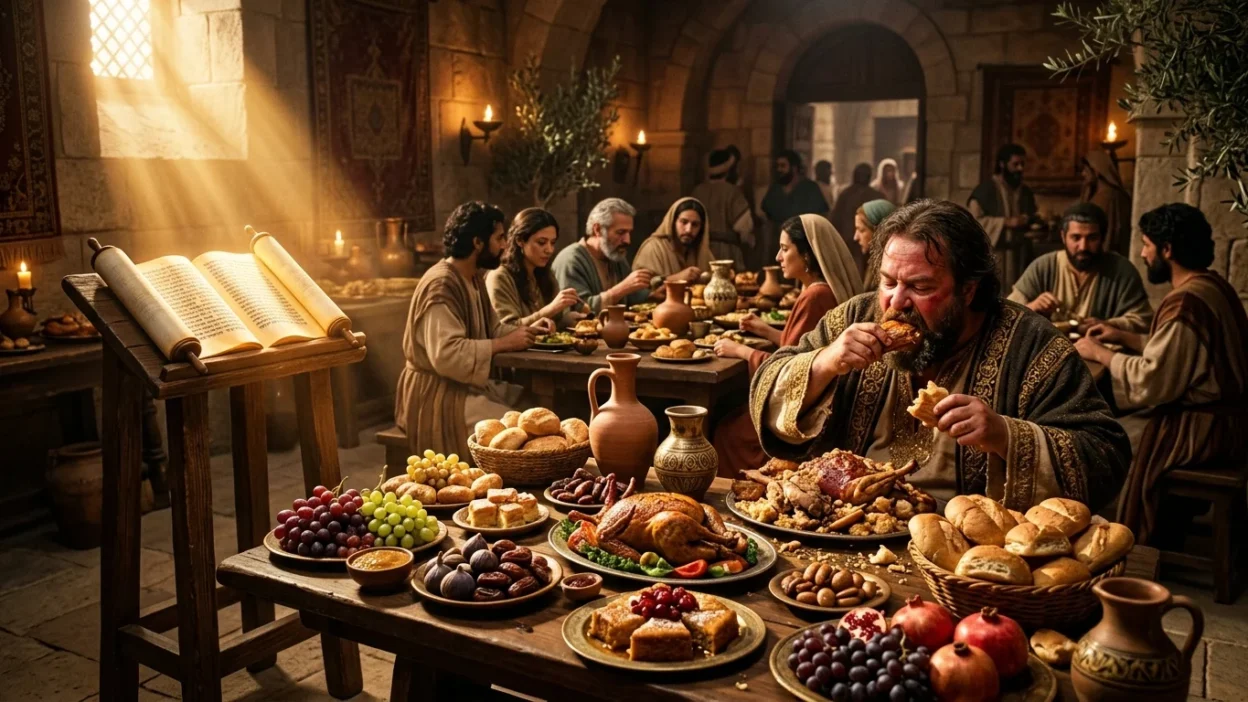
The gluttony meaning in the Bible goes beyond simply eating too much.
In Scripture, gluttony is often described as a lack of self-control and an unhealthy desire for pleasure that can distract people from honoring God.
While food itself is a blessing from God, the Bible warns against allowing physical appetites to control our hearts and actions.
Understanding the gluttony meaning in the Bible helps believers develop discipline and gratitude.
Many Christians search for the gluttony meaning in the Bible to understand If it is considered a sin, how it differs from enjoying food, and what spiritual lessons Scripture teaches.
This guide explains the biblical definition, historical background, spiritual symbolism, and practical application of gluttony in simple, easy-to-understand language.
Quick Answer
The gluttony meaning in the Bible refers to excessive indulgence in food, drink, or physical desires that reflects a lack of self-control. Scripture teaches moderation, gratitude, and self-discipline, encouraging believers to honor God with both their bodies and their choices.
What Does Gluttony Mean in the Bible?
The biblical meaning of gluttony is more than overeating. It describes a habit of excessive consumption driven by selfish desires rather than genuine need.
In Scripture, gluttony is connected with:
- Lack of self-control
- Excessive eating or drinking
- Self-centered living
- Ignoring spiritual priorities
- Wasting God’s blessings
The Bible encourages believers to enjoy God’s gifts responsibly without allowing them to become idols.
Meaning Table
| Aspect | Meaning |
|---|---|
| Biblical Definition | Excessive indulgence in food or physical desires |
| Main Focus | Lack of self-control |
| Opposite Virtue | Self-discipline and moderation |
| Spiritual Lesson | Put God above physical cravings |
| Biblical Warning | Avoid letting appetite rule your life |
Origin and History of Gluttony
The English word gluttony comes from the Latin word gluttire, meaning “to swallow” or “to gulp down.”
In biblical times, feasting was common during celebrations and religious festivals. However, Scripture distinguished joyful celebration from habitual overindulgence.
The Old Testament frequently warns against people who lived only for pleasure, while the New Testament emphasizes self-control as a fruit of spiritual maturity.
Throughout Christian history, gluttony became known as one of the Seven Deadly Sins, representing uncontrolled desire that can lead to other sinful behaviors.
Origin Table
| Feature | Details |
|---|---|
| Word Origin | Latin gluttire |
| Basic Meaning | To consume excessively |
| Old Testament Focus | Lack of wisdom and discipline |
| New Testament Focus | Self-control through the Holy Spirit |
| Christian Tradition | One of the Seven Deadly Sins |
Is Gluttony Mentioned in the Bible?
Yes. Although the Bible does not discuss gluttony as frequently as some other sins, it clearly warns against it.
Several passages describe gluttony as behavior that leads away from wisdom and holiness.
Examples include:
- Proverbs warns against joining gluttons.
- Deuteronomy describes a rebellious son as a glutton and drunkard.
- Philippians speaks of people whose “god is their stomach.”
- Proverbs encourages moderation and wisdom in eating.
These passages show that God values self-control rather than excess.
Biblical Examples Related to Gluttony
The Bible contains examples that illustrate the dangers of uncontrolled appetite.
Esau
Esau traded his birthright for a single meal, demonstrating how immediate desires can overshadow lasting blessings.
The Israelites in the Wilderness
The Israelites often complained about food despite God’s provision, revealing hearts focused more on physical satisfaction than trust in God.
The Rich Fool
Jesus’ parable of the rich fool teaches that storing earthly pleasures while neglecting spiritual priorities is foolish.
These examples show that gluttony is closely tied to misplaced priorities.
Spiritual Meaning of Gluttony in the Bible
The gluttony meaning in the Bible carries deep spiritual symbolism beyond eating too much.
Spiritually, gluttony represents allowing earthly desires to become more important than God.
Its symbolic meanings include:
Loss of Self-Control
A person ruled by appetite often struggles to control other areas of life.
Spiritual Emptiness
Trying to satisfy the soul through physical pleasures never brings lasting fulfillment.
Idolatry
When food, comfort, or pleasure becomes life’s highest priority, it can replace God in a person’s heart.
Neglect of God’s Purpose
Gluttony reminds believers not to let temporary pleasures distract them from eternal values.
Spiritual Meaning Table
| Symbol | Spiritual Meaning |
|---|---|
| Excessive Appetite | Lack of spiritual discipline |
| Overeating | Misplaced priorities |
| Self-Control | Spiritual maturity |
| Moderation | Wisdom and gratitude |
| Hunger for God | Seeking God’s presence above worldly desires |
Gluttony and Self-Control
One of the strongest biblical themes connected to gluttony is self-control.
The Bible teaches believers to:
- Practice moderation
- Be thankful for God’s provision
- Care for their bodies
- Resist unhealthy cravings
- Develop spiritual discipline
Self-control is not about rejecting food but about keeping desires in their proper place.
Gluttony vs Healthy Enjoyment of Food
The Bible never says enjoying food is wrong.
God created food as a blessing to be received with gratitude.
Comparison Table
| Healthy Enjoyment | Gluttony |
|---|---|
| Thankful eating | Excessive eating |
| Self-control | Lack of discipline |
| Honors God’s gifts | Worships physical pleasure |
| Balanced lifestyle | Controlled by appetite |
| Contentment | Constant craving |
This distinction helps explain why Scripture condemns gluttony rather than ordinary enjoyment of meals.
Cultural and Modern Usage
Today, the word gluttony is used in both religious and everyday language.
People may use it to describe:
- Excessive eating
- Overconsumption
- Greed for pleasure
- Material excess
In modern culture, the idea has expanded beyond food to include excessive entertainment, shopping, social media, or anything consumed without restraint.
The biblical principle still applies: believers are called to live balanced and disciplined lives.
Why Do People Search for “Gluttony Meaning in the Bible”?
People often search this topic because they want answers to questions like:
- Is gluttony considered a sin?
- Does the Bible forbid overeating?
- What does God say about self-control?
- Is gluttony one of the Seven Deadly Sins?
- What lessons can Christians learn about moderation?
- How can believers avoid unhealthy habits?
These questions show a desire to understand biblical teaching on everyday life.
Common Misconceptions About Gluttony
Many misunderstand the biblical teaching on gluttony.
Misconception 1: Eating a Large Meal Is Always Gluttony
Occasional feasting is not condemned. The issue is habitual excess and lack of self-control.
Misconception 2: Gluttony Is Only About Food
The principle also applies to uncontrolled desires and overindulgence in many areas of life.
Misconception 3: Food Is Sinful
The Bible teaches that food is God’s good gift and should be enjoyed with gratitude.
Misconception 4: Gluttony Is the Worst Sin
While Scripture warns against gluttony, it places all sin under humanity’s need for God’s grace and forgiveness.
Practical Lessons Christians Can Learn
Understanding the gluttony meaning in the Bible encourages believers to practice healthy spiritual habits.
Helpful principles include:
- Pray before meals.
- Be thankful for God’s provision.
- Avoid excess.
- Care for your physical health.
- Develop self-control.
- Focus on spiritual growth.
- Help those in need instead of wasting resources.
These habits reflect biblical wisdom and responsible stewardship.
Final Thought
The gluttony meaning in the Bible reminds believers that God desires hearts marked by gratitude, wisdom, and self-control rather than lives dominated by physical desires.
Scripture does not condemn enjoying food or celebrating God’s blessings, but it consistently warns against allowing appetite or pleasure to become an idol.
True spiritual maturity comes from keeping God at the center of life and using His gifts responsibly.
By practicing moderation and depending on the Holy Spirit, Christians can enjoy God’s blessings while maintaining healthy priorities.
Understanding biblical gluttony ultimately points to a greater lesson: lasting satisfaction is found not in earthly pleasures but in a faithful relationship with God.
FAQs
1. What is the gluttony meaning in the Bible?
It refers to excessive indulgence in food or physical desires that reflects a lack of self-control.
2. Is gluttony considered a sin?
Yes. The Bible warns against gluttony because it shows misplaced priorities and uncontrolled appetites.
3. Does the Bible forbid enjoying food?
No. Scripture teaches that food is a blessing from God when enjoyed with gratitude and moderation.
4. Is gluttony one of the Seven Deadly Sins?
Yes. In Christian tradition, gluttony is listed among the Seven Deadly Sins because it represents excessive desire.
5. What is the spiritual meaning of gluttony?
Spiritually, it symbolizes allowing physical desires to take priority over devotion to God.
6. How can Christians avoid gluttony?
By practicing self-control, gratitude, moderation, prayer, and relying on the Holy Spirit.
7. Is gluttony only about eating?
No. The biblical principle also applies to any form of excessive or uncontrolled indulgence.