
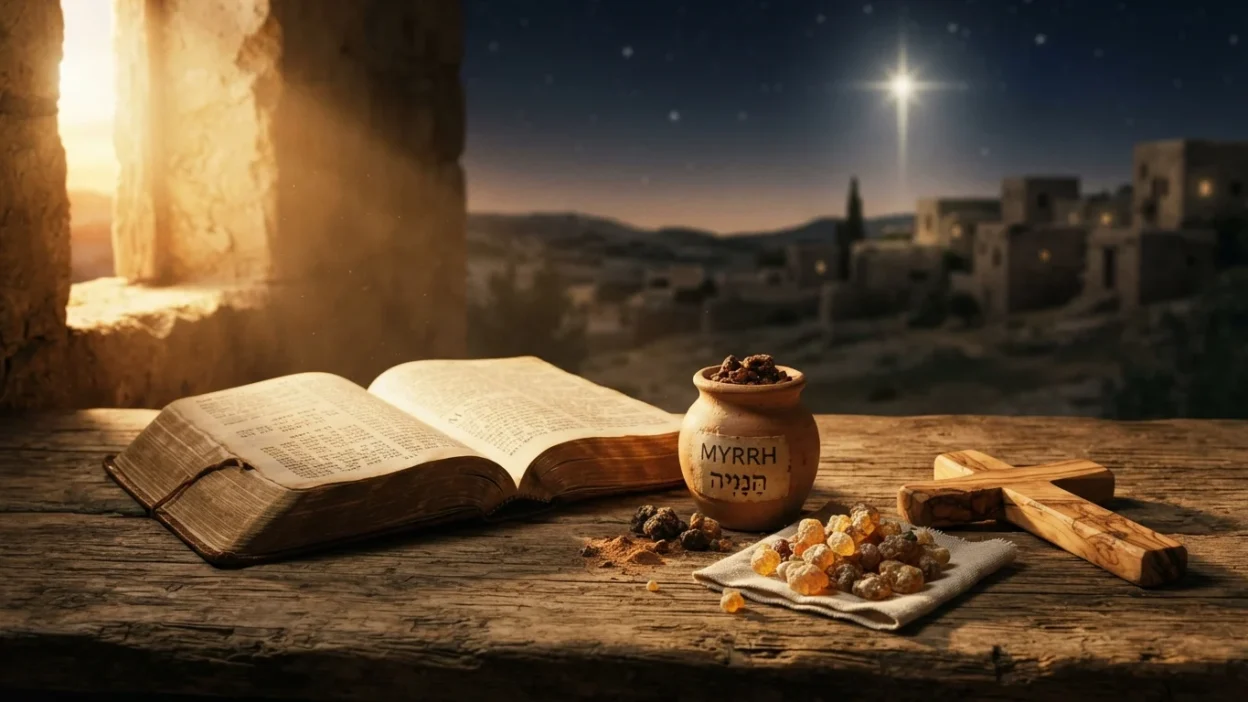
The myrrh meaning in the Bible is rich with spiritual symbolism, historical significance, and prophetic meaning.
Myrrh is a fragrant resin obtained from certain thorny trees and is mentioned numerous times throughout Scripture.
It was highly valued in ancient times for use in perfumes, medicines, sacred anointing oils, and burial preparations.
Understanding the myrrh meaning in the Bible helps believers appreciate its connection to worship, sacrifice, healing, and the life of Jesus Christ.
Many people search for the myrrh meaning in the Bible because it appears in several important biblical events, including the gifts presented to Jesus by the wise men and His burial after the crucifixion.
This guide explores the origin, biblical significance, spiritual symbolism, and lasting lessons that myrrh offers to Christians today.
Quick Answer
The myrrh meaning in the Bible symbolizes sacrifice, suffering, healing, purification, worship, and preparation. It is best known as one of the valuable gifts presented to Jesus at His birth and as a substance used during His burial, highlighting His mission as the Savior.
Myrrh Meaning at a Glance
| Feature | Details |
|---|---|
| Item | Myrrh |
| Source | Aromatic resin from the Commiphora tree |
| Biblical Uses | Anointing oil, perfume, medicine, burial preparation |
| Main Symbolism | Sacrifice, healing, worship, purification |
| Testament | Old and New Testaments |
| Spiritual Theme | Redemption and devotion to God |
What Does Myrrh Mean in the Bible?
The myrrh meaning in the Bible goes beyond its physical value. Although myrrh was a precious resin used in everyday life, Scripture gives it deep spiritual significance.
Myrrh represents:
- Sacrifice
- Suffering
- Healing
- Holiness
- Worship
- Preparation
- Redemption
Because myrrh has a naturally bitter taste but produces a pleasant fragrance, it also symbolizes how God can bring beauty, hope, and purpose through suffering.
Origin and History of Myrrh
Myrrh comes from the Commiphora tree, which grows in parts of northeastern Africa and the Arabian Peninsula. When the bark is cut, it releases a resin that hardens into fragrant tears.
In ancient civilizations, myrrh was considered one of the world’s most valuable commodities. It was traded across kingdoms and used for:
- Religious ceremonies
- Sacred anointing oil
- Perfumes
- Traditional medicine
- Cosmetic products
- Burial customs
Its rarity and high value explain why it was considered a gift worthy of kings.
Origin and Meaning Table
| Aspect | Details |
|---|---|
| Name | Myrrh |
| Origin | Commiphora tree resin |
| Ancient Regions | Arabia, Africa, Near East |
| Common Uses | Perfume, medicine, anointing, burial |
| Biblical Symbolism | Sacrifice, healing, worship |
Myrrh’s Biblical Connection
The myrrh meaning in the Bible becomes especially clear through its repeated appearance in key biblical events.
One of the Gifts Given to Jesus
Perhaps the best-known reference to myrrh is the visit of the wise men.
They presented Jesus with three valuable gifts:
- Gold
- Frankincense
- Myrrh
Each gift carried symbolic meaning.
While gold represented kingship and frankincense symbolized deity and worship, myrrh pointed toward Jesus’ future suffering, death, and sacrifice for humanity.
Used in Holy Anointing Oil
In the Old Testament, myrrh was one of the ingredients used to prepare the sacred anointing oil.
This holy oil was used to consecrate:
- Priests
- Sacred objects
- The tabernacle
- Worship furnishings
Its inclusion emphasized purity, holiness, and dedication to God.
Used During Jesus’ Burial
Following the crucifixion, myrrh was used to prepare Jesus’ body for burial.
This fulfilled the symbolic meaning introduced at His birth, connecting the gift of myrrh to His sacrificial death and the salvation He brought to the world.
Spiritual Meaning of Myrrh in the Bible
The myrrh meaning in the Bible carries profound spiritual lessons that continue to inspire believers.
Spiritually, myrrh symbolizes:
- Self-sacrifice
- Obedience to God’s will
- Spiritual purification
- Healing from sin
- Endurance during suffering
- Complete devotion
- Eternal hope through Christ
Just as myrrh releases its fragrance when crushed, believers often grow spiritually through trials and hardships.
This symbolism reminds Christians that God can transform suffering into spiritual maturity and lasting hope.
Symbolic Meaning of Myrrh
Throughout Scripture, myrrh represents several important biblical truths.
| Symbol | Spiritual Meaning |
|---|---|
| Fragrance | A life pleasing to God |
| Bitter Resin | Sacrifice and suffering |
| Anointing Oil | Holiness and dedication |
| Burial Spice | Death leading to eternal life |
| Precious Gift | Honor and worship |
These symbols point believers toward Christ’s redemptive work and God’s transforming grace.
Why Myrrh Is Spiritually Important
The myrrh meaning in the Bible reminds Christians that following God often involves sacrifice and perseverance.
Important spiritual lessons include:
- True worship requires wholehearted devotion.
- God brings healing through His grace.
- Trials can strengthen faith.
- Jesus willingly sacrificed Himself for humanity.
- Spiritual growth often comes through difficult experiences.
Myrrh encourages believers to trust God’s purpose even during life’s hardest seasons.
Lessons Christians Can Learn from Myrrh
The symbolism of myrrh offers practical guidance for Christian living.
Believers can apply its lessons by:
- Trusting God through suffering.
- Living lives that honor Christ.
- Remaining faithful during challenges.
- Offering sincere worship.
- Seeking spiritual purity.
- Serving others with humility.
- Remembering Christ’s sacrifice with gratitude.
These timeless truths make myrrh one of the Bible’s most meaningful symbols of faith and redemption.
Cultural and Modern Usage of Myrrh
The myrrh meaning in the Bible continues to influence Christian traditions and culture today. During the Christmas season, myrrh is often mentioned alongside gold and frankincense as one of the gifts the wise men presented to Jesus. This reminds believers of Christ’s identity as King, Savior, and sacrificial Redeemer.
Outside the church, myrrh is still valued for its fragrant aroma and traditional uses in perfumes, essential oils, soaps, and natural wellness products. While these modern uses differ from its biblical role, they reflect the enduring value of this precious resin. For Christians, myrrh remains a powerful reminder of worship, sacrifice, and God’s plan of salvation.
Why People Search for “Myrrh Meaning in the Bible”
Many people search for the myrrh meaning in the Bible because they encounter the word while reading Scripture or hearing Christmas messages. Others want to understand why myrrh was considered such a valuable gift.
Common reasons include:
- Learning about the gifts of the wise men.
- Understanding biblical symbols.
- Studying the life of Jesus Christ.
- Preparing Bible lessons or sermons.
- Exploring Old Testament worship practices.
- Discovering the spiritual meaning of myrrh.
Studying myrrh helps readers better understand God’s redemptive plan throughout the Bible.
Common Misconceptions About Myrrh
Although myrrh is frequently mentioned in Scripture, there are several misconceptions about it.
Myrrh Was Just a Perfume
While myrrh was used in perfumes, it had many other important purposes. It was used in sacred anointing oil, traditional medicine, religious ceremonies, and burial preparations, making it much more significant than a simple fragrance.
The Wise Men Chose Myrrh Randomly
The gift of myrrh was deeply symbolic. It pointed to Jesus’ future suffering, sacrificial death, and His mission to bring salvation to humanity.
Myrrh Has Only Historical Importance
Some believe myrrh is relevant only to ancient history. In reality, its spiritual symbolism continues to teach Christians about sacrifice, holiness, healing, and faithful devotion to God.
Comparison Table: Myrrh, Gold, and Frankincense
| Gift | Biblical Symbolism | Spiritual Meaning |
|---|---|---|
| Gold | Kingship | Jesus as the King of Kings |
| Frankincense | Worship | Jesus’ divine nature and priesthood |
| Myrrh | Sacrifice | Jesus’ suffering, death, and redemption |
Together, these three gifts reveal the identity and mission of Jesus Christ from the very beginning of His earthly life.
Practical Lessons from Myrrh
The symbolism of myrrh offers valuable lessons for Christians today.
- Worship God with sincerity and humility.
- Trust His plan during difficult times.
- Remember Christ’s sacrifice with gratitude.
- Remain faithful even through suffering.
- Seek spiritual purity and holiness.
- Encourage others with hope and compassion.
- Live a life that reflects the “fragrance” of Christ through love and good works.
These practical applications make the message of myrrh relevant for every generation.
Why Myrrh Still Matters Today
The myrrh meaning in the Bible remains important because it reminds believers that God’s greatest blessings often come through sacrifice and obedience. Myrrh points directly to Jesus Christ, whose suffering brought forgiveness and eternal life to all who believe.
It also teaches that hardship can produce spiritual growth when we trust God. Just as myrrh released its fragrance when crushed, believers can reflect Christ’s character even during life’s challenges. This timeless symbol continues to inspire faith, perseverance, and hope.
Final Thought
Understanding the myrrh meaning in the Bible provides a deeper appreciation of God’s plan of redemption.
More than a valuable resin, myrrh symbolizes sacrifice, healing, worship, and the saving work of Jesus Christ.
From its use in sacred anointing oil to its presentation by the wise men and its role in Christ’s burial, myrrh carries a powerful message throughout Scripture.
It reminds believers that God’s love is revealed through Christ’s willingness to suffer for humanity.
Today, myrrh continues to encourage Christians to live lives of faithful worship, spiritual purity, and unwavering trust in God’s promises, knowing that He can bring hope and beauty from every trial.
FAQs
1. What does myrrh mean in the Bible?
Myrrh symbolizes sacrifice, suffering, healing, purification, worship, and God’s plan of redemption through Jesus Christ.
2. Why was myrrh given to Jesus?
The wise men presented myrrh to Jesus because it symbolized His future suffering, sacrificial death, and mission to save humanity.
3. What was myrrh used for in biblical times?
Myrrh was used in sacred anointing oil, perfumes, medicine, religious ceremonies, and burial preparations.
4. What is the spiritual meaning of myrrh?
Spiritually, myrrh represents holiness, endurance, faithful devotion, healing, and the transforming power of God’s grace through sacrifice.
5. Is myrrh mentioned in both the Old and New Testaments?
Yes. Myrrh appears throughout both Testaments in connection with worship, anointing, wisdom, and the life of Jesus Christ.
6. Why is myrrh important to Christians today?
Myrrh reminds Christians of Christ’s sacrifice, God’s healing grace, and the hope of eternal life through faith in Jesus.
7. What lessons can believers learn from myrrh?
Believers learn to trust God through trials, worship sincerely, pursue holiness, and remain faithful, knowing that God brings purpose through every season.