
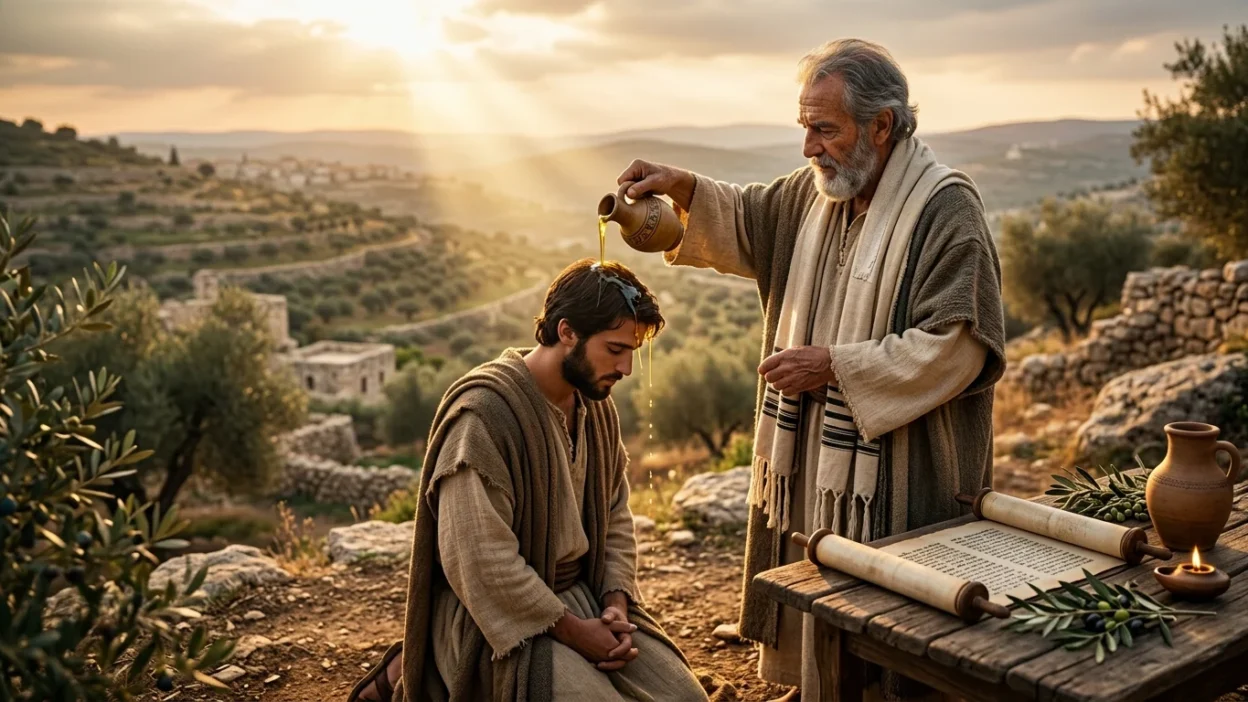
The anointing meaning in the Bible is one of the most powerful spiritual concepts found throughout Scripture.
From the Old Testament to the New Testament, anointing represents God’s blessing, authority, presence, and divine purpose.
If kings were crowned, priests were consecrated, or believers received the Holy Spirit, anointing always pointed to God’s special calling.
Understanding the anointing meaning in the Bible helps believers recognize how God equips His people for service and strengthens their faith.
Today, many Christians still talk about God’s anointing, but its biblical meaning is often misunderstood.
This guide explains the biblical definition, history, symbolism, and spiritual significance of anointing in simple language.
Quick Answer
The anointing meaning in the Bible refers to God’s act of setting someone apart for a special purpose. In the Old Testament, oil was used to dedicate kings, priests, and prophets. In the New Testament, anointing primarily represents the work of the Holy Spirit, empowering believers to serve God faithfully.
What Does Anointing Mean in the Bible?
The word anoint means to apply oil to a person or object as a sign of dedication to God. In biblical times, anointing symbolized God’s approval, blessing, protection, and appointment for a specific mission.
People who were anointed included:
- Kings
- Priests
- Prophets
- Sacred objects in the temple
In the New Testament, anointing also refers to the Holy Spirit living within believers, guiding and empowering them.
Meaning Table
| Aspect | Meaning |
|---|---|
| Biblical Definition | Setting apart for God’s purpose |
| Symbol | Oil and the Holy Spirit |
| Represents | Authority, blessing, holiness, empowerment |
| Used For | Kings, priests, prophets, believers |
| Spiritual Purpose | God’s calling and presence |
Origin and History of Biblical Anointing
The practice of anointing began early in Israel’s history. God instructed Moses to prepare sacred anointing oil for the Tabernacle and those serving Him.
The Hebrew word for anoint is Mashach, meaning “to smear” or “to apply oil.”
Later, the Greek word Chrio was used in the New Testament, referring to God’s spiritual anointing through the Holy Spirit.
Throughout biblical history:
- Moses anointed Aaron as high priest.
- Samuel anointed Saul as Israel’s first king.
- Samuel later anointed David.
- Solomon was anointed as king.
- Jesus was spiritually anointed by the Holy Spirit.
Origin Table
| Feature | Details |
|---|---|
| Hebrew Word | Mashach |
| Greek Word | Chrio |
| Main Symbol | Olive oil |
| First Major Use | Consecrating priests and holy objects |
| Continues Today | Spiritually through the Holy Spirit |
Why Was Oil Used for Anointing?
Oil had practical and symbolic value in biblical times.
It represented:
- Healing
- Joy
- Prosperity
- Purity
- God’s presence
- Strength
Olive oil was precious, making it an ideal symbol for something holy and valuable.
The physical oil reminded people that God’s Spirit was working in and through the person being anointed.
Biblical Examples of Anointing
The Bible contains many examples of anointing.
Aaron
Aaron was anointed as Israel’s first high priest, setting him apart to serve before God.
Saul
Saul became Israel’s first king after Samuel poured oil on his head.
David
David’s anointing showed that God chooses people based on the heart rather than appearance.
Solomon
Solomon was publicly anointed before becoming king.
Jesus Christ
Jesus is called the Anointed One or the Messiah, meaning the One chosen by God to save humanity.
Spiritual Meaning of Anointing in the Bible
The anointing meaning in the Bible goes far beyond applying oil. Spiritually, it represents God’s power working in a believer’s life.
The spiritual meaning includes:
God’s Calling
Anointing signifies that God has chosen someone for a unique purpose.
The Presence of the Holy Spirit
In the New Testament, believers receive spiritual anointing through the Holy Spirit.
Divine Empowerment
God gives strength and wisdom to accomplish His work.
Protection
Anointing often symbolizes God’s covering and protection.
Holiness
Those anointed are called to live lives dedicated to God.
Spiritual Meaning Table
| Symbol | Spiritual Meaning |
|---|---|
| Oil | Holy Spirit |
| Pouring Oil | God’s blessing |
| Fragrance | Holy living |
| Consecration | Being set apart |
| Empowerment | Strength to serve God |
Anointing in the Old Testament vs New Testament
Although both Testaments mention anointing, the emphasis changes.
| Old Testament | New Testament |
|---|---|
| Physical oil | Holy Spirit |
| Kings and priests | Every believer |
| External ceremony | Internal transformation |
| Temporary role | Ongoing relationship with God |
| Symbolic act | Spiritual reality |
The New Testament teaches that believers are spiritually anointed through faith in Christ.
Why Is Anointing Important for Christians Today?
Many Christians study the anointing meaning in the Bible because they want to understand how God works through His people today.
Biblical anointing reminds believers that:
- God equips those He calls.
- Spiritual gifts come from God.
- Ministry depends on God’s power.
- The Holy Spirit provides wisdom and guidance.
- Christians should rely on God instead of their own strength.
Cultural and Modern Usage of Anointing
Today, the word “anointing” is commonly used in churches around the world.
People may say:
- “The preacher is anointed.”
- “That worship was anointed.”
- “Pray for God’s anointing.”
In many Christian traditions, pastors still anoint people with oil while praying for healing, dedication, or blessing.
Outside religion, the word sometimes means selecting someone for an important leadership role.
For example:
- A company may “anoint” a new CEO.
- Political commentators may say a candidate has been “anointed” by party leaders.
These modern uses come from the biblical tradition of appointing leaders.
Why Do People Search for “Anointing Meaning in the Bible”?
People search this phrase because they want to understand:
- What biblical anointing really means
- Whether Christians are still anointed today
- The role of the Holy Spirit
- Why oil is used in churches
- The difference between biblical and modern meanings
- The spiritual significance of being anointed
Many believers also encounter the word while reading Scripture and want a deeper explanation.
Common Misconceptions About Anointing
Several misunderstandings surround biblical anointing.
Misconception 1: Oil Has Magical Power
The oil itself has no supernatural power. It symbolizes God’s work.
Misconception 2: Only Pastors Are Anointed
The New Testament teaches that every believer receives the Holy Spirit.
Misconception 3: Anointing Guarantees Success
Biblical figures who were anointed still experienced suffering, trials, and persecution.
Misconception 4: Anointing Means Fame
God’s anointing is about serving Him faithfully, not becoming popular.
Symbolism of Anointing Throughout Scripture
The symbolism behind anointing is rich and meaningful.
It represents:
- God’s approval
- Divine appointment
- Spiritual authority
- Holiness
- Healing
- Joy
- Protection
- The Holy Spirit
- Dedication
- God’s presence
These symbols appear consistently throughout both the Old and New Testaments.
How Can Believers Live Under God’s Anointing?
The Bible encourages believers to remain close to God.
Ways to grow spiritually include:
- Daily prayer
- Reading Scripture
- Obeying God’s commands
- Following the Holy Spirit
- Serving others with humility
- Living a holy life
- Trusting God’s guidance
The biblical focus is not on chasing experiences but on walking faithfully with God.
Final Thought
The anointing meaning in the Bible reveals God’s desire to set apart His people for His purposes.
From kings and priests in the Old Testament to believers filled with the Holy Spirit in the New Testament, anointing symbolizes God’s presence, power, and calling.
Rather than being merely a religious ritual, biblical anointing points to a deeper spiritual reality—God equips those He chooses to fulfill His will.
Understanding this truth helps Christians appreciate both the historical practice of anointing with oil and its ongoing spiritual significance today.
As believers seek to follow God faithfully, they can trust that His Spirit provides the wisdom, strength, and guidance needed to serve Him with confidence and humility.
FAQs
1. What is the anointing meaning in the Bible?
It means being set apart by God for a special purpose and empowered by His Spirit.
2. Why was oil used for anointing?
Oil symbolized holiness, blessing, healing, God’s presence, and dedication.
3. Who was anointed in the Bible?
Kings, priests, prophets, sacred objects, and ultimately believers through the Holy Spirit.
4. Is anointing still important today?
Yes. Christians believe the Holy Spirit spiritually anoints believers for service and faithful living.
5. Is Jesus called the Anointed One?
Yes. The title “Messiah” or “Christ” means “Anointed One.”
6. Does anointing oil have supernatural power?
No. The oil is a symbol of God’s work, while the power comes from God alone.
7. What is the spiritual meaning of anointing?
It represents God’s calling, empowerment, protection, holiness, and the presence of the Holy Spirit in a believer’s life.