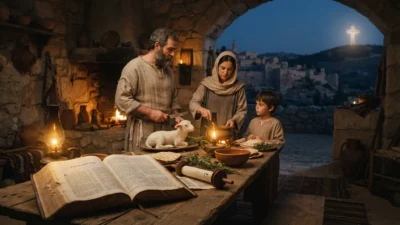

The faith meaning in the Bible goes far beyond simply believing that God exists. Biblical faith involves trusting God, believing His promises, relying on His character, and responding to Him with obedience. Throughout Scripture, faith is presented as essential to a relationship with God. Hebrews 11:1 famously describes faith as confidence in what is hoped for and assurance about what is not seen. This makes faith a foundation for Christian living, especially when circumstances are uncertain.
Understanding the faith meaning in the Bible can transform how believers approach prayer, suffering, salvation, relationships, and everyday decisions. Biblical faith is not blind optimism or wishful thinking. It is confidence placed in God because of who He is and what He has revealed. From Abraham’s trust in God’s promise to the faith taught by Jesus and the apostles, Scripture shows that genuine faith produces action, perseverance, obedience, and hope.
Quick Answer: What Does Faith Mean in the Bible?
Faith in the Bible means trusting, believing, and relying on God and His promises.
It involves confidence in God even when circumstances or outcomes cannot yet be seen.
Biblical faith is demonstrated through obedience, perseverance, and a transformed life.
Hebrews 11:1 provides one of Scripture’s clearest descriptions of faith.
What Is the Meaning of Faith in the Bible?
The word faith generally refers to trust, belief, confidence, or reliance.
In the Bible, faith is especially connected with trusting God and accepting His truth.
Hebrews 11:6 teaches that without faith it is impossible to please God because those who approach Him must believe that He exists and rewards those who earnestly seek Him.
Biblical faith therefore includes both belief and trust.
| Aspect | Biblical Meaning |
|---|---|
| Faith | Trust and confidence in God |
| Belief | Accepting God’s truth |
| Trust | Depending on God’s character |
| Obedience | Acting on faith |
| Hope | Expecting God’s promises |
| Perseverance | Continuing to trust during difficulty |
Faith is not merely agreeing with information about God. It involves placing confidence in Him.
Origin and Biblical Meaning of the Word Faith
The English word “faith” comes from older language connected with trust, confidence, and belief.
In the New Testament, the Greek word pistis is commonly translated as “faith.” Depending on context, it can carry ideas of faith, trust, belief, faithfulness, or reliability.
In the Old Testament, related Hebrew concepts include trust, faithfulness, and firmness. One important Hebrew root, aman, conveys the idea of firmness or reliability and is related to the biblical concept of believing or trusting.
| Language | Term | General Idea |
|---|---|---|
| English | Faith | Trust or belief |
| Greek | Pistis | Faith, trust, faithfulness |
| Hebrew | Aman | Firmness, reliability, trust |
| Biblical concept | Faith | Confidence in God |
The biblical concept therefore involves more than intellectual agreement. It includes a dependable relationship of trust.
Faith in the Old Testament
Faith appears throughout the Old Testament, even though the vocabulary and expressions may differ from the New Testament.
One of the greatest examples is Abraham.
Genesis 15:6 says that Abraham believed the Lord, and it was credited to him as righteousness.
Abraham trusted God’s promise even before seeing its complete fulfillment.
His story demonstrates an important principle: faith can involve trusting God while waiting.
Other Old Testament examples include:
- Noah building the ark
- Moses following God’s calling
- Joshua leading Israel
- David trusting God
- Daniel remaining faithful under pressure
These examples show that biblical faith often produces action.
Abraham as an Example of Biblical Faith
Abraham provides one of the clearest examples of the faith meaning in the Bible.
God called Abraham to leave his homeland and eventually promised that he would become the father of a great nation.
Abraham did not have every detail of the future.
He had to trust God’s promise.
Hebrews 11 includes Abraham among the great examples of faith because he obeyed God’s call and lived as a person looking forward to what God had promised.
His story teaches that faith does not require knowing every detail.
Faith means trusting the One who knows the future.
Faith in the Teachings of Jesus
Jesus frequently called people to believe in God and trust Him.
Throughout the Gospels, faith is associated with healing, salvation, prayer, discipleship, and dependence upon God.
Jesus sometimes challenged His disciples because of their lack of faith.
At the same time, He also responded positively to people who demonstrated remarkable trust.
Faith in Jesus is especially important in the New Testament because Christian faith is not merely faith in an abstract idea. It is centered on Jesus Christ.
The Gospel message calls people to believe in Christ, trust Him, and follow Him.
Spiritual Meaning of Faith
The spiritual meaning of faith meaning in the Bible centers on trusting God even when we cannot see the complete picture.
Faith has several important spiritual dimensions.
1. Trust
Faith means depending on God rather than believing that human strength is sufficient.
2. Confidence
Faith gives believers confidence in God’s character and promises.
3. Obedience
Genuine faith produces action.
4. Perseverance
Faith helps believers remain committed during difficult seasons.
5. Hope
Faith looks beyond present circumstances toward God’s promises.
| Spiritual Symbol | Meaning |
|---|---|
| Light | Trusting God through uncertainty |
| Anchor | Stability and hope |
| Path | Following God’s direction |
| Seed | Growing faith over time |
| Shield | Protection and confidence in God |
| Foundation | Building life on God’s truth |
These images help explain why faith is so central to Christian spirituality.
Faith and Salvation
Faith is closely connected with salvation in the New Testament.
Ephesians 2:8 teaches that salvation is by grace through faith.
Romans also emphasizes faith in relation to righteousness and justification.
This does not mean that biblical faith is simply saying that something is true.
Saving faith involves trusting in Christ rather than relying on personal righteousness.
Christians understand salvation as God’s grace, received through faith.
Faith therefore directs attention away from human achievement and toward God’s mercy and Christ’s work.
Faith and Works: Are They Opposites?
One common question concerns faith and works.
Paul emphasizes salvation by grace through faith, while James emphasizes that faith without works is dead.
At first glance, these teachings may seem contradictory.
However, they address different aspects of the Christian life.
Paul rejects the idea that people can earn salvation through religious works.
James rejects the idea that genuine faith can remain completely inactive.
| Faith | Works |
|---|---|
| Trusts God | Demonstrates that trust |
| Receives God’s grace | Produces practical obedience |
| Internal confidence | External action |
| Root | Fruit |
| Saves through God’s grace | Shows living faith |
A helpful way to understand this is:
Works do not replace genuine faith; genuine faith produces works.
Faith and Prayer
Faith also plays an important role in prayer.
Jesus encouraged His followers to pray with trust in God.
Faith does not mean believing that God must give us everything we request.
Instead, biblical faith trusts God’s wisdom even when His answer differs from our expectations.
A faithful prayer can say:
“God, I trust You even if I do not understand.”
This kind of faith protects prayer from becoming an attempt to control God.
It turns prayer into an expression of dependence.
Faith During Difficult Times
One of the most powerful aspects of biblical faith is its ability to endure hardship.
Faith does not mean Christians will never experience fear, grief, disappointment, or doubt.
Many biblical figures experienced difficult emotions.
David cried out to God.
Job asked difficult questions.
The disciples struggled with fear.
Yet biblical faith repeatedly points people back toward God.
During hardship, faith can provide:
- Hope
- Perseverance
- Peace
- Courage
- Perspective
- Confidence in God’s character
Faith does not always remove the storm. Sometimes it helps believers remain faithful while passing through it.
Faith and Doubt
Another common misconception is that having faith means never experiencing doubt.
The Bible presents a more realistic picture.
People can have questions while still seeking God.
In Mark 9:24, a man asks Jesus to help his unbelief.
This short prayer shows that faith and struggle can sometimes exist together.
Christian faith is not pretending that questions do not exist.
Instead, faith brings questions to God and continues seeking truth.
Doubt can become an invitation to deeper understanding when it leads someone toward honest seeking rather than complete rejection.
Faithfulness vs. Faith
The concepts of faith and faithfulness are closely related but can have different emphases.
Faith often describes trusting or believing.
Faithfulness emphasizes reliability, loyalty, and steadfastness.
| Faith | Faithfulness |
|---|---|
| Trust in God | Remaining loyal to God |
| Belief | Consistent commitment |
| Confidence | Dependability |
| Beginning of trust | Continued expression of trust |
| Receiving God’s promises | Living consistently with them |
In biblical thought, genuine faith can naturally produce faithfulness.
Faith vs. Hope: What Is the Difference?
Faith and hope are closely connected but are not identical.
Faith is confidence and trust in God.
Hope looks forward with expectation.
For example, a Christian may have faith that God is trustworthy and therefore have hope for the future.
| Faith | Hope |
|---|---|
| Trusts God | Looks toward God’s promises |
| Present confidence | Future expectation |
| Believes God’s character | Anticipates God’s fulfillment |
| Foundation | Resulting expectation |
Together, faith and hope help believers remain steady.
Common Misconceptions About Biblical Faith
Misconception 1: Faith Means Blind Belief
Biblical faith is not simply believing without reason. It is confidence in God based on His character, revelation, and promises.
Misconception 2: Faith Means You Will Never Have Problems
Scripture contains many faithful people who experienced suffering and hardship.
Misconception 3: Faith Guarantees Everything You Want
Biblical faith trusts God’s will rather than demanding a particular outcome.
Misconception 4: Faith Is Only an Emotion
Faith involves the mind, heart, will, and actions.
Misconception 5: Faith Means You Never Question Anything
Scripture includes honest prayers and questions from people who continued seeking God.
Why Do People Search for Faith Meaning in the Bible?
People search faith meaning in the Bible because faith is one of Christianity’s central concepts.
New believers may want to understand what it means to have faith in God.
Others may be struggling with doubt, suffering, unanswered prayer, or uncertainty.
Bible readers may also want to understand how faith relates to salvation, works, prayer, and everyday Christian living.
The biblical answer is both simple and profound: faith means trusting God and responding to Him with confidence and obedience.
How to Grow in Faith
Faith can grow through intentional spiritual practices.
Study Scripture
Romans 10:17 connects faith with hearing the word of Christ.
Pray
Prayer strengthens dependence upon God.
Remember God’s Faithfulness
Looking back at God’s provision can encourage present trust.
Fellowship With Believers
Christian community can provide encouragement during difficult seasons.
Practice Obedience
Faith becomes stronger when believers act on what they know to be true.
Wait Patiently
Learning to trust God during unanswered questions develops perseverance.
Faith is not usually developed instantly. Like a seed, it grows through time, experience, and spiritual nourishment.
Cultural and Modern Understanding of Faith
In modern conversation, “faith” can sometimes mean simply believing something without evidence.
For example, people may say they have faith that a particular event will happen.
The biblical meaning is more specific.
Christian faith is directed toward God and His revealed truth.
It is not merely positive thinking or personal optimism.
This distinction is important when explaining biblical faith to people unfamiliar with Christianity.
What Does Faith Symbolize Spiritually?
The deepest spiritual symbolism of faith is trusting God when the future cannot yet be seen.
Faith can be pictured as an anchor because it gives stability.
It can be pictured as a path because it involves following God.
It can be pictured as a seed because it can begin small and grow.
It can also be pictured as a shield because believers are called to trust God in spiritual battles.
These images show that faith is active, growing, and deeply connected to relationship with God.
Final Thought
The faith meaning in the Bible is ultimately about trusting God, believing His truth, and living in response to that trust. Biblical faith is not blind optimism, nor does it promise an easy life. Abraham trusted God’s promise before seeing its fulfillment, and countless other biblical figures demonstrated faith while facing uncertainty and hardship. In the New Testament, faith becomes especially centered on Jesus Christ and God’s saving grace.
Genuine faith can produce obedience, perseverance, hope, and a transformed life. Even when believers experience questions or doubts, they can continue bringing those struggles to God. Faith invites Christians to trust God’s character when circumstances are unclear and to build their lives on His promises rather than on fear or changing circumstances.
FAQs
1. What does faith mean in the Bible?
Faith means trusting, believing, and relying on God and His promises.
2. What is the biblical definition of faith?
Hebrews 11:1 describes faith as confidence in what is hoped for and assurance concerning what is not seen.
3. Why is faith important to Christians?
Faith is central to a relationship with God and is closely connected with salvation, prayer, obedience, and Christian living.
4. Does faith mean believing without evidence?
No. Biblical faith involves confidence in God’s character, revelation, and promises rather than simple irrational belief.
5. Can a person have faith and still have doubts?
Yes. Scripture contains examples of people who struggled with questions while continuing to seek God.
6. What is the relationship between faith and works?
Genuine faith produces action. Works do not earn God’s grace, but living faith should influence how a person lives.
7. How can I grow stronger in faith?
Studying Scripture, praying, remembering God’s faithfulness, practicing obedience, and participating in Christian fellowship can help faith grow.

William Noah is a spiritual writer at BibLoft, exploring hidden meanings, symbols, and divine insights. He shares thoughtful interpretations that inspire self-awareness, inner growth, and spiritual understanding.