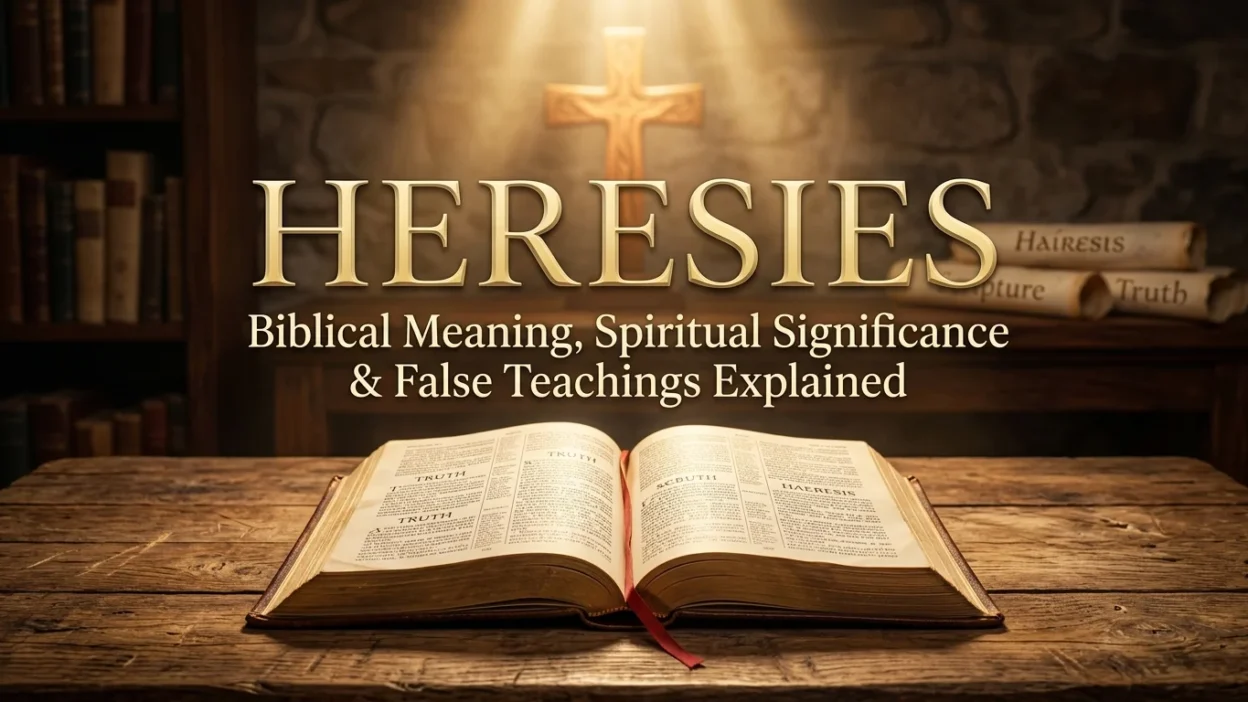
Understanding heresies meaning in the Bible is essential for anyone who wants to study Scripture accurately and grow in their Christian faith. The Bible repeatedly warns believers about false teachings that can divide the church and lead people away from God’s truth. Learning heresies meaning in the Bible helps Christians recognize the importance of sound doctrine and staying faithful to biblical teachings.
Many people search for heresies meaning in the Bible because they encounter the word in Bible studies, sermons, or older translations of Scripture. Although the term may sound unfamiliar today, it carries a significant spiritual message. This guide explains its biblical meaning, historical background, spiritual significance, and why it continues to matter for Christians today.
Quick Answer
Heresies meaning in the Bible refers to false beliefs, teachings, or divisions that oppose or distort God’s truth. In Scripture, heresies are warnings against doctrines that lead believers away from the true gospel and create conflict within the Christian community.
What Does Heresies Mean in the Bible?
The heresies meaning in the Bible refers to beliefs, teachings, or groups that depart from the truth revealed by God in Scripture.
In the New Testament, the word “heresy” originally described a sect, party, or division. Over time, it came to refer to teachings that contradicted the essential truths of the Christian faith.
Biblically, heresies involve:
- False doctrine
- Spiritual deception
- Division within the church
- Rejection of biblical truth
- Distortion of the gospel
The Bible encourages believers to carefully examine every teaching against God’s Word rather than accepting every new idea.
Meaning at a Glance
| Feature | Details |
|---|---|
| Biblical Meaning | False teachings or doctrines contrary to Scripture |
| Original Greek Word | Hairesis |
| Literal Meaning | Choice, faction, sect |
| Spiritual Theme | Guarding biblical truth |
| Biblical Focus | Avoiding deception and division |
| Main Warning | Remain faithful to God’s Word |
Origin and History of the Word Heresy
The word heresy comes from the Greek word Hairesis, which originally meant choice, party, school of thought, or sect.
In ancient Greek society, the word itself was not always negative. It could simply describe a philosophical group or religious movement.
However, in the New Testament, the meaning gradually changed. As false teachers began spreading teachings contrary to the gospel, hairesis became associated with dangerous doctrines that threatened the unity and truth of the early church.
Over the centuries, Christian leaders continued using the term to identify beliefs that conflicted with core biblical teachings.
Origin Table
| Aspect | Information |
|---|---|
| Original Language | Greek |
| Greek Word | Hairesis |
| Original Meaning | Choice, faction, sect |
| New Testament Usage | False doctrine and division |
| Christian Development | Teachings opposing biblical truth |
Where Does the Bible Mention Heresies?
Several New Testament passages warn believers about heresies and false teaching.
Some well-known examples include:
- Galatians 5:20, where heresies are listed among works of the flesh in some Bible translations.
- 2 Peter 2:1, which warns about false teachers introducing destructive heresies.
- 1 Corinthians 11:19, where divisions reveal those who remain faithful.
- Acts 24:14, where Christianity itself was once called a “sect” by its opponents.
These passages demonstrate that the early church faced false teachings just as believers do today.
Biblical Connection of Heresies
The Bible consistently teaches that truth comes from God and that believers should remain rooted in sound doctrine.
Jesus warned about false prophets who appear harmless outwardly but deceive people inwardly.
The apostles also urged churches to:
- Test every teaching.
- Hold firmly to the gospel.
- Reject false doctrine.
- Protect the unity of believers.
- Remain faithful to Scripture.
Rather than encouraging fear, these warnings help Christians develop spiritual discernment.
Spiritual Meaning of Heresies in the Bible
The spiritual significance of heresies extends beyond simply believing incorrect ideas.
Spiritually, heresy represents anything that pulls people away from God’s truth and replaces it with human opinions or deceptive teachings.
It serves as a reminder that faith should always be grounded in God’s Word rather than personal preferences or popular trends.
Symbolic Interpretation
From a symbolic perspective, heresies represent:
- Spiritual deception
- Confusion
- Division
- Pride
- Rebellion against truth
- Loss of biblical direction
- The need for discernment
The Bible encourages believers to remain humble, prayerful, and committed to studying Scripture so they can recognize truth from error.
Why Does the Bible Warn Against Heresies?
The Bible warns against heresies because false teaching can gradually lead people away from God’s truth.
When incorrect doctrines spread unchecked, they may create confusion, division, and weakened faith within the church.
The biblical warnings are intended to help believers:
- Protect their faith.
- Grow in biblical knowledge.
- Stay united.
- Recognize spiritual deception.
- Remain faithful to Jesus Christ.
Rather than focusing on arguments, Scripture encourages Christians to pursue truth with humility, wisdom, and love.
Why Do People Search for “Heresies Meaning in the Bible”?
Many people search for heresies meaning in the Bible after reading older Bible translations, attending Bible studies, or hearing sermons that mention false doctrine.
Others want to understand the difference between heresy, false teaching, disagreement, and denominational differences. Students of theology also study the term to better understand the challenges faced by the early church and the importance of preserving sound biblical doctrine.
Learning the biblical meaning of heresies helps believers develop discernment, deepen their understanding of Scripture, and appreciate why the Bible repeatedly emphasizes truth, unity, and faithfulness.
Common Examples of Heresies in Christian History
Throughout church history, various teachings have been identified as heresies because they contradicted core biblical doctrines. These teachings often challenged the nature of God, the identity of Jesus Christ, or the message of salvation.
Some historical examples include:
- Denying the full divinity of Jesus Christ.
- Rejecting the resurrection of Christ.
- Teaching salvation through human works alone instead of God’s grace.
- Adding teachings that contradict the authority of Scripture.
- Claiming secret knowledge is required for salvation.
These examples illustrate why the early church worked diligently to preserve biblical truth and protect believers from deception.
Heresies vs. False Teaching
Although the terms are related, they are not always identical.
A false teaching may involve misunderstanding or incorrectly explaining a biblical passage. Heresy generally refers to a persistent belief or doctrine that rejects or seriously distorts essential biblical truths.
| Term | Meaning | Biblical Impact |
|---|---|---|
| Heresy | Persistent doctrine opposing essential biblical truth | Causes division and spiritual deception |
| False Teaching | Incorrect interpretation or teaching | Can mislead believers if left uncorrected |
| Sound Doctrine | Teaching that agrees with Scripture | Builds faith and unity |
| Biblical Truth | God’s revealed Word | Leads to spiritual growth |
Understanding this difference helps believers respond with wisdom, patience, and biblical discernment.
Common Misconceptions About Heresies
Many misunderstandings exist regarding heresies meaning in the Bible.
Every Disagreement Is Heresy
This is false. Christians may hold different views on secondary issues while still sharing the essential truths of the Christian faith.
Heresy Only Existed in Bible Times
False teachings have appeared throughout history and continue to exist today. The Bible’s warnings remain relevant for every generation.
Heresy Is Simply Having Questions
Asking sincere questions is not heresy. Scripture encourages believers to seek wisdom, study God’s Word, and grow in understanding.
Only Church Leaders Need to Recognize Heresy
Every Christian is encouraged to know Scripture, test teachings carefully, and develop spiritual discernment.
How Christians Can Guard Against Heresies
The Bible offers practical guidance for avoiding spiritual deception.
Believers can protect themselves by:
- Reading the Bible regularly.
- Comparing teachings with Scripture.
- Praying for wisdom and discernment.
- Learning sound biblical doctrine.
- Participating in a faithful Christian community.
- Listening to trustworthy biblical teachers.
- Remaining humble and teachable.
A strong foundation in God’s Word is the best defense against false doctrine.
Cultural and Modern Usage of the Word Heresy
Today, the word heresy is sometimes used outside religious settings to describe ideas that strongly oppose accepted beliefs.
In Christian contexts, however, the term retains its biblical meaning and refers to teachings that conflict with essential doctrines of the faith.
Modern believers often encounter discussions about heresy through Bible studies, theological books, online ministries, podcasts, and church teaching. These conversations encourage Christians to evaluate beliefs carefully using Scripture rather than popular opinion.
Why Understanding Heresies Still Matters Today
The message behind heresies meaning in the Bible remains highly relevant.
With countless opinions available through books, social media, videos, and online discussions, Christians need wisdom to distinguish biblical truth from misleading teachings.
Studying Scripture helps believers:
- Grow in spiritual maturity.
- Recognize deceptive ideas.
- Strengthen their faith.
- Protect church unity.
- Remain focused on the gospel of Jesus Christ.
The goal is not to create fear or unnecessary conflict but to encourage faithfulness to God’s Word with humility and love.
Final Summary
The heresies meaning in the Bible refers to false doctrines, divisions, or beliefs that oppose the truth revealed in Scripture. Originating from the Greek word Hairesis, the term initially meant a sect or faction but later came to describe teachings that distorted the gospel.
Throughout the New Testament, believers are encouraged to remain rooted in sound doctrine, test every teaching against Scripture, and guard the unity of the church. By understanding biblical truth, Christians are better equipped to recognize error while continuing to grow in faith, wisdom, and spiritual maturity.
Final Thought
Understanding heresies meaning in the Bible is not about becoming judgmental or argumentative. Instead, it is about developing spiritual discernment and remaining faithful to God’s truth. The Bible encourages believers to examine teachings carefully, hold firmly to the gospel, and pursue unity based on sound doctrine. While false teachings have existed since the early church, God’s Word continues to provide clear guidance for those who seek Him sincerely. By studying Scripture with humility, prayer, and wisdom, Christians can confidently recognize truth, avoid deception, and grow in a deeper relationship with Jesus Christ.
Frequently Asked Questions
1. What does heresies mean in the Bible?
Heresies refer to false doctrines or teachings that contradict essential biblical truth and can lead believers away from the gospel.
2. What is the Greek word for heresy?
The Greek word is Hairesis, meaning choice, faction, sect, or school of thought.
3. Are all disagreements considered heresy?
No. Differences on secondary issues are not necessarily heresy. Heresy involves rejecting or distorting essential biblical doctrines.
4. Why does the Bible warn against heresies?
Because false teachings can create division, confusion, and spiritual deception among believers.
5. How can Christians avoid heresy?
By studying Scripture, praying for wisdom, testing teachings carefully, and remaining grounded in sound biblical doctrine.
6. Is heresy still relevant today?
Yes. Christians are still encouraged to compare every teaching with God’s Word and remain faithful to the gospel.
7. What is the spiritual meaning of heresies?
Spiritually, heresies symbolize deception, division, and departure from God’s truth while reminding believers to seek wisdom, discernment, and faithfulness.