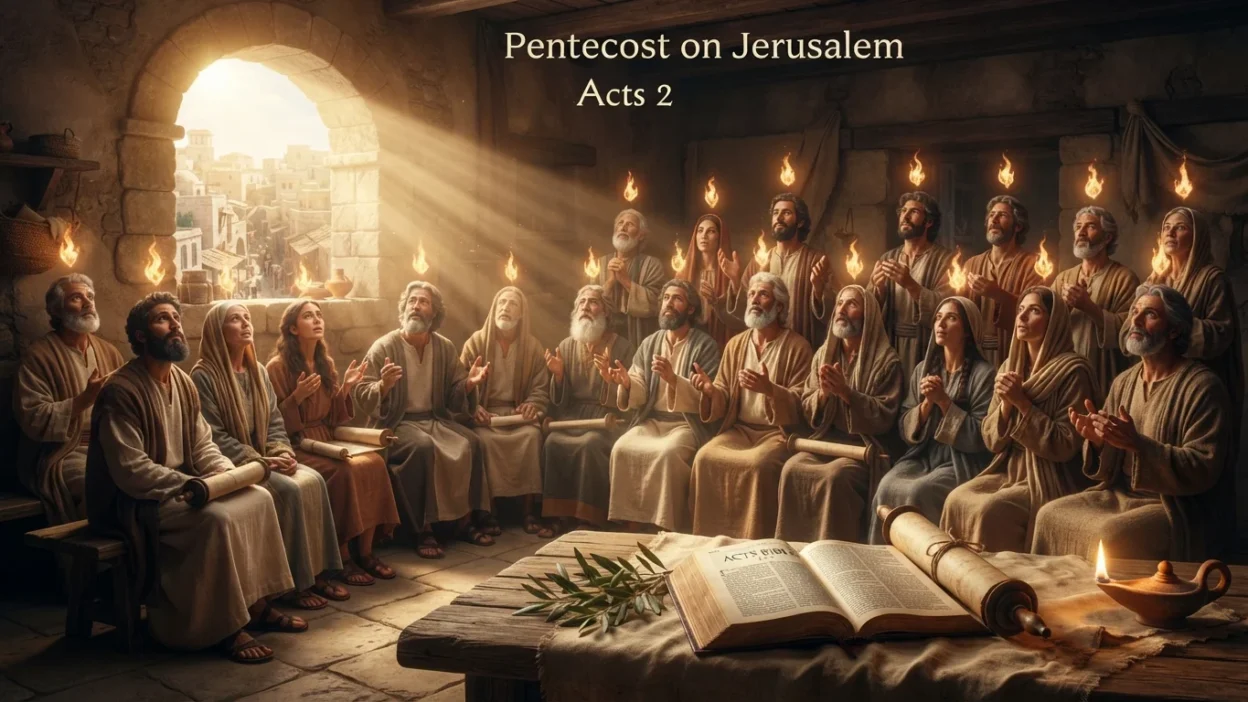
The Pentecost meaning in the Bible is one of the most important topics in Christian faith because it marks the coming of the Holy Spirit and the birth of the New Testament Church. Pentecost was originally a Jewish feast celebrated fifty days after Passover, but it gained even greater significance after the resurrection of Jesus Christ. Understanding the Pentecost meaning in the Bible helps believers appreciate God’s promise, the power of the Holy Spirit, and the beginning of the Church’s worldwide mission.
Many people search for the Pentecost meaning in the Bible to understand what happened on the Day of Pentecost, why it is celebrated, and what spiritual lessons it offers today. This article explores its biblical meaning, historical background, symbolism, and lasting importance in clear, easy-to-read language.
Quick Answer
The Pentecost meaning in the Bible refers to the day when the Holy Spirit came upon Jesus’ followers, as recorded in Acts 2. It occurred fifty days after Jesus’ resurrection and marked the birth of the Christian Church, empowering believers to boldly share the Gospel.
Meaning of Pentecost in the Bible
The word Pentecost comes from the Greek word Pentēkostē, meaning “fiftieth.” It refers to the Jewish Feast of Weeks, celebrated fifty days after Passover.
In the New Testament, Pentecost became the day when God fulfilled Jesus’ promise by sending the Holy Spirit upon His disciples.
This event transformed fearful followers into courageous witnesses who proclaimed the Gospel throughout the world.
SEO Table: Meaning of Pentecost
| Term | Meaning |
|---|---|
| Pentecost | Fiftieth |
| Greek Word | Pentēkostē |
| Biblical Event | Coming of the Holy Spirit |
| Main Theme | Birth of the Christian Church |
Origin and History of Pentecost
Pentecost began as an Old Testament harvest festival known as the Feast of Weeks (Shavuot).
The Israelites celebrated it by:
- Thanking God for the harvest.
- Offering firstfruits.
- Remembering God’s faithfulness.
After Jesus’ resurrection, Pentecost gained a new meaning.
According to Acts 2, the Holy Spirit descended upon the disciples while they gathered in Jerusalem, fulfilling Old Testament prophecy and Jesus’ promise.
SEO Table: Origin of Pentecost
| Category | Details |
|---|---|
| Old Testament Name | Feast of Weeks |
| Greek Name | Pentecost |
| Timing | Fifty days after Passover |
| New Testament Importance | Coming of the Holy Spirit |
Biblical Connection of Pentecost
The Pentecost meaning in the Bible is centered in Acts chapter 2.
During Pentecost:
- The disciples gathered together.
- A sound like a mighty rushing wind filled the house.
- Tongues of fire appeared.
- The Holy Spirit filled every believer.
- The disciples spoke in different languages.
- Thousands believed Peter’s message.
This remarkable event marked the beginning of the Church’s mission to the nations.
Spiritual Meaning of Pentecost in the Bible
The spiritual meaning of Pentecost is much deeper than a historical event.
It symbolizes:
- God’s presence through the Holy Spirit.
- Spiritual empowerment.
- New life in Christ.
- Unity among believers.
- Boldness in sharing the Gospel.
- Fulfillment of God’s promises.
Pentecost reminds Christians that God continues to guide and strengthen His people through the Holy Spirit.
Symbolic Interpretation
Pentecost symbolizes:
- Spiritual renewal.
- Divine power.
- The beginning of the Church.
- God’s presence among believers.
- Worldwide evangelism.
It demonstrates that God’s Spirit equips ordinary people for extraordinary ministry.
Why Pentecost Is Important in Christianity
Pentecost is one of the most significant events in Christian history.
Its importance includes:
- Fulfillment of Jesus’ promise.
- Arrival of the Holy Spirit.
- Beginning of the Church.
- Empowerment for ministry.
- Worldwide spread of the Gospel.
Without Pentecost, the early Church would not have received the divine power needed to fulfill Christ’s Great Commission.
Symbols of Pentecost
Several symbols are connected with Pentecost.
Wind
Represents the invisible power and presence of the Holy Spirit.
Fire
Symbolizes God’s holiness, purification, and power.
Languages
Demonstrate that the Gospel is for every nation.
Harvest
Reflects the gathering of believers into God’s kingdom.
Each symbol reveals an important aspect of God’s work.
Pentecost Compared with Other Biblical Festivals
SEO Comparison Table
| Festival | Main Purpose | Biblical Significance |
|---|---|---|
| Passover | Deliverance from Egypt | Christ’s sacrifice |
| Pentecost | Feast of Weeks | Coming of the Holy Spirit |
| Tabernacles | God’s provision | God’s presence among His people |
These festivals point to different stages of God’s plan of salvation.
Cultural and Modern Usage
Today, Pentecost is celebrated by Christians around the world.
Churches often commemorate the day with:
- Special worship services.
- Prayer gatherings.
- Bible readings from Acts 2.
- Teaching about the Holy Spirit.
- Evangelism and outreach.
Many Christian traditions also use red decorations to symbolize the fire of the Holy Spirit.
Why People Search for Pentecost Meaning in the Bible
People commonly search this topic because they want to:
- Understand Acts chapter 2.
- Learn about the Holy Spirit.
- Study Christian holidays.
- Discover the meaning of Pentecost Sunday.
- Deepen their Bible knowledge.
Pentecost remains one of Christianity’s most meaningful celebrations.
Common Misconceptions About Pentecost
Misconception 1: Pentecost Began in the New Testament
Actually, Pentecost originated as the Old Testament Feast of Weeks.
Misconception 2: Pentecost Is Only About Speaking in Tongues
Speaking in different languages was one sign, but Pentecost primarily celebrates the coming of the Holy Spirit and the birth of the Church.
Misconception 3: Pentecost Was Only for the Apostles
The Holy Spirit came upon all believers who were gathered together, demonstrating God’s desire to empower His people.
Lessons Christians Can Learn from Pentecost
Pentecost teaches believers to:
- Depend on the Holy Spirit.
- Share the Gospel boldly.
- Live in unity.
- Trust God’s promises.
- Grow spiritually.
- Serve others faithfully.
The same Holy Spirit who empowered the early Church continues to guide believers today.
Pentecost’s Lasting Message
The Pentecost meaning in the Bible reminds Christians that God fulfills every promise.
The Holy Spirit empowers believers not merely for personal blessing but for faithful service and witness.
Pentecost continues inspiring Christians to proclaim Christ with courage, compassion, and unwavering faith.
Final Thought
The Pentecost meaning in the Bible reveals God’s incredible plan to empower His people through the Holy Spirit. What began as the Jewish Feast of Weeks became the historic day when the Church was born, thousands believed the Gospel, and Jesus’ promise was fulfilled. Pentecost reminds believers that God provides strength, wisdom, and courage to accomplish His mission.
The wind, fire, and miraculous languages all point to God’s transforming presence among His people. Today, Christians continue celebrating Pentecost as a reminder that the Holy Spirit equips every believer to live faithfully, grow spiritually, and boldly share the message of Jesus Christ with the world.
FAQs
1. What does Pentecost mean in the Bible?
Pentecost means “fiftieth” and marks the coming of the Holy Spirit in Acts 2.
2. Why is Pentecost important?
It marks the birth of the Christian Church and the fulfillment of Jesus’ promise to send the Holy Spirit.
3. What happened on the Day of Pentecost?
The Holy Spirit came upon the believers, empowering them to preach the Gospel in different languages.
4. Is Pentecost an Old Testament festival?
Yes. It began as the Feast of Weeks before becoming a major New Testament event.
5. What do the wind and fire symbolize?
They symbolize the power, presence, holiness, and work of the Holy Spirit.
6. Is Pentecost still celebrated today?
Yes. Christians worldwide celebrate Pentecost to remember the coming of the Holy Spirit.
7. What spiritual lesson does Pentecost teach?
It teaches believers to rely on the Holy Spirit, live faithfully, and boldly share the Gospel.