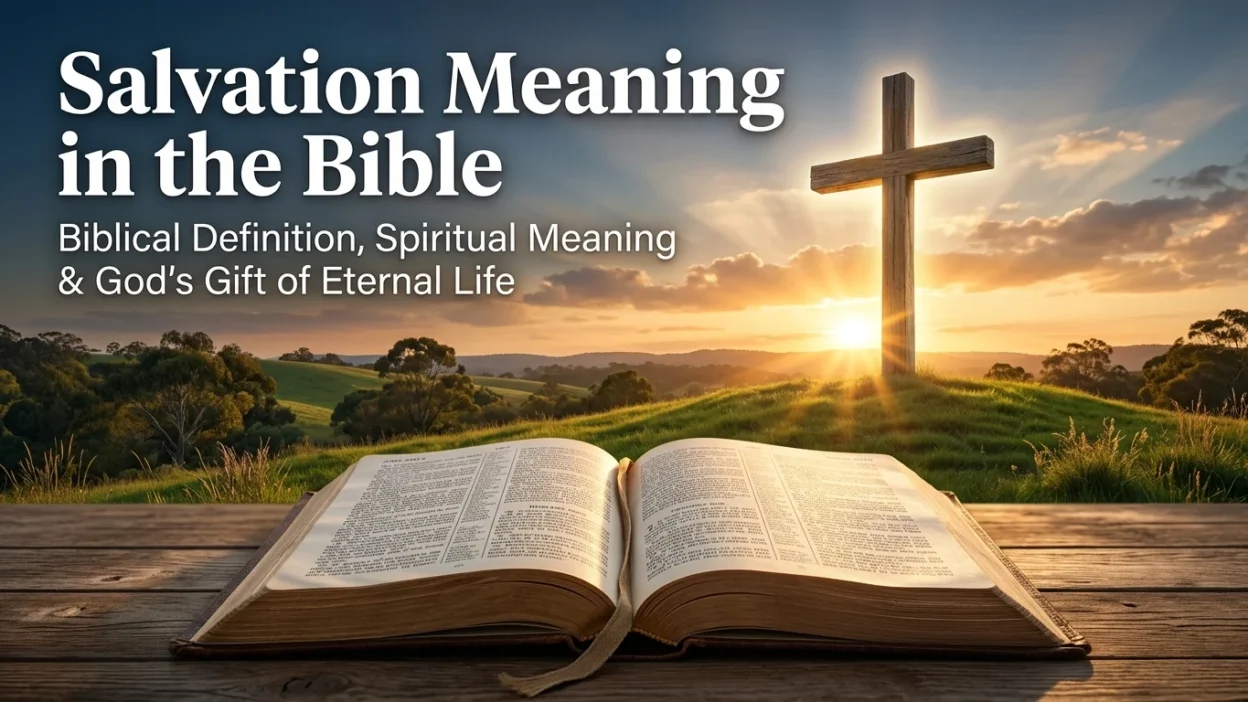
Salvation meaning in the Bible is one of the most important topics for anyone seeking to understand God’s plan for humanity. Throughout Scripture, salvation is presented as God’s loving gift that rescues people from sin, restores their relationship with Him, and offers the promise of eternal life. Understanding the salvation meaning in the Bible helps believers grow in faith while giving seekers a clearer picture of Christianity’s central message.
Many people search for the salvation meaning in the Bible because they want to know how salvation works, why it matters, and what the Bible teaches about forgiveness and eternal life. This guide explains its biblical definition, origin, spiritual significance, and practical meaning in simple, easy-to-understand language.
Quick Answer
The salvation meaning in the Bible refers to God’s act of rescuing humanity from sin and its consequences through faith in Jesus Christ. It brings forgiveness, reconciliation with God, spiritual renewal, and the hope of eternal life.
What Does Salvation Mean in the Bible?
In the Bible, salvation means being saved or delivered from sin, spiritual death, and eternal separation from God. It is a free gift offered by God’s grace and received through faith in Jesus Christ.
Salvation is not simply about escaping punishment. It is about restoring a broken relationship with God and beginning a transformed life through His love and mercy.
Salvation Meaning at a Glance
| Aspect | Meaning |
|---|---|
| Biblical Meaning | Deliverance from sin and eternal death |
| Source | God’s grace |
| Received Through | Faith in Jesus Christ |
| Result | Forgiveness, new life, eternal hope |
| Main Purpose | Reconciliation with God |
Origin and History of Salvation
The concept of salvation appears from the very beginning of the Bible. After humanity’s fall into sin, God promised redemption and began revealing His plan throughout history.
In the Old Testament, salvation often referred to God’s deliverance of His people from physical danger, oppression, or enemies. As biblical history progressed, salvation came to represent something much greater—the rescue of humanity from sin through the promised Messiah.
The New Testament reveals Jesus Christ as the fulfillment of God’s plan of salvation. Through His death and resurrection, believers receive forgiveness and eternal life.
Origin of the Word “Salvation”
| Language | Word | Meaning |
|---|---|---|
| Latin | Salus | Safety, health, deliverance |
| Greek | Soteria | Rescue, preservation, salvation |
| Hebrew | Yeshua | Deliverance, rescue, victory |
Salvation in the Old Testament
In the Old Testament, salvation usually described God’s intervention on behalf of His people.
Examples include:
- Delivering Israel from slavery in Egypt
- Protecting His people during times of war
- Rescuing individuals from danger
- Promising a future Savior
These events pointed forward to the ultimate salvation that would come through Jesus Christ.
Salvation in the New Testament
The New Testament fully explains the salvation meaning in the Bible through the life, death, and resurrection of Jesus Christ.
According to Scripture, every person has sinned and needs God’s forgiveness. Jesus willingly died on the cross to pay the penalty for sin and rose again, making salvation available to everyone who believes in Him.
The New Testament teaches that salvation includes:
- Forgiveness of sins
- Peace with God
- New spiritual life
- Adoption into God’s family
- Eternal life
Rather than being earned through good works, salvation is received by faith as God’s gracious gift.
Spiritual Meaning of Salvation
The spiritual meaning of salvation goes far beyond forgiveness. It represents complete transformation from spiritual death to spiritual life.
When someone experiences salvation, the Bible teaches they become a new creation. Their heart is renewed, their relationship with God is restored, and they receive the hope of eternal life.
Symbolic Interpretation of Salvation
Spiritually, salvation symbolizes:
- Light overcoming darkness
- Freedom from the bondage of sin
- New birth and spiritual renewal
- Victory over death
- Restoration of hope
- Eternal fellowship with God
For Christians, salvation marks the beginning of a lifelong journey of faith, spiritual growth, and obedience rather than simply a one-time event.
Why Do People Search for Salvation Meaning in the Bible?
People search for the salvation meaning in the Bible for many reasons. Some are exploring Christianity for the first time, while others want a deeper understanding of God’s plan for humanity.
Common reasons include:
- Learning how to receive salvation
- Understanding the purpose of Jesus’ sacrifice
- Finding hope during difficult times
- Growing spiritually as a Christian
- Preparing for Bible studies or church discussions
- Seeking answers about eternal life
The Bible provides clear guidance, comfort, and hope for everyone seeking the truth about salvation.
Salvation in Modern Christian Life
Although the message of salvation comes from ancient Scripture, it remains just as relevant today. Christians believe salvation changes not only a person’s eternal destiny but also their daily life.
Someone who understands the salvation meaning in the Bible is encouraged to:
- Trust God during life’s challenges
- Show love and forgiveness to others
- Live according to biblical principles
- Grow through prayer and Bible study
- Share God’s message with others
Salvation continues to inspire millions of believers around the world.
Common Misconceptions About Salvation
Many misunderstand what the Bible actually teaches about salvation. Here are some of the most common misconceptions.
| Misconception | Biblical Truth |
|---|---|
| Salvation is earned by good works. | Salvation is a gift of God’s grace received through faith. |
| Only perfect people can be saved. | Every person has sinned and can receive God’s forgiveness. |
| Church attendance alone brings salvation. | Salvation comes through faith in Jesus Christ, not religious activities alone. |
| Once saved, spiritual growth is unnecessary. | Salvation begins a lifelong journey of faith and discipleship. |
Understanding these truths helps prevent confusion and keeps the focus on God’s grace rather than human effort.
Salvation Compared With Related Biblical Terms
Many people confuse salvation with other important biblical concepts. While they are closely connected, each has its own meaning.
| Term | Meaning | Difference |
|---|---|---|
| Salvation | Rescue from sin and eternal death | The complete gift of redemption |
| Grace | God’s undeserved favor | The reason salvation is possible |
| Faith | Trust in Jesus Christ | The means by which salvation is received |
| Redemption | Being bought back from sin | Part of God’s saving work |
| Justification | Being declared righteous before God | A legal result of salvation |
Final Thought
The salvation meaning in the Bible reveals God’s incredible love, mercy, and desire to restore humanity. From Genesis to Revelation, Scripture tells one unified story of God’s plan to rescue people from sin through Jesus Christ. Salvation is not something that can be earned by human effort. Instead, it is a gracious gift offered to everyone who believes in Christ.
Understanding salvation brings peace, hope, and purpose. It reminds believers that forgiveness is available, new life is possible, and eternal fellowship with God awaits those who trust Him. Whether you are studying the Bible for the first time or strengthening your faith, the message of salvation remains the foundation of Christianity and one of the greatest expressions of God’s love.
FAQs
1. What is the salvation meaning in the Bible?
Salvation is God’s gift of rescuing people from sin through faith in Jesus Christ, leading to forgiveness and eternal life.
2. Is salvation a gift from God?
Yes. The Bible teaches that salvation is a free gift given by God’s grace and received through faith.
3. Can good works earn salvation?
No. Good works are the result of faith, not the cause of salvation.
4. Why is salvation important?
Salvation restores a person’s relationship with God, forgives sin, and offers the promise of eternal life.
5. What is the spiritual meaning of salvation?
Spiritually, salvation represents new life, freedom from sin, reconciliation with God, and eternal hope.
6. Who can receive salvation according to the Bible?
The Bible teaches that salvation is available to everyone who believes in Jesus Christ.
7. Where is salvation explained in the Bible?
Salvation is explained throughout Scripture, especially in the Gospels, Romans, Ephesians, and other New Testament books.