The lost books of the bible meaning is a topic that fascinates Christians, Bible readers, historians, and people curious about ancient religious writings. Many people hear about mysterious books that were supposedly removed, hidden, or forgotten and wonder whether important parts of biblical history are missing from modern Bibles. The truth is more complex and historically interesting.
Understanding lost books of the bible meaning requires looking at ancient manuscripts, Jewish and Christian traditions, and the development of the biblical canon. Some ancient religious books were known to early communities but were not accepted as Scripture by every tradition. Others survived only in fragments or translations. These writings can provide valuable historical insight, but their existence does not automatically mean that books were secretly removed from the Bible.
Quick Answer: What Does “Lost Books of the Bible” Mean?
The phrase lost books of the Bible usually refers to ancient Jewish or Christian writings that are not included in the standard biblical canon. Some were never considered Scripture by most communities, while others belong to the biblical canon of particular religious traditions.
What Are the Lost Books of the Bible?
The expression “lost books of the Bible” can be misleading.
It often refers to ancient religious texts connected with biblical history, Jewish tradition, or early Christianity that are not found in a standard Protestant Bible.
Some of these books are not truly “lost.”
They have survived through manuscripts, translations, or archaeological discoveries.
Others are known only because ancient writers mentioned them.
The lost books of the bible meaning therefore covers several different categories of ancient literature.
These may include:
- Apocryphal writings
- Deuterocanonical books
- Pseudepigraphal works
- Ancient Jewish literature
- Early Christian writings
- Books mentioned but no longer preserved
Not every non-biblical ancient religious book was intended to become part of the Bible.
Why Are They Called “Lost Books”?
The word “lost” can mean different things.
Some books were genuinely lost because no complete manuscript survived.
Other writings were simply excluded from a particular biblical canon.
Still others were preserved but remained unfamiliar to the general public.
For this reason, “lost books” does not always mean that someone deliberately hid a book.
In many cases, different religious communities made different decisions about which writings they considered authoritative Scripture.
| Type of Writing | Meaning |
|---|---|
| Lost text | A work no longer fully preserved |
| Non-canonical text | A surviving book not included in a particular Bible |
| Apocryphal writing | A traditional term for certain writings outside some canons |
| Pseudepigraphal work | A text attributed to an ancient biblical figure |
| Deuterocanonical book | A book accepted in some Christian biblical traditions |
The Origin and History of Ancient Religious Books
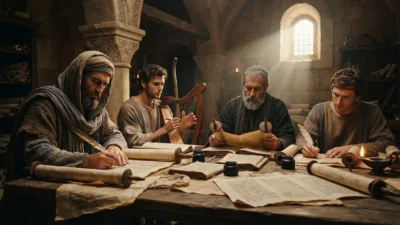
Ancient Jewish and Christian communities produced many religious writings.
The Bible developed within a much larger world of literature.
Stories, prayers, laws, visions, wisdom teachings, letters, and interpretations circulated among different communities.
Over time, Jewish and Christian groups recognized particular collections of writings as sacred and authoritative.
This process is often called the development of the biblical canon.
The canon was not created in one simple moment.
Different communities preserved different collections and traditions.
The lost books of the bible meaning becomes clearer when readers understand that ancient religious literature was diverse.
Many texts existed alongside the writings that eventually became part of widely recognized biblical collections.
How Did Books Become Part of the Bible?
The process of recognizing biblical books developed over time.
Religious communities considered several important factors.
These included:
- Connection with recognized religious traditions
- Consistency with accepted beliefs
- Use in worship and teaching
- Historical importance
- Traditional authority
- Broad acceptance within a community
Different traditions did not always reach identical conclusions.
This is why Protestant, Catholic, Ethiopian Orthodox, and other Christian biblical collections may differ.
The existence of different canons does not necessarily prove that books were secretly removed.
It shows that the history of Scripture developed across different communities and traditions.
Examples of Ancient Books Often Called “Lost”
Several ancient writings are commonly discussed under the phrase “lost books of the Bible.”
The Book of Enoch
The Book of Enoch is an ancient Jewish work containing visions, angels, judgment, and other religious themes.
It is not part of most Christian biblical canons but is important in ancient Jewish literature and is canonical in the Ethiopian Orthodox Tewahedo tradition.
The Book of Jubilees
The Book of Jubilees retells and expands parts of Genesis and Exodus.
It emphasizes sacred time, covenant, law, and religious identity.
It is also canonical in the Ethiopian Orthodox Tewahedo tradition.
The Gospel of Thomas
The Gospel of Thomas is a collection of sayings attributed to Jesus.
It is not included in the New Testament canon.
Scholars study it as an important early Christian text, but its theological and historical relationship to the canonical Gospels remains debated.
The Gospel of Peter
The Gospel of Peter is another ancient Christian writing that was not included in the New Testament.
Only portions of the text survive.
These examples show that ancient religious literature was broader than the books found in most modern Bibles.
Books Mentioned in the Bible That Are No Longer Available
Another meaning of the lost books of the bible meaning involves writings actually mentioned within the Bible.
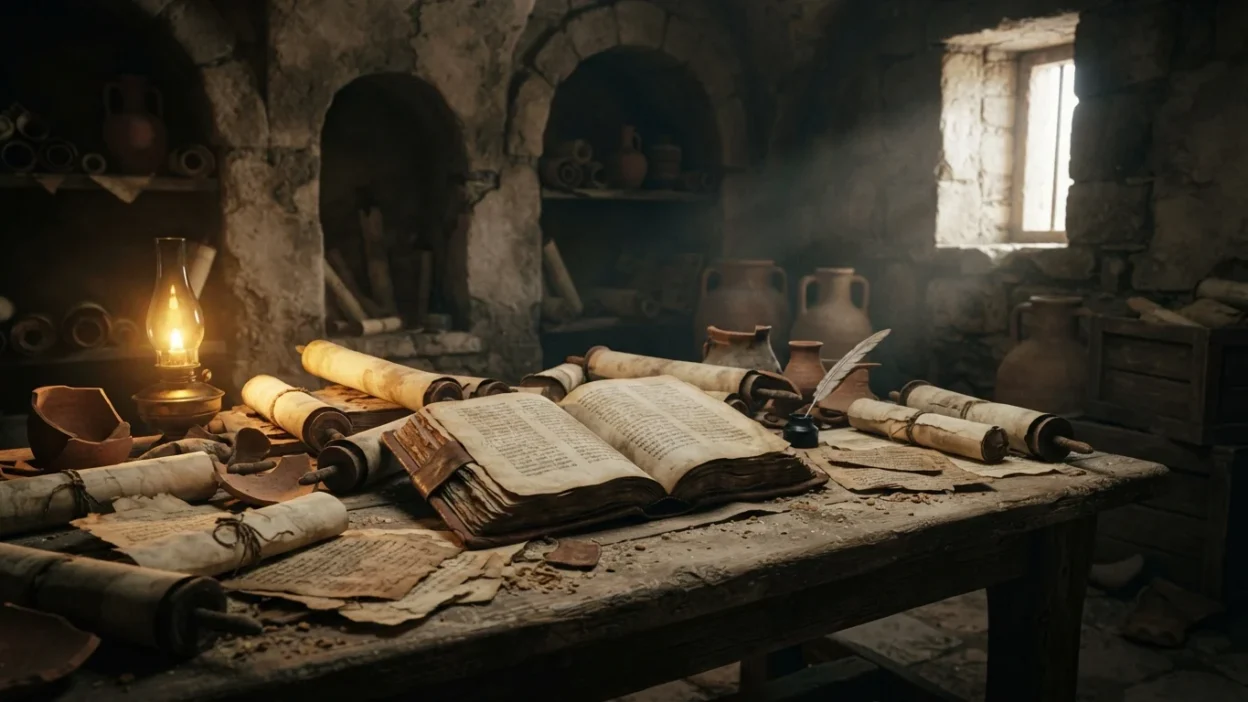
Some biblical passages refer to books that are no longer available in complete form.
Examples include references to:
- The Book of the Wars of the Lord
- The Book of Jashar
- The Book of the Acts of Solomon
These references demonstrate that other writings existed in the ancient world.
However, being mentioned in the Bible does not necessarily mean that those books were considered Scripture.
Some may have been historical records, poems, royal chronicles, or collections of songs.
Comparison Between Biblical and Non-Biblical Ancient Texts
| Feature | Canonical Biblical Books | Other Ancient Religious Texts |
|---|---|---|
| Canonical status | Accepted within a specific tradition | Often outside a particular canon |
| Use in worship | Widely used by accepting communities | More limited or varied |
| Authority | Considered Scripture by recognized traditions | Historical or religious value varies |
| Content | Diverse genres and teachings | Also includes diverse religious ideas |
| Preservation | Generally widely copied and preserved | Survival varies by manuscript history |
This comparison helps explain why not every ancient religious writing became part of the Bible.
The Biblical and Religious Connection
The so-called lost books have strong connections with biblical history and religious thought.
Some retell stories involving Adam, Noah, Abraham, Moses, or other familiar figures.
Others describe angels, visions, judgment, wisdom, or the coming kingdom of God.
These writings can help historians understand how ancient communities interpreted Scripture.
They may also reveal beliefs and debates that existed during biblical times.
However, historical connection is not the same as canonical authority.
A book may be connected to biblical characters without being accepted as Scripture.
This distinction is essential when studying the lost books of the bible meaning.
The Spiritual Meaning of Lost Books of the Bible
The spiritual meaning of this topic can be understood through themes of truth, wisdom, discernment, and seeking knowledge.
For many readers, ancient religious writings represent humanity’s long search to understand God and the meaning of life.
Symbolic Spiritual Interpretation
| Symbol | Possible Spiritual Meaning |
|---|---|
| Hidden manuscripts | The search for forgotten knowledge |
| Ancient scrolls | Wisdom from the past |
| Lost writings | The limits of human knowledge |
| Preserved Scripture | Faith and religious tradition |
| Archaeological discoveries | Rediscovery and learning |
| Different canons | Diversity within religious history |
Spiritually, the topic can encourage humility.
Not every unanswered historical question has a simple answer.
It also reminds readers to distinguish curiosity from reliable interpretation.
Ancient writings can be fascinating, but careful study is necessary before drawing major theological conclusions from them.
Why Do People Search for Lost Books of the Bible Meaning?
People search for this subject because it combines religion, history, mystery, and ancient manuscripts.
Some people wonder whether important truths were intentionally hidden.
Others have heard about books such as Enoch or Jubilees and want to know why they are not found in their Bible.
Interest in archaeology has also increased curiosity.
Discoveries such as ancient manuscripts have shown that the religious world of biblical times was much more diverse than many modern readers realize.
Movies, documentaries, social media, and online discussions have also made the phrase “lost books of the Bible” more popular.
Common Misconceptions About Lost Books of the Bible
Misconception 1: All Lost Books Were Secretly Removed
There is no simple historical evidence that all non-canonical books were secretly removed from the Bible.
Different communities recognized different collections over time.
Misconception 2: Every Ancient Religious Book Was Originally Scripture
Many ancient religious writings were never accepted as Scripture by the communities that preserved the biblical canon.
Misconception 3: Lost Books Contain a Completely Different Bible
Most ancient writings reflect themes already present in the religious world of their time, although some contain unique ideas and interpretations.
Misconception 4: Non-Canonical Means Historically Useless
Non-canonical texts can be extremely valuable for understanding ancient history, culture, language, and religious beliefs.
Misconception 5: Every Christian Bible Has Exactly the Same Books
Different Christian traditions recognize somewhat different biblical collections, especially regarding Old Testament writings.
Cultural and Modern Interest in Lost Biblical Books
Modern interest in ancient religious writings continues to grow.
Books such as Enoch and Jubilees are now widely available in translation.
Academic research examines ancient manuscripts and archaeological discoveries.
Documentaries and online videos have introduced these texts to larger audiences.
The lost books of the bible meaning is also popular because it raises questions about authority and tradition.
People want to know who decided which books belonged in the Bible.
These questions encourage readers to study the history of the biblical canon more carefully.
How Should Christians Read the Lost Books?
Christians should first understand the position of their own religious tradition.
For most Christian traditions, non-canonical ancient texts are studied as historical or religious literature rather than as Scripture.
They can provide useful background for understanding the ancient world.
However, readers should be careful about treating every ancient writing as equally authoritative.
Context matters.
The date, authorship, purpose, manuscript history, and religious setting of a text should all be considered.
Comparing ancient writings with recognized biblical texts can help readers understand both similarities and important differences.
Are Lost Books Important for Understanding the Bible?
Yes, they can be historically important.
Ancient Jewish and Christian writings provide a broader picture of the world in which biblical traditions developed.
They can help scholars understand religious language, beliefs, and debates.
However, the importance of a text does not automatically determine its canonical status.
A historically valuable book and a sacred canonical book are not necessarily the same thing.
Understanding this difference helps readers approach the subject responsibly.
The lost books of the bible meaning is ultimately about learning how ancient communities preserved, interpreted, and valued religious writings.
Final Thought
The lost books of the bible meaning is more complex than the popular idea of secret books hidden away from the world. Ancient Jewish and Christian communities produced many religious writings, and only certain collections became part of particular biblical canons. Some books were genuinely lost, some survived outside standard Bibles, and others remain part of the Scriptures of specific religious traditions.
These texts can offer valuable insight into the history and culture surrounding the Bible. At the same time, historical importance should not automatically be confused with canonical authority. By studying these writings carefully, readers can gain a deeper appreciation for the ancient religious world and the long process through which biblical collections developed.
FAQs
1. What are the lost books of the Bible?
They usually refer to ancient religious writings that are not included in a particular biblical canon or are no longer fully preserved.
2. Were books secretly removed from the Bible?
The history is more complex. Different religious communities gradually recognized different collections of authoritative writings.
3. Is the Book of Enoch a lost book of the Bible?
It is not included in most biblical canons but survives and is canonical in the Ethiopian Orthodox Tewahedo tradition.
4. Are books mentioned in the Bible sometimes lost?
Yes. Some writings mentioned in biblical passages, such as the Book of Jashar, are no longer available in their original ancient form.
5. Are non-canonical books useless?
No. Many are historically important and help scholars understand ancient religious beliefs and cultures.
6. Do all Christian Bibles contain the same books?
No. Protestant, Catholic, Orthodox, and Ethiopian Orthodox traditions have differences in their biblical collections.
7. Should Christians read lost books of the Bible?
They can be read for historical and religious study, while their authority should be understood according to the reader’s religious tradition.

William Noah is a spiritual writer at BibLoft, exploring hidden meanings, symbols, and divine insights. He shares thoughtful interpretations that inspire self-awareness, inner growth, and spiritual understanding.