
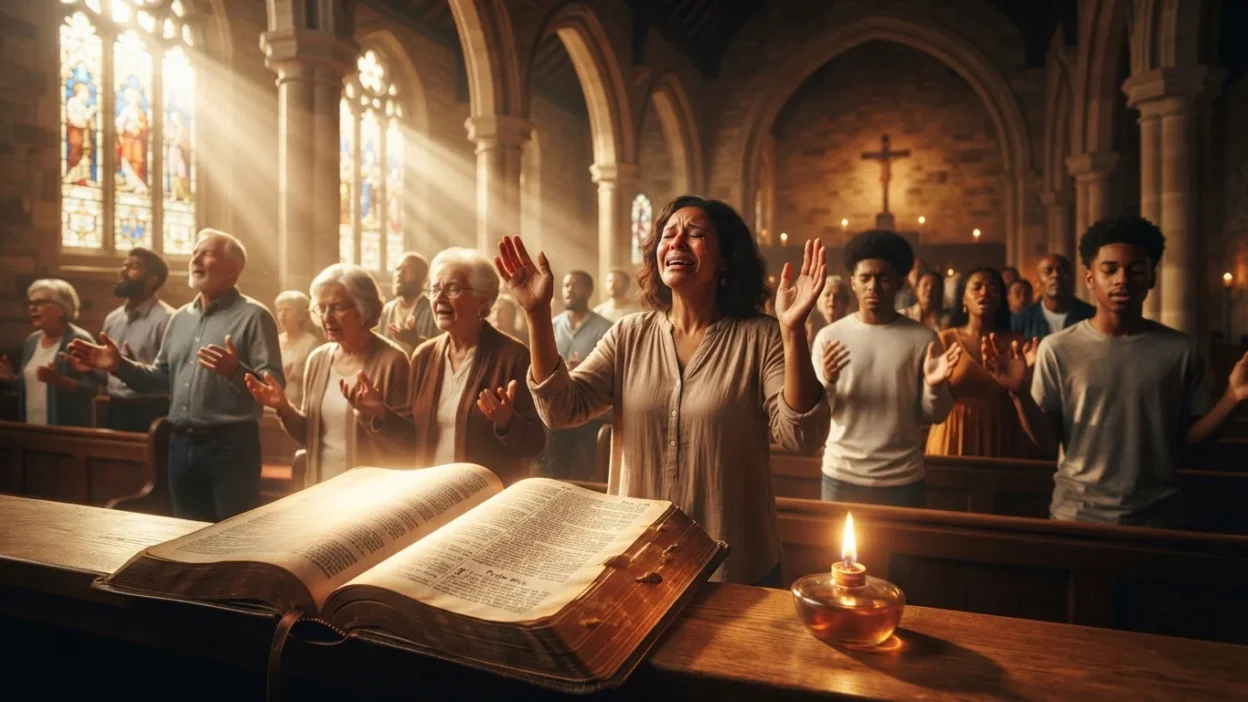
The revival meaning in the Bible is deeply connected with spiritual awakening, renewal, restoration, and a return to wholehearted devotion to God. Although the exact modern phrase “Christian revival” is not always used in Scripture, the Bible repeatedly describes moments when God’s people turn back to Him, experience renewed faith, and seek His presence with sincere hearts. Revival is therefore more than an emotional religious experience; it represents a spiritual awakening that can transform individuals, families, churches, and communities.
Understanding the revival meaning in the Bible can help believers recognize the importance of repentance, prayer, worship, and spiritual renewal. Throughout Scripture, God’s people sometimes became spiritually weak or distant, only to experience restoration when they returned to Him. These biblical patterns provide valuable lessons for Christians who desire a deeper relationship with God and long for spiritual transformation in their lives.
Quick Answer: What Is the Revival Meaning in the Bible?
The revival meaning in the Bible refers to spiritual renewal, awakening, and restoration that draws people back to God.
Biblical revival involves repentance, renewed faith, prayer, obedience, and a fresh awareness of God’s presence.
It is not simply an emotional event but a transformation that produces lasting spiritual change and a desire to follow God faithfully.
What Does Revival Mean?
The word revival generally means bringing something back to life, restoring strength, or renewing something that has become weak. In a spiritual context, revival describes a renewed interest in God and a powerful awakening of faith.
The Bible often communicates the idea of revival through words and concepts such as:
- Revive
- Restore
- Renew
- Awaken
- Return
- Repent
- Seek God
In Psalm 85:6, the psalmist asks God, “Will you not revive us again?” This verse captures the heart of biblical revival: God’s people recognize their spiritual need and ask Him to restore their joy, faith, and devotion.
| Aspect | Meaning |
|---|---|
| Revival | Spiritual awakening and renewal |
| Repentance | Turning away from sin and returning to God |
| Restoration | Being brought back to spiritual strength |
| Renewal | Receiving fresh spiritual strength |
| Awakening | Becoming spiritually alert and responsive |
Thus, revival is closely associated with a renewed relationship between God and His people.
Origin and History of the Word Revival
The English word revival comes from the idea of “reviving,” meaning to restore life or bring something back into active existence. The word is related to the Latin root vivere, meaning “to live.”
Over time, the term became widely used in Christian contexts to describe periods of extraordinary spiritual awakening. During such times, people may return to church, seek forgiveness, pray more deeply, and renew their commitment to Christian faith.
The concept, however, is much older than the modern English word. The Bible contains numerous accounts of spiritual renewal and restoration, even when the word “revival” itself is not used in the same way modern Christians use it.
| Term | Basic Meaning | Spiritual Idea |
|---|---|---|
| Revival | Bringing back to life | Spiritual awakening |
| Renewal | Making fresh again | Restored faith |
| Restoration | Returning to an earlier condition | Returning to God |
| Awakening | Becoming spiritually alert | Recognizing spiritual need |
| Reformation | Changing what is wrong | Correcting spiritual direction |
The history of Christian revival movements shows how the biblical idea of renewal continued to influence believers across different generations.
Is Revival Mentioned in the Bible?
The exact term “revival” depends on the Bible translation and context, but the concept is clearly present throughout Scripture.
One of the most recognizable examples appears in Psalm 85:6, where the writer asks God to revive His people. This prayer demonstrates that spiritual renewal ultimately depends on God.
Other passages describe similar experiences. In 2 Chronicles 7:14, God calls His people to humble themselves, pray, seek His face, and turn from their wicked ways. This passage is often connected with revival because it presents a pattern of repentance and restoration.
The story of King Josiah in 2 Kings 22–23 also provides an example of national spiritual renewal. When the Book of the Law was rediscovered, the people recognized their departure from God’s commands and began making significant reforms.
These biblical examples show that revival is closely connected with returning to God’s truth.
Biblical Examples of Spiritual Revival
The Bible contains several stories that illustrate principles associated with revival.
King Josiah’s Reforms
During Josiah’s reign, the rediscovery of God’s Law led to repentance and reforms. The people renewed their commitment to worship God according to His commands.
Ezra and Nehemiah
After the exile, God’s people returned to Jerusalem. The reading of Scripture, confession of sin, and rebuilding of the community demonstrated spiritual and physical restoration.
Pentecost
Acts 2 records the coming of the Holy Spirit and the powerful preaching of Peter. Thousands responded to the message about Jesus. This event represents one of the most significant spiritual awakenings in the New Testament.
Nineveh’s Repentance
When Jonah preached to Nineveh, the people responded with repentance. Their response demonstrates how hearing God’s message can lead to widespread spiritual change.
| Biblical Event | Revival Principle |
|---|---|
| Josiah’s reforms | Returning to God’s Word |
| Ezra’s ministry | Confession and understanding |
| Nehemiah’s renewal | Restoration and community |
| Pentecost | Spirit-empowered transformation |
| Nineveh’s repentance | Turning away from sin |
These accounts reveal that biblical revival is always connected with a response to God.
The Spiritual Meaning of Revival
The spiritual meaning of revival goes beyond simply increasing religious activity. True revival represents a renewed relationship with God.
When spiritual revival takes place, people become more aware of their need for God. They begin to recognize areas of sin, spiritual weakness, or compromise. This awareness often leads to repentance and a desire to live according to God’s will.
Revival can involve:
- A renewed hunger for God’s Word
- Deeper prayer
- Genuine repentance
- Increased love for God
- Greater concern for others
- Renewed commitment to holiness
- A stronger desire to share faith
The spiritual meaning of revival can therefore be summarized as a return to spiritual life and wholehearted devotion to God.
Symbolic Meaning of Revival in the Bible
Revival carries several powerful symbols that help explain its spiritual significance.
Fire
Fire can symbolize God’s presence, purification, and spiritual passion. Revival is sometimes described metaphorically as a fire that awakens hearts and renews devotion.
Breath
The image of breath is strongly associated with life and the Spirit of God. Ezekiel 37’s vision of dry bones provides a powerful picture of God bringing life to what appears spiritually dead.
Water
Water can symbolize cleansing and renewal. Revival often involves spiritual cleansing through repentance and a renewed commitment to God’s ways.
Awakening
The idea of awakening represents becoming spiritually alert after a period of weakness or indifference.
| Symbol | Spiritual Meaning |
|---|---|
| Fire | Passion and purification |
| Breath | Life and God’s Spirit |
| Water | Cleansing and renewal |
| Light | Truth and spiritual understanding |
| Awakening | Renewed spiritual awareness |
These symbols help believers understand revival as a process of spiritual transformation rather than merely a religious gathering.
Revival and Repentance
One of the clearest themes connected with biblical revival is repentance. Genuine spiritual renewal requires people to acknowledge their sins and turn back toward God.
Repentance is more than feeling guilty. It involves a change of direction. A person recognizes what is wrong, turns away from it, and seeks to live according to God’s will.
This pattern appears repeatedly throughout Scripture. God’s people wander away, prophets call them back, and God offers restoration when they sincerely return.
Therefore, revival without repentance would be incomplete. True revival produces a desire for changed lives.
Revival and Prayer
Prayer is another central theme associated with spiritual awakening. Throughout the Bible, God’s people pray during times of crisis, spiritual weakness, and national need.
The prayer in Psalm 85:6 is particularly important because it directly asks God for revival. The psalmist recognizes that God’s people need divine intervention to experience renewed spiritual life.
Prayer prepares the heart for revival by creating humility and dependence on God. It reminds believers that spiritual transformation cannot be manufactured simply through human effort.
For this reason, many Christian revival movements have been preceded by periods of persistent prayer and earnest seeking of God.
Revival vs. Reformation: What’s the Difference?
Revival and reformation are related but not identical concepts.
Revival generally emphasizes spiritual awakening and renewed devotion, while reformation focuses more on correcting practices, beliefs, or structures that have become unhealthy or unbiblical.
| Feature | Revival | Reformation |
|---|---|---|
| Main focus | Spiritual awakening | Correction and change |
| Emphasis | Renewed faith | Restoring biblical principles |
| Personal impact | Repentance and devotion | Changed beliefs and practices |
| Community impact | Increased spiritual engagement | Structural or institutional change |
| Goal | Renewed spiritual life | Faithful alignment with truth |
Sometimes revival leads to reformation. When people experience spiritual renewal, they may recognize areas that need to change in their personal lives or communities.
Revival vs. Religious Emotion
Not every emotional religious experience should be called revival. People may feel deeply moved during worship, preaching, or prayer, but genuine revival involves more than temporary emotions.
Biblical revival produces lasting fruit. It encourages repentance, obedience, love, humility, and a stronger commitment to God.
Emotions can be part of spiritual experiences, but they are not the primary measure of revival.
A helpful question is: What happens after the emotional moment ends?
If people become more committed to Scripture, more loving toward others, more willing to repent, and more devoted to God, the experience may reflect genuine spiritual renewal.
What Does Revival Mean Spiritually for Christians Today?
For Christians today, revival can begin with personal spiritual renewal. A person does not have to wait for a large public movement to seek a deeper relationship with God.
Personal revival may involve:
- Returning to regular prayer.
- Reading and studying Scripture.
- Confessing and turning away from sin.
- Renewing commitment to Christian obedience.
- Rebuilding a neglected relationship with God.
- Serving others with greater love.
- Seeking the guidance of the Holy Spirit.
In this sense, the revival meaning in the Bible can be applied personally. It invites believers to examine their spiritual lives and ask whether their faith has become weak, distracted, or routine.
Cultural and Modern Usage of Revival
Today, the word revival is commonly used in Christian churches to describe special gatherings focused on preaching, worship, prayer, and evangelism.
A revival meeting may last for several days or weeks and often seeks to encourage people to recommit themselves to their faith.
However, modern usage can sometimes create confusion. A scheduled church event is not automatically a biblical revival. The true measure of revival is not the size of the crowd or the intensity of the event but the spiritual fruit that follows.
Historically, major Christian revival movements have often been associated with increased prayer, repentance, evangelism, social change, and renewed interest in Scripture.
Why Do People Search for the Revival Meaning in the Bible?
People search for the revival meaning in the Bible because they want to understand spiritual awakening and how it relates to their faith.
Some are interested in revival because they feel spiritually tired or distant from God. Others want to understand historical Christian revival movements or learn how revival is described in Scripture.
Common reasons include:
- Seeking personal spiritual renewal
- Understanding biblical repentance
- Learning about Christian revival movements
- Finding Bible verses about revival
- Understanding the role of prayer
- Exploring how churches experience spiritual awakening
The topic remains relevant because believers in every generation can experience periods of spiritual weakness and renewal.
Common Misconceptions About Revival
One misconception is that revival is simply a large church meeting. While gatherings can be part of revival, biblical revival is much deeper.
Another misconception is that revival can be manufactured through a particular formula. Scripture emphasizes God’s work, human repentance, prayer, and obedience rather than a guaranteed method.
Some also assume that revival always produces dramatic outward signs. While spiritual awakening can be powerful and visible, its most important evidence is transformed lives.
| Misconception | Biblical Perspective |
|---|---|
| Revival is just an emotional event | It involves lasting spiritual transformation |
| Revival is only for churches | It can begin with individual renewal |
| Revival can be manufactured | Genuine renewal ultimately depends on God |
| Revival requires dramatic signs | Changed lives are more important than spectacle |
| Revival is only historical | Spiritual renewal remains relevant today |
Understanding these distinctions helps believers approach the subject with wisdom and biblical balance.
How Can Someone Pray for Revival?
A prayer for revival should begin with humility. Instead of focusing only on changing others, believers can first ask God to examine their own hearts.
A simple prayer for revival might include requests for:
- A deeper hunger for God
- Genuine repentance
- Greater love for Scripture
- Freedom from spiritual complacency
- Renewed passion for prayer
- Strength to obey God’s Word
- Spiritual awakening in the wider community
The central focus should be God’s glory rather than personal recognition or emotional excitement.
When Christians pray for revival, they are essentially asking God to awaken hearts, restore spiritual passion, and draw people closer to Himself.
Final Thought
The revival meaning in the Bible points to a powerful message of spiritual renewal, awakening, repentance, and restoration. Scripture repeatedly shows God’s people returning to Him after periods of spiritual weakness or disobedience. True revival is not simply a church event or emotional experience; it produces transformed lives, deeper prayer, renewed love for God’s Word, and a sincere desire to follow Him.
If revival occurs in an individual heart, a church, or a wider community, its purpose is ultimately to bring people closer to God. For Christians today, the message of revival remains an invitation to examine their faith, turn away from spiritual complacency, and seek God with renewed passion and wholehearted devotion.
FAQs
1. What does revival mean in the Bible?
Revival means spiritual renewal, awakening, and restoration. It describes a renewed turning toward God through repentance, prayer, faith, and obedience.
2. Is the word revival found in the Bible?
The exact wording depends on the Bible translation, but the concept of revival is clearly present. Psalm 85:6 is one of the most commonly referenced passages about spiritual revival.
3. What is the spiritual meaning of revival?
Spiritually, revival represents a renewed relationship with God. It involves awakening from spiritual weakness, returning to God’s truth, and developing a deeper desire to follow Him.
4. What are signs of biblical revival?
Signs may include genuine repentance, renewed prayer, hunger for Scripture, increased love for God and others, changed behavior, and a deeper commitment to faithful living.
5. Can revival begin with one person?
Yes. Personal spiritual renewal can begin with one individual’s repentance, prayer, and renewed commitment to God. Individual renewal can also influence families and communities.
6. What Bible verse talks about revival?
Psalm 85:6 asks, “Will you not revive us again?” This verse is one of the clearest biblical prayers expressing the desire for spiritual renewal.
7. How can Christians pray for revival?
Christians can pray with humility, asking God to renew their hearts, expose sin, strengthen faith, increase spiritual hunger, and awaken others to seek Him.