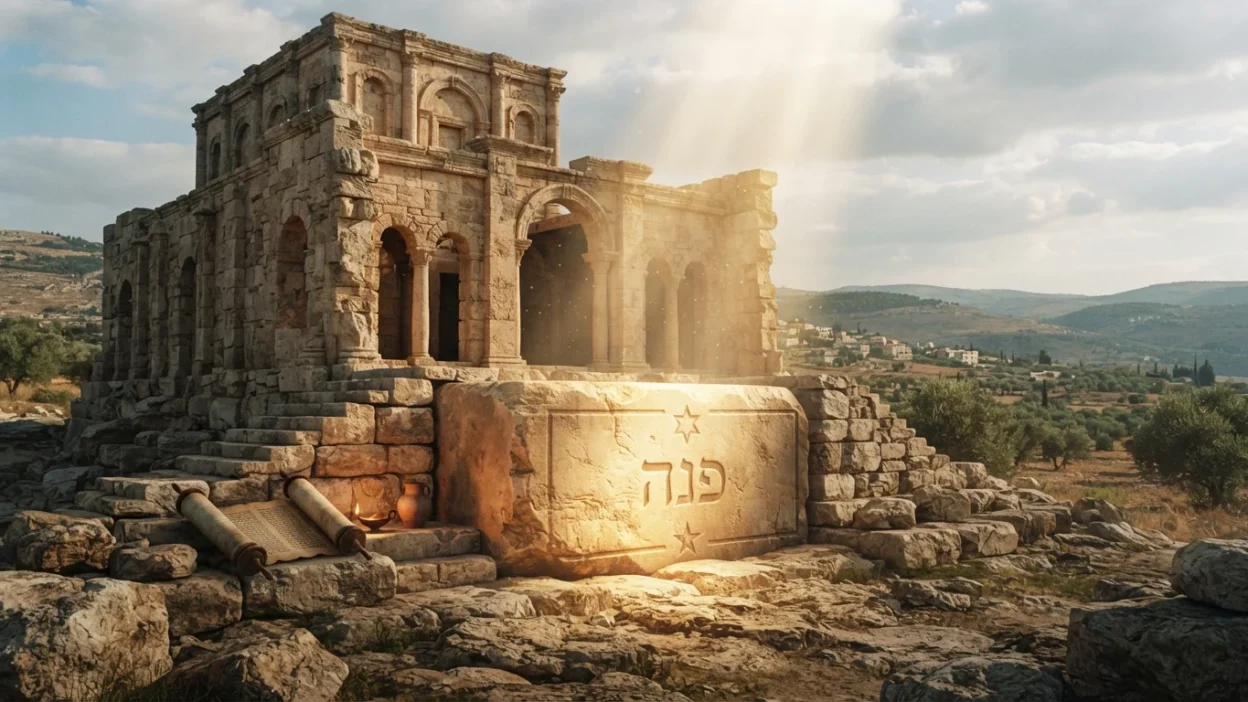
The cornerstone meaning in the Bible is deeply connected to Jesus Christ, spiritual foundations, faith, and God’s plan for salvation. In ancient construction, a cornerstone was an important stone placed at the foundation or corner of a building. It helped establish the structure’s alignment and stability. Because of this practical purpose, biblical writers used the cornerstone as a powerful spiritual image to describe the person and role of the Messiah.
Understanding the cornerstone meaning in the Bible reveals why this simple building image carries such profound theological significance. The Old Testament introduces the idea of a chosen cornerstone, while the New Testament identifies Jesus as the fulfillment of this prophecy. Spiritually, the cornerstone represents a foundation that determines the direction and strength of an entire life. For Christians, it is a reminder that faith should be built upon Christ rather than temporary ideas, human achievement, or worldly success.
Quick Answer: What Does Cornerstone Mean in the Bible?
In the Bible, a cornerstone is a foundational stone that provides stability and alignment to a building.
Spiritually, it represents Jesus Christ, who is described as the chief cornerstone of God’s spiritual house.
The image teaches that Christ is the foundation of Christian faith, salvation, identity, and spiritual life.
What Is the Meaning of Cornerstone in the Bible?
The cornerstone meaning in the Bible comes from the practical importance of a cornerstone in ancient construction.
A cornerstone was a significant stone placed at the corner of a building. It could help determine the alignment and stability of the structure. If the foundation was incorrectly positioned, the rest of the building could be affected.
The Bible uses this architectural image to communicate an important spiritual truth.
| Aspect | Meaning |
|---|---|
| Literal cornerstone | Important foundational building stone |
| Biblical symbolism | Foundation and stability |
| Spiritual meaning | Jesus Christ |
| Main lesson | Build life on Christ |
| Symbolic qualities | Strength, alignment, stability, identity |
In Christian theology, Jesus is described as the cornerstone because He is central to God’s redemptive plan and the foundation of the believer’s faith.
Origin and History of the Cornerstone Image
The cornerstone image comes from the ancient world of construction.
Buildings were constructed using carefully selected stones. A foundational stone at an important corner could help establish the position and alignment of the structure.
The biblical writers understood this familiar image and used it to explain spiritual realities.
The Old Testament contains passages that refer to a chosen or rejected stone. One of the most important passages is Psalm 118:22, which speaks of the stone rejected by builders becoming the cornerstone.
This verse later becomes especially important in the New Testament, where it is applied to Jesus.
| Biblical Stage | Cornerstone Significance |
|---|---|
| Ancient construction | Foundation and alignment |
| Psalm 118 | Rejected stone becomes cornerstone |
| Isaiah 28 | A chosen foundation stone |
| Jesus’ teaching | Applied to God’s kingdom |
| Early Christianity | Christ identified as cornerstone |
| Christian theology | Foundation of faith |
The image therefore develops from a physical construction concept into one of the Bible’s most powerful descriptions of Christ.
Cornerstone in the Old Testament
The Old Testament provides the foundation for understanding the biblical symbolism of the cornerstone.
Psalm 118:22 says that the stone rejected by the builders becomes the cornerstone. This statement became an important messianic passage in Jewish and Christian interpretation.
Isaiah 28:16 also speaks of God laying a tested and precious cornerstone as a secure foundation.
These passages communicate a common theme: something that people may reject or overlook can become central to God’s purposes.
This idea becomes especially significant when applied to Jesus.
Although many people rejected Him, Christians believe that God made Him central to salvation and redemption.
Jesus as the Chief Cornerstone
The cornerstone meaning in the Bible reaches its fullest expression in the New Testament, where Jesus is identified as the cornerstone.
The apostles used Old Testament passages to explain the significance of Christ’s death and resurrection.
Jesus was rejected by many religious and political leaders, yet Christianity teaches that He became the central foundation of God’s saving work.
This creates a powerful contrast:
Rejected by people, chosen by God.
The cornerstone image therefore communicates both rejection and exaltation.
Jesus’ rejection did not mean that God’s plan had failed. Instead, Christians understand His rejection, crucifixion, and resurrection as central to God’s plan of salvation.
The Spiritual Meaning of Cornerstone
The spiritual meaning of cornerstone is centered on foundation, stability, alignment, and identity.
A building depends on its foundation. In the same way, a person’s spiritual life needs a solid foundation.
For Christians, that foundation is Jesus Christ.
Spiritually, the cornerstone can symbolize:
- Faith – Trusting Christ as the foundation of life.
- Stability – Remaining firm during difficulties.
- Alignment – Shaping life according to God’s truth.
- Identity – Understanding who we are in Christ.
- Hope – Trusting God’s promises.
- Salvation – Recognizing Christ as central to God’s redemptive plan.
The spiritual lesson is clear: what we build our lives upon matters.
If a foundation is weak, the structure becomes vulnerable. Similarly, a life built entirely on wealth, popularity, success, or human approval may become unstable when circumstances change.
Symbolic Interpretation of the Cornerstone
The cornerstone meaning in the Bible can be explored through several layers of symbolism.
| Symbol | Spiritual Interpretation |
|---|---|
| Foundation | Christ supports spiritual life |
| Alignment | Believers are called to follow God’s truth |
| Stability | Faith provides strength during trials |
| Rejection | God’s purposes may differ from human expectations |
| Precious stone | Christ’s unique value |
| Corner | A central point holding the structure together |
The image is particularly powerful because it suggests that Christ is not merely one part of Christianity.
He is the foundation around which everything else is organized.
Cornerstone and the Rejection of Jesus
One of the most meaningful aspects of the cornerstone metaphor is the theme of rejection.
In the biblical image, builders reject a particular stone, yet that same stone becomes the cornerstone.
The New Testament applies this imagery to Jesus.
Jesus was rejected by many of the people who encountered Him. He was opposed by religious leaders and ultimately crucified.
Yet Christians believe that God raised Him from the dead and made Him central to salvation.
This teaches an important spiritual lesson: human rejection does not determine God’s purpose.
A person may be overlooked, rejected, or misunderstood by others, but their value is not ultimately determined by human opinion.
Cornerstone and Christian Faith
Christian faith is built around the person of Jesus Christ.
The cornerstone metaphor communicates that Christianity is not simply a collection of moral teachings. At its center is a person whom Christians believe to be the Son of God and Savior.
Just as a building’s structure depends upon its foundational stone, Christian faith depends upon Christ.
This means that believers are encouraged to build their:
- Beliefs on biblical truth
- Character on Christlike values
- Hope on God’s promises
- Identity on their relationship with God
- Future on eternal hope
The metaphor encourages Christians to continually evaluate what they are building their lives upon.
Cornerstone and the Church
The New Testament expands the cornerstone image to describe the relationship between Christ and the Christian community.
Jesus is the cornerstone, while believers are described as living stones being built into a spiritual house.
This creates a beautiful picture of Christian community.
A building is made up of many individual stones, but the stones have meaning as part of a larger structure.
Similarly, Christians have individual identities and gifts, yet they are called to belong to a spiritual community centered on Christ.
The cornerstone provides unity and direction.
Without the cornerstone, the structure loses its proper alignment. Likewise, Christian community should remain centered on Jesus rather than personality, popularity, or human power.
Cornerstone as a Symbol of Stability
The cornerstone meaning in the Bible also teaches the importance of spiritual stability.
Life is filled with uncertainty. People experience financial difficulties, broken relationships, health challenges, disappointments, and unexpected changes.
A strong spiritual foundation does not mean that believers will never face problems. Instead, it means they have something firm to rely upon when problems come.
Christ as the cornerstone represents a foundation that remains trustworthy when circumstances change.
This encourages believers to develop faith that is not dependent entirely on temporary conditions.
Cornerstone and Spiritual Alignment
A cornerstone was important because it helped establish the alignment of a building.
Spiritually, this creates another powerful lesson.
Christ provides the standard by which believers are called to shape their lives.
This means asking questions such as:
- Are my decisions consistent with my faith?
- Do my actions reflect Christ’s teachings?
- Am I treating others with love and dignity?
- Is my identity based on God or human approval?
- Are my priorities aligned with God’s purposes?
The cornerstone metaphor therefore challenges believers to examine whether their lives are properly aligned with their spiritual foundation.
Cornerstone vs. Foundation: What’s the Difference?
The words cornerstone and foundation are closely related but are not exactly identical.
A foundation refers broadly to the base upon which a structure is built. A cornerstone is a specific and important stone associated with the building’s alignment and structure.
| Feature | Cornerstone | Foundation |
|---|---|---|
| Meaning | Key foundational stone | Supporting base |
| Biblical symbolism | Christ | Spiritual foundation |
| Main idea | Alignment and centrality | Stability and support |
| Christian lesson | Christ is central | Faith must be firmly established |
In biblical symbolism, the two concepts complement each other. Christ is both central to the structure and foundational to Christian faith.
Common Misconceptions About the Biblical Cornerstone
One misconception is that the cornerstone is simply a decorative stone placed on a building. In biblical symbolism, it represents something much more significant.
Another misconception is that the cornerstone refers only to a general spiritual foundation. In the New Testament, the imagery specifically points to Jesus Christ.
A third misconception is that being built on the cornerstone means believers will never experience difficulties. The Bible does not promise a trouble-free life. Instead, the metaphor emphasizes having a secure foundation during difficult times.
| Misconception | Biblical Perspective |
|---|---|
| Cornerstone is merely decorative | It symbolizes central importance |
| It refers to any spiritual teacher | The New Testament applies it to Christ |
| It guarantees an easy life | It represents stability amid trials |
| It is only an Old Testament image | It becomes central to New Testament theology |
| It has no modern relevance | It remains a powerful image of faith |
Cultural and Modern Usage of Cornerstone
Today, the word cornerstone is commonly used both literally and figuratively.
In construction, a cornerstone may be placed in a building as part of a ceremonial tradition.
In everyday language, cornerstone often means something essential or fundamental.
For example, someone might describe education as a cornerstone of society or trust as a cornerstone of friendship.
This modern usage reflects the biblical metaphor’s broader influence. When people call something a cornerstone, they usually mean that it is essential to the structure or success of something larger.
Why Do People Search for the Cornerstone Meaning in the Bible?
People search for the cornerstone meaning in the Bible because they encounter the phrase while reading Scripture or studying Christian teachings.
Common reasons include:
- Understanding references to Jesus as the cornerstone.
- Studying Psalm 118:22.
- Exploring Isaiah’s prophecy about a foundation stone.
- Understanding the meaning of Christ as the chief cornerstone.
- Learning about Christian spiritual foundations.
- Exploring the symbolism of rejected and chosen stones.
The concept is especially important for anyone studying the relationship between Old Testament prophecy and New Testament fulfillment.
What Can Christians Learn From the Cornerstone?
The cornerstone meaning in the Bible provides several practical lessons for Christian living.
First, it teaches believers to build their lives on Christ.
Second, it encourages spiritual stability. Faith should remain firm even when circumstances change.
Third, it reminds Christians that rejection does not always mean failure. Jesus Himself was rejected yet became central to God’s redemptive plan.
Finally, the cornerstone image teaches alignment. Believers are called to shape their lives according to Christ’s example and teachings.
The central question is not simply, “What am I building?” but also, “What am I building upon?”
Final Thought
The cornerstone meaning in the Bible is one of Scripture’s most powerful images of Jesus Christ and His role in the life of every believer. A cornerstone provides stability, direction, and alignment to a structure, and the Bible uses this picture to explain why Christ is central to Christian faith. Though rejected by many, Jesus became the foundation of God’s redemptive plan.
For believers, this metaphor offers a lasting reminder to build life on something stronger than temporary success, human approval, or worldly possessions. When Christ is the cornerstone, faith can remain steady through changing circumstances. The image also challenges Christians to examine their spiritual foundation and ensure that their beliefs, decisions, and actions remain aligned with God’s truth.
FAQs
1. What does cornerstone mean in the Bible?
A cornerstone is a foundational stone used as a symbol of stability, alignment, and central importance. In the New Testament, it represents Jesus Christ.
2. Why is Jesus called the cornerstone?
Jesus is called the cornerstone because Christians believe He is the central foundation of God’s saving plan and the foundation of Christian faith.
3. What does the cornerstone symbolize spiritually?
Spiritually, the cornerstone symbolizes Christ as the source of stability, faith, identity, alignment, hope, and salvation.
4. What does “the stone the builders rejected” mean?
This phrase refers to the biblical image of a stone rejected by builders that later becomes the cornerstone. The New Testament applies this imagery to Jesus, who was rejected but became central to God’s plan.
5. Where does the Bible mention the cornerstone?
Important references include Psalm 118:22, Isaiah 28:16, and several New Testament passages that apply the cornerstone imagery to Jesus.
6. What does it mean to build your life on Christ?
Building your life on Christ means trusting Him, following His teachings, developing your character according to biblical values, and making Him the foundation of your faith and decisions.
7. Is the cornerstone the same as the foundation?
They are closely related but not identical. A foundation is the supporting base of a structure, while a cornerstone is a key stone that helps establish its alignment and stability. Biblically, both ideas can point to Christ’s central role.