
The surrender meaning in the Bible is closely connected to trust, obedience, humility, and complete dependence on God. In everyday language, surrender can sound like giving up or admitting defeat. However, the Bible presents surrender in a much deeper way. Biblical surrender means willingly yielding our desires, plans, fears, and control to God while trusting His wisdom and purpose. It is not weakness but an expression of faith that recognizes God’s authority and goodness.
Understanding the surrender meaning in the Bible can transform the way believers approach prayer, difficult circumstances, personal ambitions, and spiritual growth. Surrender invites Christians to release the need to control every outcome and instead follow God’s direction. From Jesus’ prayer in Gethsemane to Paul’s teaching about presenting our bodies to God, Scripture repeatedly shows that surrender is an essential part of a faithful relationship with Him.
Quick Answer: What Does Surrender Mean in the Bible?
In the Bible, surrender means yielding yourself, your will, and your plans to God and trusting Him to guide your life.
It involves humility, obedience, faith, and letting go of the desire to control everything.
Biblical surrender is not defeat; it is an active decision to trust God’s wisdom and follow His will.
What Is the Meaning of Surrender in the Bible?
The surrender meaning in the Bible involves willingly giving God control over every area of life.
In a spiritual sense, surrender means recognizing that God knows what is best and choosing to trust Him even when His plans are different from our own.
Biblical surrender may involve giving God:
- Personal desires
- Future plans
- Fears and worries
- Relationships
- Ambitions
- Habits and sins
- Need for control
- Expectations about the future
| Aspect of Surrender | Biblical Meaning |
|---|---|
| Will | Yielding personal desires to God’s purposes |
| Control | Trusting God with outcomes |
| Obedience | Following God’s direction |
| Faith | Believing God is trustworthy |
| Humility | Recognizing dependence on God |
| Sacrifice | Giving up selfish priorities |
Surrender does not mean becoming passive. Instead, it means choosing to act according to God’s will rather than being controlled by selfish desires or fear.
Origin and Meaning of the Word Surrender
The English word “surrender” developed from older French linguistic roots associated with the idea of yielding or giving oneself over.
In ordinary language, surrender often refers to giving up resistance, especially in a conflict. A defeated army may surrender to an opposing force.
The biblical concept is different in an important way.
When Christians surrender to God, they are not yielding to an enemy. They are willingly placing themselves in the hands of a loving and sovereign God.
| Meaning | Everyday Use | Biblical Application |
|---|---|---|
| Surrender | Giving up resistance | Yielding to God’s will |
| Control | Managing outcomes | Trusting God |
| Submission | Accepting authority | Obeying God’s direction |
| Sacrifice | Giving something up | Offering oneself to God |
| Yielding | Stopping resistance | Resting in God’s wisdom |
This distinction helps explain why biblical surrender is associated with freedom, peace, and spiritual growth rather than defeat.
Biblical and Religious Connection of Surrender
The Bible contains many examples of people surrendering their own plans to God’s purposes.
Abraham demonstrated surrender when he obeyed God’s call to leave his homeland and trust an unknown future.
Moses surrendered his reluctance and accepted God’s calling to lead Israel.
Mary demonstrated remarkable surrender when she accepted God’s purpose for her life, even though it brought uncertainty and difficulty.
The Apostle Paul also experienced a dramatic transformation when he stopped resisting God’s purposes and became a devoted follower of Christ.
These examples show that surrender is not limited to one moment. It can happen repeatedly throughout a person’s spiritual journey.
Jesus as the Greatest Example of Surrender
One of the clearest examples of surrender in Scripture is found in the life of Jesus.
In the Garden of Gethsemane, Jesus prayed before His crucifixion. He expressed the depth of His anguish but ultimately submitted Himself to the Father’s will.
His prayer demonstrates a profound truth about surrender: surrender does not mean that we never experience fear, sadness, or uncertainty.
Jesus experienced deep emotional distress, yet He remained obedient to God’s purpose.
This teaches believers that surrender can coexist with honest emotions.
A person can tell God about their fears and still choose to trust Him.
Jesus’ example shows that true surrender is not the absence of struggle. It is choosing faith and obedience in the middle of struggle.
The Spiritual Meaning of Surrender
The spiritual meaning of surrender is complete trust in God’s authority, wisdom, and goodness.
When a believer surrenders, they acknowledge that God is greater than their understanding.
Spiritually, surrender can symbolize:
- Trust – Believing that God knows what is best.
- Faith – Moving forward without knowing every detail.
- Humility – Accepting that we do not control everything.
- Obedience – Following God’s instructions.
- Peace – Releasing unnecessary anxiety about outcomes.
- Transformation – Allowing God to change our hearts.
- Freedom – Letting go of the burden of controlling everything.
The surrender meaning in the Bible therefore points toward a relationship of trust rather than a single religious action.
Symbolic Interpretation of Surrender
Biblical surrender can be understood through several powerful spiritual symbols.
| Symbol | Spiritual Interpretation |
|---|---|
| Open hands | Releasing control |
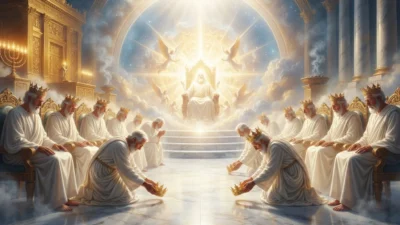
| Kneeling | Humility before God |
| Empty vessel | Readiness to be filled by God |
| Cross | Sacrifice and obedience |
| Open door | Trusting God’s direction |
| Rest | Confidence in God’s care |
The image of open hands is particularly meaningful.
When people tightly hold onto their plans, they may struggle to receive something different. Surrender involves opening the hands and saying, in effect, “God, I trust You with this.”
This does not mean that every desire will disappear immediately. It means the believer chooses to place the desire under God’s authority.
Surrender and Trusting God’s Will
One of the central ideas behind surrender is trusting God’s will.
Human beings naturally want certainty. We often want to know what will happen next and how every situation will turn out.
Faith, however, requires trust even when the future is unclear.
Surrender means saying:
“I may not understand the path, but I trust the One who leads me.”
This kind of trust does not remove responsibility. Christians are still called to pray, think wisely, make decisions, and take action.
The difference is that surrender changes the heart behind those actions.
Instead of demanding that everything happen according to personal plans, the believer becomes willing to accept God’s direction.
Surrender and Obedience
Surrender and obedience are closely connected.
A person may say that they trust God, but genuine surrender eventually influences their choices.
Biblical surrender asks believers to obey God even when obedience is inconvenient or difficult.
This can include forgiving someone, turning away from sinful behavior, serving others, practicing generosity, or choosing truth over personal advantage.
| Surrender | Obedience |
|---|---|
| Internal decision | External response |
| Trusting God | Following God’s direction |
| Yielding the will | Acting on faith |
| Letting go of control | Accepting God’s commands |
Surrender begins in the heart, but obedience demonstrates that surrender in everyday life.
Surrender and Letting Go of Control
Many people struggle with surrender because they want to control outcomes.
We may try to control relationships, careers, finances, health, reputation, or future plans.
Some control is simply impossible.
The Bible’s message of surrender invites believers to recognize the limits of human control.
This does not mean ignoring responsibilities. It means distinguishing between what we can control and what we cannot.
We can control our choices, attitudes, and responses.
We cannot control every person, circumstance, or future event.
Surrender involves faithfully handling what God has placed in our hands while trusting Him with what remains beyond our control.
Surrender Does Not Mean Giving Up
A common misconception is that surrender means quitting.
Biblical surrender is not the same as hopelessness.
Giving up says, “Nothing matters.”
Surrender says, “I trust God more than I trust my own ability to control the outcome.”
These are completely different attitudes.
A surrendered Christian can still work hard, pursue goals, make plans, and fight for justice.
The difference is that personal ambitions are placed under God’s authority.
Surrender does not destroy purpose. It redirects purpose.
Surrender and Spiritual Transformation
The surrender meaning in the Bible is also closely connected with transformation.
When people surrender to God, they become willing to allow Him to change their thoughts, attitudes, priorities, and behavior.
Christian spiritual growth involves more than simply believing certain facts. It involves becoming increasingly like Christ.
This transformation often requires letting go of attitudes such as:
- Pride
- Bitterness
- Selfishness
- Fear
- Unforgiveness
- Envy
- Excessive control
Surrender creates space for spiritual growth because it moves the believer from “my way at all costs” toward “God’s will above my own.”
Surrender in Prayer
Prayer is one of the most practical places to practice surrender.
A prayer of surrender does not simply ask God to make everything happen according to personal wishes.
Instead, it expresses desires honestly while remaining open to God’s answer.
A surrendered prayer might communicate:
“God, this is what I desire, but I trust Your wisdom more than my own. Lead me according to Your will.”
This approach does not mean that believers should stop making requests.
The Bible encourages people to bring their needs to God.
Surrender means that requests are combined with trust.
The believer asks boldly but remains willing to accept God’s direction.
Surrender During Difficult Times
Surrender becomes especially challenging during seasons of pain and uncertainty.
When circumstances are difficult, people often want immediate answers.
They may ask:
- Why is this happening?
- When will it end?
- What should I do?
- Why isn’t God changing the situation?
The Bible does not always provide immediate explanations.
However, surrender offers another response: trusting God’s presence even when His purposes are not fully understood.
This kind of surrender does not deny pain.
Instead, it allows believers to bring their pain honestly to God while continuing to trust Him.
Cultural and Modern Usage of Surrender
In modern culture, surrender often has negative associations.
People may think of surrender as weakness, failure, or defeat.
In competitive environments, the word can suggest losing.
However, Christian spirituality often presents surrender differently.
Surrender can be viewed as strength because it requires humility and trust.
It takes courage to admit that we do not have complete control.
It also takes faith to release something valuable into God’s hands.
This is why the biblical understanding of surrender can challenge modern ideas about success and independence.
Why Do People Search for Surrender Meaning in the Bible?
People search for the surrender meaning in the Bible for many personal and spiritual reasons.
They may be facing a difficult decision, struggling with anxiety, or trying to understand what it means to trust God.
Common reasons include:
- Learning how to trust God.
- Understanding God’s will.
- Dealing with uncertainty.
- Letting go of fear.
- Growing spiritually.
- Understanding Christian obedience.
- Finding peace during difficult circumstances.
For many people, the concept of surrender becomes especially meaningful when life does not unfold according to their expectations.
Common Misconceptions About Biblical Surrender
Several misunderstandings can make surrender difficult to understand.
One misconception is that surrender means doing nothing. In reality, surrender can involve active obedience and faithful action.
Another misconception is that surrender means God will always give us exactly what we want. The Bible does not promise that.
A third misconception is that surrender eliminates all emotions. Even Jesus experienced deep anguish before surrendering to the Father’s will.
| Misconception | Biblical Perspective |
|---|---|
| Surrender means giving up | It means trusting God |
| Surrender means doing nothing | It involves faithful obedience |
| Surrender guarantees desired results | It means accepting God’s wisdom |
| Surrender removes all fear | It means trusting God despite fear |
| Surrender is weakness | It can demonstrate spiritual strength |
Understanding these differences makes the biblical concept much clearer.
Surrender vs. Submission vs. Sacrifice
These three ideas are related but have different emphases.
| Concept | Main Meaning | Spiritual Focus |
|---|---|---|
| Surrender | Yielding control | Trust |
| Submission | Accepting authority | Obedience |
| Sacrifice | Giving something valuable | Offering |
| Surrender to God | Trusting His will | Faith and dependence |
Together, these concepts describe a life that is centered on God rather than self.
Surrender is the willingness to yield.
Submission is the choice to obey.
Sacrifice is the willingness to give.
All three can be important parts of Christian discipleship.
How to Practice Surrender in Daily Life
Surrender is not only a theological concept. It can become a daily practice.
A believer can practice surrender by:
- Starting the day with prayer.
- Asking God for wisdom before making decisions.
- Releasing worries through prayer.
- Accepting that some outcomes cannot be controlled.
- Obeying Scripture even when it is difficult.
- Forgiving others.
- Letting go of unhealthy attachments.
- Trusting God during uncertainty.
The goal is not to surrender once and never struggle again.
Instead, surrender is often a repeated decision to trust God.
Each day brings new circumstances, and each circumstance creates another opportunity to practice faith.
What Does Surrender Mean for Christians Today?
The surrender meaning in the Bible remains deeply relevant for modern believers.
People today face many pressures: career expectations, financial uncertainty, relationship struggles, social comparison, and fear about the future.
The temptation to control everything can become overwhelming.
Biblical surrender offers a different approach.
It teaches believers to work faithfully without believing they must control every outcome.
It encourages people to make wise decisions while trusting God with what lies beyond their understanding.
Ultimately, surrender means allowing God to be God.
It means recognizing that faith is not about having every answer. It is about trusting the One who does.
Final Thought
The surrender meaning in the Bible is ultimately about trusting God enough to place our lives, plans, fears, and desires in His hands. Biblical surrender is not defeat, weakness, or hopelessness. It is an active expression of faith that says God’s wisdom is greater than our own and His purposes are worth following. Jesus demonstrated the deepest example of surrender when He submitted Himself to the Father’s will in the face of suffering.
For believers today, surrender can bring freedom from the exhausting need to control every outcome. It encourages humility, obedience, peace, and spiritual transformation. When we surrender to God, we are not giving up on life; we are choosing to live with deeper trust in the One who holds our future.
FAQs
1. What does surrender mean in the Bible?
Surrender means willingly yielding your will, plans, desires, and control to God while trusting His wisdom and direction.
2. Is surrender the same as giving up?
No. Biblical surrender is not hopelessness or quitting. It means trusting God and remaining willing to obey Him, even when circumstances are difficult.
3. What is the spiritual meaning of surrender?
Spiritually, surrender represents trust, humility, obedience, faith, dependence on God, and willingness to follow His purposes.
4. How did Jesus demonstrate surrender?
Jesus demonstrated surrender in the Garden of Gethsemane by honestly expressing His anguish while ultimately submitting Himself to the Father’s will.
5. How can I surrender my life to God?
You can begin through prayer, trusting God with your concerns, obeying Scripture, releasing the need to control outcomes, and asking Him to guide your decisions.
6. Does surrender mean I should stop making plans?
No. Christians can make plans and pursue goals while remaining open to God’s direction. Surrender means placing those plans under God’s authority.
7. Why is surrender important in Christianity?
Surrender is important because it helps believers grow in trust, humility, obedience, and dependence on God rather than relying entirely on their own understanding.

Levi Ezra is a spiritual writer and author at BibLoft.com, exploring symbolism, dreams, and hidden meanings in life, offering insightful reflections to guide spiritual understanding and inner awareness.