
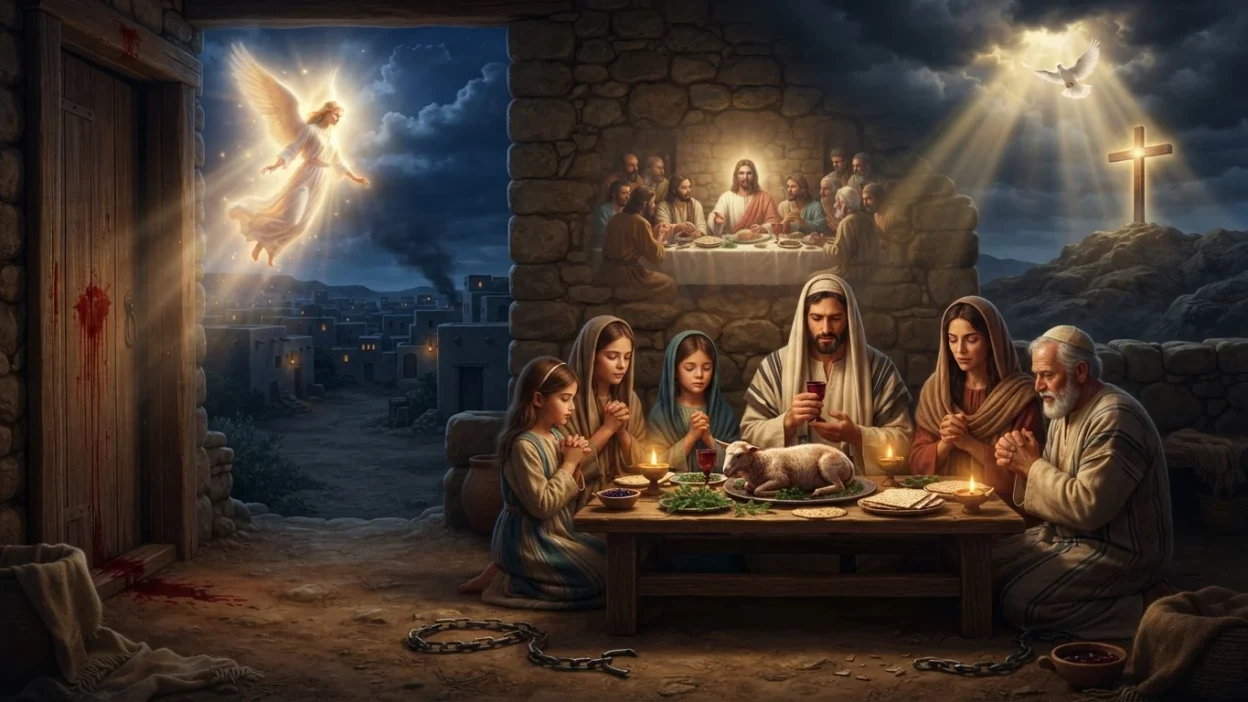
The Passover meaning in the Bible is one of the most important themes in both the Old and New Testaments. Passover commemorates God’s miraculous deliverance of the Israelites from slavery in Egypt and demonstrates His power, mercy, and faithfulness. Understanding the Passover meaning in the Bible helps believers appreciate God’s plan of redemption and the connection between the Old Testament Passover and Jesus Christ, the Lamb of God.
Many Christians and Bible readers search for the Passover meaning in the Bible to understand its historical background, spiritual symbolism, and relevance today. Although Passover began as a Jewish feast, its message extends to all believers by pointing to salvation through Christ. This article explores its meaning, origin, biblical importance, spiritual lessons, and lasting significance.
Quick Answer
The Passover meaning in the Bible refers to the Jewish festival celebrating God’s deliverance of Israel from Egyptian slavery. It remembers how God “passed over” the homes marked with the blood of a lamb and spared the firstborn. Spiritually, Passover points to Jesus Christ, whose sacrifice brings forgiveness and eternal salvation.
What Does Passover Mean in the Bible?
The word Passover comes from the Hebrew word Pesach, meaning “to pass over” or “to spare.”
According to Exodus 12, God instructed the Israelites to sacrifice a spotless lamb and place its blood on their doorposts. When the final plague struck Egypt, the Lord passed over every house marked by the lamb’s blood.
This event became an everlasting memorial of God’s deliverance.
Meaning of Passover
| Aspect | Meaning |
|---|---|
| Hebrew Name | Pesach |
| Literal Meaning | To pass over, to spare |
| First Mention | Exodus 12 |
| Main Symbol | Deliverance through the lamb |
| Spiritual Meaning | Redemption and salvation |
Origin and History of Passover
Passover began during Israel’s slavery in Egypt.
After Pharaoh repeatedly refused to release the Israelites, God sent ten plagues upon Egypt. The tenth plague brought the death of every firstborn in Egypt, but God protected the Israelites who obeyed His command.
Following this miracle, Pharaoh allowed Israel to leave Egypt, marking the beginning of the Exodus.
God instructed His people to celebrate Passover every year so future generations would remember His faithfulness.
Origin of Passover
| Category | Details |
|---|---|
| Origin | Ancient Israel |
| Institution | God through Moses |
| Biblical Reference | Exodus 12 |
| Purpose | Remember Israel’s deliverance |
| Observance | Annual feast |
Passover in the Old Testament
Passover became one of Israel’s most important religious celebrations.
Key elements included:
- A spotless lamb
- Blood on the doorposts
- Unleavened bread
- Bitter herbs
- Family gathering
- Remembering God’s salvation
Every symbol reminded Israel of God’s power and mercy.
Passover in the New Testament
The Passover meaning in the Bible reaches its fullest expression in Jesus Christ.
Jesus celebrated the Passover with His disciples during the Last Supper.
Soon afterward, He was crucified during Passover, fulfilling its deepest meaning.
The Apostle Paul writes that “Christ, our Passover Lamb, has been sacrificed.” (1 Corinthians 5:7)
This reveals that Jesus became the perfect sacrifice for humanity’s sins.
Spiritual Meaning of Passover in the Bible
The Passover meaning in the Bible carries profound spiritual symbolism.
Spiritually, Passover represents:
- Redemption from sin
- God’s mercy
- Obedience to God
- Deliverance from bondage
- Salvation through Jesus Christ
- New life in God
Just as the lamb’s blood protected Israel, Christ’s sacrifice brings forgiveness and eternal life to everyone who believes.
Symbolic Meaning of Passover Elements
Each part of the Passover celebration has symbolic significance.
| Passover Symbol | Spiritual Meaning |
|---|---|
| Lamb | Jesus Christ, the perfect sacrifice |
| Blood | Salvation and protection |
| Unleavened Bread | Purity and holiness |
| Bitter Herbs | Suffering and slavery |
| Exodus | Freedom through God |
These symbols reveal God’s complete plan of redemption.
Why Is Passover Important?
Passover teaches believers several important truths.
It reminds us that:
- God keeps His promises.
- Obedience brings blessing.
- Salvation comes through God’s provision.
- Redemption requires sacrifice.
- Faith leads to freedom.
These lessons remain meaningful for Christians today.
Cultural and Modern Usage
Today, Passover is celebrated annually by Jewish communities around the world.
Many Christians also study and remember Passover because it helps explain:
- The Last Supper
- Jesus’ sacrifice
- Communion
- God’s redemption plan
- Biblical prophecy
Although Christians do not observe Passover in exactly the same way as Judaism, its spiritual message remains significant.
Why People Search for Passover Meaning in the Bible
People commonly search this topic because they want to know:
- What is Passover?
- Why did God establish Passover?
- Why is Jesus called the Passover Lamb?
- What does Passover symbolize?
- Should Christians celebrate Passover?
- How does Passover relate to Communion?
Understanding these questions deepens appreciation for God’s salvation plan.
Common Misconceptions About Passover
Several misunderstandings exist.
Passover Is Only a Jewish Holiday
Although it began with Israel, its symbolism points directly to Jesus Christ and God’s plan of salvation.
Passover Is the Same as Easter
No. Passover and Easter are different observances, though Jesus’ death and resurrection occurred during the Passover season.
The Lamb Was Only a Symbol
The Passover lamb foreshadowed Jesus, the ultimate sacrifice for sin.
Passover Is No Longer Relevant
Its message of redemption and deliverance remains central to Christian faith.
Lessons Christians Learn from Passover
Passover teaches believers to:
- Trust God’s promises.
- Remember God’s faithfulness.
- Live in obedience.
- Accept Christ’s sacrifice.
- Walk in spiritual freedom.
- Share God’s salvation with others.
These timeless truths continue to inspire Christians around the world.
Final Thought
The Passover meaning in the Bible reveals God’s incredible love, mercy, and plan of redemption. From the night the Israelites were delivered from Egypt to the sacrifice of Jesus Christ on the cross, Passover points to God’s desire to save His people. The blood of the Passover lamb protected Israel physically, while the blood of Christ offers eternal salvation to all who believe.
Understanding the Passover meaning in the Bible strengthens our faith and reminds us that God always keeps His promises. As believers reflect on Passover, they are encouraged to trust in Christ, the true Passover Lamb, whose sacrifice brings forgiveness, freedom, and everlasting hope.
FAQs
1. What is the Passover meaning in the Bible?
Passover commemorates God’s deliverance of Israel from Egypt and symbolizes redemption through the blood of the lamb.
2. Why is Passover important?
It celebrates God’s faithfulness, salvation, and the beginning of Israel’s freedom from slavery.
3. What does Passover symbolize for Christians?
It points to Jesus Christ as the perfect Passover Lamb who sacrificed Himself for humanity’s sins.
4. Is Passover mentioned in the New Testament?
Yes. Jesus celebrated Passover during the Last Supper, and the New Testament connects Him with the Passover Lamb.
5. What does the Passover lamb represent?
The lamb represents Jesus Christ, whose sacrifice brings forgiveness and eternal life.
6. Should Christians celebrate Passover?
Some Christians observe it as a way to remember Christ’s fulfillment of Passover, while others focus on Communion and Easter.
7. What is the difference between Passover and Easter?
Passover remembers Israel’s deliverance from Egypt, while Easter celebrates Jesus Christ’s resurrection after His sacrificial death.

Levi Ezra is a spiritual writer and author at BibLoft.com, exploring symbolism, dreams, and hidden meanings in life, offering insightful reflections to guide spiritual understanding and inner awareness.