
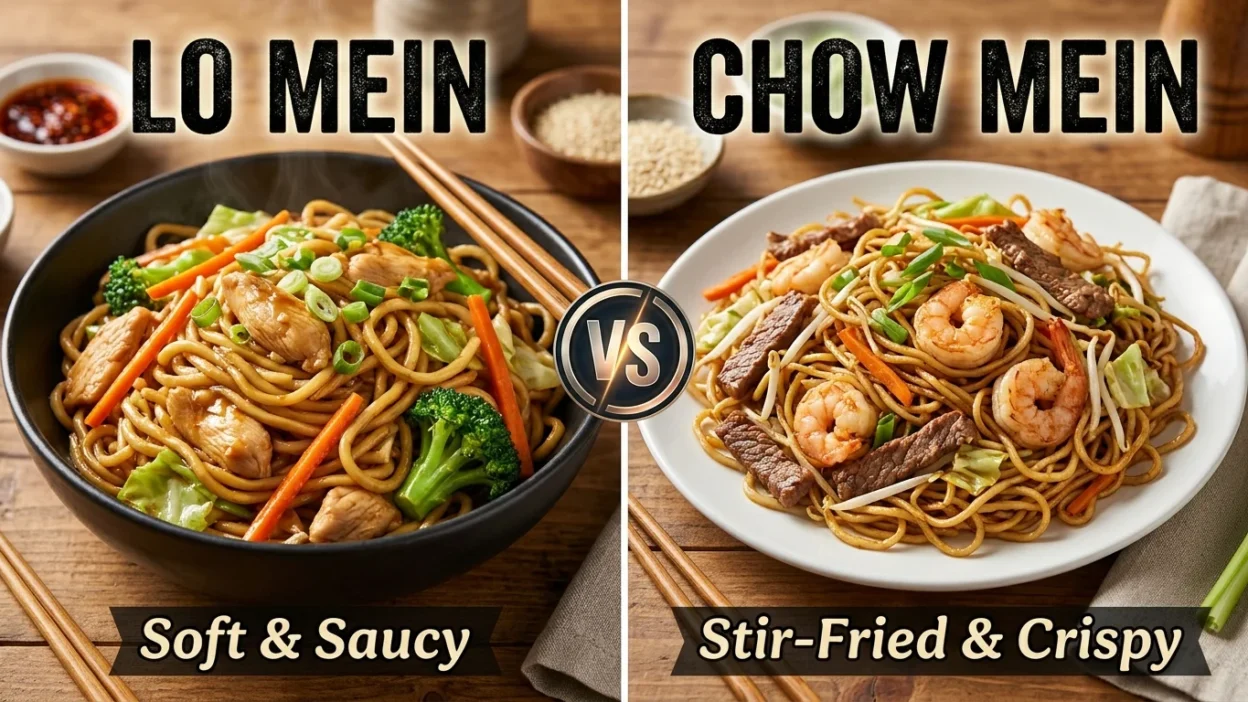
Lo mein vs chow mein is a common comparison for anyone who loves Chinese-American food. Both dishes feature Chinese wheat noodles, vegetables, and flavorful sauces, and they may include chicken, beef, shrimp, or tofu. However, the biggest difference is how the noodles are cooked and served. Lo mein noodles are typically tossed with sauce until soft and tender, while chow mein noodles are usually stir-fried to create a firmer texture and sometimes crispy edges.
Although both dishes share similar ingredients, their textures, cooking methods, and regional variations make them different. Lo mein is often the better choice if you enjoy soft noodles coated in savory sauce. Chow mein is ideal if you prefer a stir-fried dish with more texture and a slightly crisp finish. Understanding these differences can help you choose the right meal at a restaurant or prepare your favorite noodle dish at home.
Quick Answer: Lo Mein vs Chow Mein
Lo mein and chow mein are Chinese noodle dishes, but they differ mainly in preparation. Lo mein noodles are boiled and tossed with sauce and other ingredients, creating a soft, saucy dish. Chow mein noodles are stir-fried, often giving them a firmer texture and browned or crispy edges. Both can contain vegetables, meat, seafood, or tofu.
Why Do People Confuse Lo Mein and Chow Mein?
People often confuse these dishes because they use similar ingredients and appear on the same restaurant menus. Both typically feature wheat-based egg noodles, vegetables, and a savory sauce.
The names also sound similar, and restaurants do not always prepare them in exactly the same way. In some Chinese-American restaurants, chow mein may be served with softer noodles, while other versions use crispy noodles.
The key is to remember that lo mein emphasizes tossing noodles with sauce, while chow mein emphasizes frying the noodles. These descriptions are useful general guidelines, although traditional regional recipes can vary.
What Does Lo Mein Mean?
Lo mein comes from the Cantonese expression lou min, commonly translated as tossed or stirred noodles. The name reflects the preparation method: cooked noodles are combined with sauce and other ingredients.
Lo mein is usually served with noodles that feel soft, chewy, and moist. The sauce coats the noodles, helping distribute the flavors throughout the dish.
Common lo mein ingredients include:
- Wheat or egg noodles
- Cabbage, carrots, and onions
- Chicken, beef, shrimp, or tofu
- Soy sauce, garlic, and sesame oil
- Optional additions such as mushrooms or bok choy
Lo mein is popular among people who enjoy noodles with a balanced mixture of vegetables, protein, and savory sauce.
What Does Chow Mein Mean?
Chow mein comes from the Cantonese expression chao min, commonly translated as fried noodles. The dish is associated with noodles that are cooked in a hot pan or wok, often alongside vegetables, protein, and seasonings.
Depending on the recipe, chow mein noodles can be soft and chewy, lightly browned, or crispy. Some Chinese-American restaurants serve a crisp noodle base topped with vegetables and sauce, while others prepare everything together in a wok.
Common chow mein ingredients include:
- Wheat or egg noodles
- Cabbage, bean sprouts, and carrots
- Chicken, beef, shrimp, or tofu
- Soy sauce, garlic, and other seasonings
- Cooking oil for stir-frying
Chow mein is a good choice when you want a noodle dish with a more noticeable fried texture and a rich, savory flavor.
Lo Mein vs Chow Mein: Comparison Table
| Feature | Lo Mein | Chow Mein |
|---|---|---|
| Main preparation | Boiled noodles tossed with sauce | Noodles stir-fried in a hot pan or wok |
| Texture | Usually soft and chewy | Often firmer, browned, or crispy |
| Sauce | Commonly coats the noodles | May be lighter, mixed in, or served with toppings |
| Cooking oil | Generally used in smaller amounts for finishing or stir-frying | Often more important during frying |
| Common ingredients | Noodles, vegetables, protein, sauce | Noodles, vegetables, protein, seasonings |
| Flavor | Savory, often sauce-forward | Savory, often with toasted or fried notes |
| Best for | People who enjoy soft, saucy noodles | People who enjoy stir-fried or crispier noodles |
The exact ingredients, texture, and nutritional values depend on the recipe and restaurant. Neither dish is automatically healthier than the other.
When Should You Choose Lo Mein or Chow Mein?
Your choice depends on the texture and flavor you prefer.
Choose Lo Mein When:
- You enjoy soft, chewy noodles.
- You want the sauce distributed throughout the dish.
- You prefer a comforting noodle meal with vegetables and protein.
- You want noodles that are easy to mix with chopsticks or a fork.
Example: Chicken lo mein is a good option when you want tender noodles tossed with chicken, carrots, cabbage, and a savory soy-based sauce.
Choose Chow Mein When:
- You enjoy noodles with browned or crispy edges.
- You prefer a more noticeable stir-fried flavor.
- You like vegetables and noodles cooked together over high heat.
- You want a dish with a firmer texture.
Example: Vegetable chow mein can provide a satisfying combination of stir-fried noodles, cabbage, bean sprouts, and carrots.
If you are ordering from a restaurant, ask whether its chow mein is soft or crispy. The answer can make a significant difference to your meal.
10 Examples of Lo Mein and Chow Mein
These examples show how the two dishes can be used in everyday conversation and food ordering.
- Chicken lo mein: I ordered chicken lo mein because I wanted soft noodles covered in savory sauce.
- Beef chow mein: My brother chose beef chow mein for its stir-fried noodles and rich flavor.
- Vegetable lo mein: Vegetable lo mein is a convenient choice for someone who enjoys noodles with mixed vegetables.
- Shrimp chow mein: Shrimp chow mein combines seafood with vegetables and noodles cooked in a hot wok.
- Tofu lo mein: Tofu lo mein provides a meat-free option with tender noodles and a flavorful sauce.
- Crispy chow mein: Some restaurants serve crispy chow mein noodles with vegetables and sauce on top.
- Homemade lo mein: I made lo mein at home using leftover noodles, cabbage, carrots, and soy sauce.
- Quick chow mein: Chow mein can be prepared quickly when the ingredients are chopped and ready before cooking.
- Restaurant order: She asked for lo mein because she preferred a soft noodle texture.
- Family dinner: We served chow mein with stir-fried vegetables for a simple family meal.
These examples demonstrate that both names refer to noodle dishes, but the preparation method helps distinguish them.
Common Mistakes When Comparing Lo Mein and Chow Mein
Several misconceptions can make the difference harder to understand.
Mistake 1: Assuming lo mein always contains more sauce.
Lo mein is commonly tossed with sauce, but the amount varies by recipe. Some chow mein dishes also contain plenty of sauce.
Mistake 2: Believing chow mein is always crispy.
Chow mein can be crispy, but it can also be soft or chewy. Restaurant styles and regional traditions influence the final texture.
Mistake 3: Thinking one dish always contains different ingredients.
Both dishes can use similar noodles, vegetables, meats, seafood, and seasonings. The cooking method is often the more useful distinction.
Mistake 4: Assuming one is always healthier.
Calories, sodium, fat, and protein depend on portion size, ingredients, oil, and sauce. A vegetable-heavy dish with less oil may be lighter than a richer version of either dish.
Mistake 5: Treating every restaurant’s version as identical.
Chinese cuisine includes many regional styles, and Chinese-American menus may use the names differently. Ask how the noodles are prepared if you want a specific texture.
Memory Trick: How to Remember the Difference
Use this simple memory trick:
- Lo mein = tossed noodles. Think of soft noodles being tossed with sauce.
- Chow mein = fried noodles. Think of noodles being cooked in a hot wok.
The word mein refers to noodles in both names. The first part helps distinguish the preparation.
This is a practical shortcut rather than a complete description of every traditional recipe, but it works well when reading a typical Chinese-American restaurant menu.
American vs British English: Is There a Difference?
Lo mein and chow mein are food names rather than words that have different standard meanings in American and British English.
In the United States, both dishes are widely associated with Chinese-American restaurant menus. Lo mein generally refers to soft noodles tossed with sauce, while chow mein often refers to stir-fried noodles or, in some restaurants, a crispy noodle preparation.
In the United Kingdom, chow mein is also a familiar Chinese takeaway dish. Lo mein may be less common on some menus, and preparation styles can vary between restaurants.
The important distinction is culinary rather than grammatical. If you are ordering in either country, check the menu description to find out whether the noodles will be soft, stir-fried, or crispy.
Similar Words and Related Noodle Dishes
Lo mein and chow mein are part of a larger family of noodle dishes. These related terms are useful to recognize.
- Chop suey: A dish of mixed vegetables, often with meat or seafood, served with or without rice or noodles depending on the restaurant.
- Chow fun: A dish made with broad, flat rice noodles, commonly stir-fried with vegetables and protein.
- Pad Thai: A Thai noodle dish usually made with rice noodles and a sweet, sour, and savory sauce.
- Yakisoba: A Japanese-style stir-fried noodle dish often prepared with vegetables, meat, and a tangy sauce.
- Ramen: Japanese noodle soup served in broth with toppings such as meat, eggs, and vegetables.
- Singapore noodles: A Chinese-restaurant dish commonly made with thin rice vermicelli, vegetables, protein, and curry seasoning.
These dishes may share some ingredients or cooking techniques, but they have different culinary traditions and flavor profiles.
FAQs
1. Is lo mein or chow mein healthier?
Neither is automatically healthier. The nutritional value depends on the amount of oil, sauce, vegetables, protein, and the serving size. Choosing extra vegetables and a moderate amount of sauce can make either dish a more balanced meal.
2. Which has more sauce, lo mein or chow mein?
Lo mein commonly has sauce tossed throughout the noodles. Chow mein may have less sauce mixed in, but some versions are served with a generous sauce or vegetable topping.
3. Is chow mein crispy or soft?
It can be either. Some recipes produce browned or crispy noodles, while others feature soft, stir-fried noodles. Restaurant preparation determines the texture.
4. Are lo mein and chow mein made with the same noodles?
They can use similar wheat-based noodles, including egg noodles. The type of noodle and its thickness vary by recipe and restaurant.
5. Which tastes better, lo mein or chow mein?
It depends on your preference. Choose lo mein for soft noodles coated in savory sauce. Choose chow mein if you prefer a firmer texture and the toasted flavor that can come from stir-frying.
6. Can lo mein and chow mein contain chicken or shrimp?
Yes. Both dishes can include chicken, beef, shrimp, pork, tofu, or vegetables. The protein choice does not determine whether a dish is lo mein or chow mein.
7. Can I make lo mein or chow mein at home?
Yes. You can prepare both with cooked noodles, vegetables, seasonings, and your preferred protein. For lo mein, toss the cooked noodles with sauce. For chow mein, stir-fry the noodles in a hot pan or wok to develop a more fried texture.
Remember This
Lo mein and chow mein are similar Chinese noodle dishes, but their preparation gives them different textures.
- Lo mein: Cooked noodles tossed with sauce, usually soft and chewy.
- Chow mein: Noodles stir-fried in a hot pan or wok, often firmer and sometimes crispy.
Both can include vegetables, chicken, beef, shrimp, or tofu. Their nutrition depends on the ingredients and cooking method, so neither is automatically the healthier choice.
Conclusion
Understanding lo mein vs chow mein makes choosing a noodle dish easier. Although the two meals can contain similar noodles, vegetables, proteins, and sauces, their cooking methods create their main differences. Lo mein is generally prepared by tossing cooked noodles with sauce and other ingredients, making it a good option for anyone who enjoys soft, savory noodles. Chow mein emphasizes frying the noodles, which can produce a firmer texture, browned edges, or a crispy finish depending on the recipe.
Neither dish is universally better. Your decision should depend on the texture, flavor, and ingredients you enjoy most. If you prefer tender noodles with sauce throughout, choose lo mein. If you like stir-fried noodles with more texture, try chow mein. When ordering at a restaurant, ask how the noodles are prepared because the exact style can vary.

William Noah is a spiritual writer at BibLoft, exploring hidden meanings, symbols, and divine insights. He shares thoughtful interpretations that inspire self-awareness, inner growth, and spiritual understanding.