
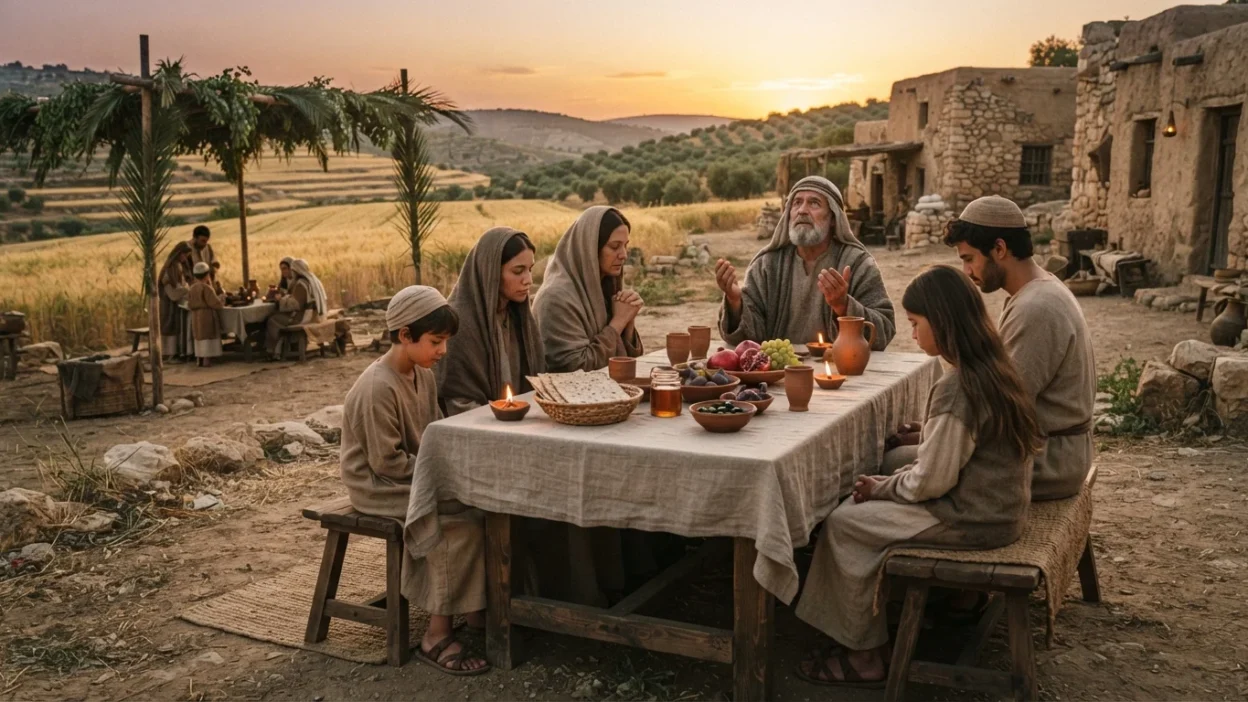
The holy days meaning in the Bible is connected with special times set apart for worship, remembrance, rest, repentance, thanksgiving, and celebration. Throughout the Old Testament, God instructed the people of Israel to observe certain sacred days and festivals. These occasions were not simply cultural holidays. They helped the community remember God’s actions, renew their faith, and pass important beliefs from one generation to another.
Understanding the holy days meaning in the Bible also helps readers see how biblical worship was connected with the rhythm of everyday life. Sacred times marked major events such as deliverance, harvest, repentance, and God’s provision. Some holy days involved rest from ordinary work, while others included gatherings, sacrifices, meals, and celebrations. Their deeper purpose was to direct people’s attention toward God and encourage gratitude, obedience, reflection, and spiritual renewal.
Quick Answer: What Are Holy Days in the Bible?
The holy days meaning in the Bible refers to sacred days or appointed times set apart for worship, remembrance, rest, repentance, or celebration. Major biblical holy days include the Sabbath, Passover, the Feast of Weeks, the Feast of Trumpets, the Day of Atonement, and the Feast of Tabernacles.
What Does “Holy Days” Mean in the Bible?
In the Bible, something described as holy is set apart for a special purpose connected with God.
Holy days, therefore, are times separated from ordinary routines for worship and spiritual reflection.
The Old Testament often uses the idea of appointed times or sacred assemblies.
These occasions brought the people of Israel together to remember important events and participate in worship.
The holy days meaning in the Bible is not limited to rest.
Different occasions had different purposes.
Some focused on remembering God’s deliverance, while others emphasized repentance, thanksgiving, harvest, or joyful celebration.
| Aspect | Meaning |
|---|---|
| Holy | Set apart or sacred |
| Holy day | A time dedicated to God |
| Main purpose | Worship and remembrance |
| Common activities | Rest, gatherings, sacrifices, celebration |
| Spiritual focus | Faith, gratitude, repentance, and renewal |
The Origin and History of Biblical Holy Days
Biblical holy days developed within the religious life of ancient Israel.
Many were connected with God’s instructions given through Moses.
They created a yearly rhythm that helped people remember important parts of their history and relationship with God.
Some festivals were also connected with the agricultural seasons.
This linked worship with the everyday experience of planting and harvesting.
The sacred calendar reminded Israel that food, land, freedom, and life itself were connected with God’s provision.
Over time, these observances became an important part of Jewish religious and cultural identity.
Many continue to be remembered and celebrated within Judaism today.
The Sabbath as a Holy Day
The Sabbath is one of the most important sacred times in the Bible.
It is connected with the creation story and later became part of the Ten Commandments.
The seventh day was set apart as a time of rest and holiness.
The Sabbath also reminded Israel of freedom from slavery and dependence on God.
Unlike annual festivals, the Sabbath created a regular weekly rhythm.
Its lessons included rest, worship, trust, and renewal.
The holy days meaning in the Bible therefore begins with the broader biblical principle of setting apart time for God.
Passover and the Feast of Unleavened Bread
Passover remembers Israel’s deliverance from slavery in Egypt.
The event is closely connected with the story of the Exodus.
It reminded each generation of God’s power to rescue and deliver His people.
The Feast of Unleavened Bread followed Passover and involved eating unleavened bread for a specific period.
Together, these observances created a powerful connection between historical memory and worship.
The festivals encouraged families to teach children about their people’s history.
For Christians, Passover also has theological connections with the New Testament story of Jesus, particularly in discussions of sacrifice, redemption, and the Last Supper.
The Feast of Weeks
The Feast of Weeks, also known as Shavuot, was connected with the harvest season.
It involved gratitude for agricultural blessings and the first fruits of the harvest.
The festival emphasized that the land’s productivity was ultimately a gift.
Later Jewish tradition also associated Shavuot with the giving of the Torah at Mount Sinai.
The New Testament places the events of Pentecost during this festival period.
This creates an important connection between the Jewish biblical calendar and early Christian history.
The Feast of Trumpets
The Feast of Trumpets involved a sacred gathering marked by the sounding of trumpets or horns.
In the biblical calendar, it served as a significant occasion for the community.
Trumpets had several functions in ancient Israel.
They could signal assemblies, important events, worship, or moments requiring public attention.
The feast reminded people to pause and recognize the importance of sacred time.
In later Jewish tradition, this observance became associated with Rosh Hashanah, the Jewish New Year.
The Day of Atonement
The Day of Atonement, often known by the Hebrew name Yom Kippur, was one of the most solemn days in Israel’s religious calendar.
It focused on repentance, humility, and reconciliation.
The high priest played an important role in the ancient observance described in Leviticus.
The day reminded the people of the seriousness of sin and the need for forgiveness.
It was not primarily a celebration in the same sense as some other festivals.
Instead, it created time for reflection and repentance.
The holy days meaning in the Bible includes this important dimension of spiritual self-examination and restoration.
| Biblical Holy Day | Main Biblical Theme |
|---|---|
| Sabbath | Rest and holiness |
| Passover | Deliverance and freedom |
| Unleavened Bread | Remembrance and separation |
| Feast of Weeks | Harvest and thanksgiving |
| Feast of Trumpets | Sacred gathering and remembrance |
| Day of Atonement | Repentance and reconciliation |
| Feast of Tabernacles | Provision and God’s presence |
The Feast of Tabernacles
The Feast of Tabernacles, also called Sukkot or the Feast of Booths, remembered Israel’s journey through the wilderness.
It was also connected with the agricultural harvest.
People lived in temporary shelters as part of remembering the wilderness period.
The festival combined celebration, thanksgiving, historical memory, and dependence on God.
It reminded Israel that permanent security did not come only from buildings, possessions, or material success.
God’s presence and provision remained central.
The feast is one of the clearest examples of how biblical festivals connected historical events with present faith.
The Spiritual Meaning of Holy Days
The spiritual holy days meaning in the Bible can be understood through several important themes.
Remembrance
Sacred days helped people remember what God had done.
Worship
Holy times created opportunities for individuals and communities to focus on God.
Rest
The Sabbath demonstrated that stopping from ordinary work could have spiritual value.
Repentance
The Day of Atonement emphasized humility, forgiveness, and restoration.
Gratitude
Harvest festivals reminded people to be thankful for provision.
Community
Holy days brought families and communities together through shared worship and memory.
| Spiritual Theme | Symbolic Meaning |
|---|---|
| Passover | Deliverance and hope |
| Sabbath | Rest and trust |
| Harvest festivals | Gratitude and provision |
| Trumpets | Awareness and remembrance |
| Atonement | Repentance and restoration |
| Tabernacles | Dependence on God |
These interpretations should be understood within their biblical and religious contexts rather than as hidden meanings assigned to every celebration.
Holy Days and God’s Appointed Times
Biblical holy days were often connected with the idea of appointed times.
These were specific moments set apart within the religious calendar.
The structure of the calendar created a rhythm of remembrance throughout the year.
Instead of remembering God’s actions only occasionally, the community repeatedly returned to important themes.
Deliverance was remembered through Passover.
Provision was celebrated through harvest festivals.
Repentance was emphasized through the Day of Atonement.
Rest was practiced through the Sabbath.
This pattern shows that spiritual life in the Bible was not limited to private beliefs.
It was woven into time, community, worship, and daily life.
Holy Days in the Old Testament and New Testament
The Old Testament provides the main biblical foundation for the sacred calendar of Israel.
The New Testament takes place within a Jewish religious and cultural setting where these festivals remained important.
Jesus and His disciples participated in Jewish festivals and traveled to Jerusalem for significant occasions.
The New Testament also mentions Pentecost and Passover.
However, early Christianity gradually developed its own patterns of worship and celebration.
Different Christian traditions today understand the relationship between biblical festivals and Christian practice in different ways.
| Old Testament Holy Days | New Testament Connection |
|---|---|
| Passover | Jesus’ final Passover period and themes of redemption |
| Feast of Weeks | Pentecost |
| Day of Atonement | Themes of forgiveness and reconciliation |
| Tabernacles | Jewish worship and biblical imagery |
| Sabbath | Teachings and discussions involving Jesus |
Common Misconceptions About Biblical Holy Days
Misconception 1: All holy days were the same
Each biblical festival had its own purpose, practices, and historical significance.
Misconception 2: Holy days were only about celebration
Some involved joy and thanksgiving, while others focused on repentance, rest, or solemn reflection.
Misconception 3: Modern holidays are identical to biblical festivals
Many modern religious holidays developed later and should not automatically be treated as direct biblical observances.
Misconception 4: Every Christian must observe biblical festivals in the same way
Christian traditions differ in how they interpret and practice biblical sacred times.
Misconception 5: Holy days had only historical value
Their themes of gratitude, remembrance, repentance, community, and spiritual renewal continue to influence religious life.
Why Do People Search for Holy Days Meaning in the Bible?
People search holy days meaning in the Bible because they want to understand which sacred occasions are directly mentioned in Scripture.
Some readers are curious about the difference between biblical festivals and modern religious holidays.
Others want to explore the spiritual symbolism of Passover, Sabbath, Pentecost, or the Day of Atonement.
The topic is also important for people studying Jewish history and Christian theology.
Learning about biblical holy days helps readers understand the cultural and religious setting of many important biblical events.
Cultural and Modern Usage of Holy Days
The idea of holy days continues in both Jewish and Christian traditions.
Jewish communities observe festivals rooted in the Hebrew Scriptures through worship, family gatherings, meals, prayer, and cultural customs.
Christian communities observe various sacred seasons and celebrations, although practices differ across denominations.
The word “holiday” itself historically developed from the idea of a “holy day,” though its modern use is much broader.
Today, people may use the term for religious celebrations, national events, or vacation periods.
The biblical understanding remains more specific: sacred time is intentionally set apart for remembrance and relationship with God.
What Can Believers Learn From Biblical Holy Days?
Biblical holy days teach the importance of intentional remembrance.
People can easily forget important events, values, and spiritual commitments.
A regular pattern of sacred time encourages reflection.
These occasions also show the value of community.
Faith was often practiced through shared meals, worship, stories, and celebrations.
Another important lesson is gratitude.
Harvest festivals reminded people that provision should not be taken for granted.
Finally, holy days demonstrate the importance of stopping.
Rest and reflection can help people recognize that life is more than constant activity.
The Deeper Symbolism of Holy Days
The holy days meaning in the Bible points to the idea that time itself can be used for spiritual purpose.
Ordinary days pass quickly, but sacred times invite people to pause.
Passover symbolizes remembrance of deliverance.
The Sabbath symbolizes rest and trust.
The Day of Atonement symbolizes repentance and restoration.
Harvest festivals symbolize gratitude and provision.
Together, these observances create a spiritual rhythm that connects the past with the present.
They remind believers that faith can be practiced through regular patterns of remembrance, worship, rest, and community.
Final Thought
The holy days meaning in the Bible reveals how deeply worship and remembrance were woven into the life of ancient Israel. From the weekly Sabbath to annual festivals such as Passover, the Feast of Weeks, the Day of Atonement, and the Feast of Tabernacles, each sacred time carried an important purpose. These occasions helped people remember God’s deliverance, express gratitude, seek forgiveness, rest from ordinary labor, and celebrate within their communities.
Although Jewish and Christian traditions understand and observe sacred times in different ways today, the underlying biblical themes remain meaningful. Holy days remind people to slow down, remember their spiritual heritage, renew their faith, and recognize the importance of worship, gratitude, reflection, and community.
FAQs
1. What are holy days in the Bible?
Holy days are sacred or appointed times set apart for worship, remembrance, rest, repentance, thanksgiving, or celebration.
2. What are the main biblical holy days?
Major biblical holy days include the Sabbath, Passover, the Feast of Unleavened Bread, the Feast of Weeks, the Feast of Trumpets, the Day of Atonement, and the Feast of Tabernacles.
3. What is the spiritual meaning of holy days?
They can symbolize remembrance, worship, gratitude, repentance, freedom, trust, provision, and spiritual renewal.
4. Is the Sabbath a holy day?
Yes. The Sabbath is one of the most important sacred times in the Bible and is associated with rest and holiness.
5. Is Christmas a biblical holy day?
Christmas celebrates the birth of Jesus in Christian tradition, but the Bible does not command its annual observance or provide a specific date for Jesus’ birth.
6. What is the difference between a biblical holy day and a modern holiday?
Biblical holy days were established within Israel’s sacred calendar, while modern holidays may have religious, cultural, historical, or secular origins.
7. Why were holy days important in the Bible?
They helped communities remember God’s actions, worship together, express gratitude, seek forgiveness, and renew their faith.

William Noah is a spiritual writer at BibLoft, exploring hidden meanings, symbols, and divine insights. He shares thoughtful interpretations that inspire self-awareness, inner growth, and spiritual understanding.