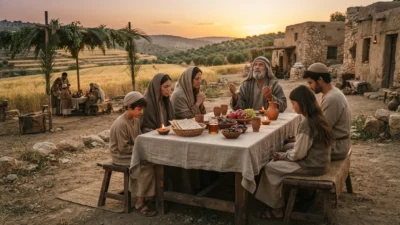
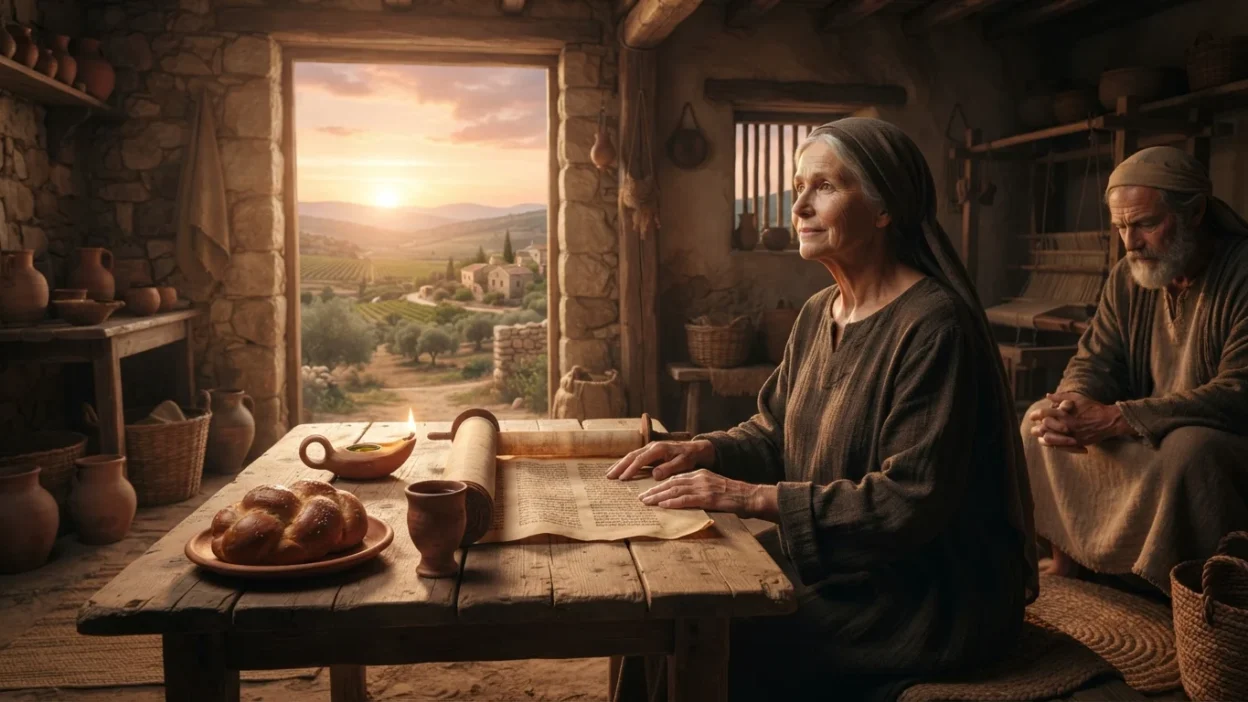
The Sabbath meaning in the Bible is deeply connected with rest, worship, holiness, and humanity’s relationship with God. From the opening chapters of Genesis to the teachings of Jesus, the Sabbath holds an important place in the biblical story. It represents a regular time set apart from ordinary work and reminds believers that life is not defined only by labor, productivity, or personal achievement.
Understanding the Sabbath meaning in the Bible also requires looking at its Hebrew roots and historical setting. The biblical Sabbath developed as a sacred pattern of rest and remembrance within Israel’s covenant life. In the Old Testament, it was connected with creation, freedom, worship, and obedience. In the New Testament, Jesus’ teachings emphasized mercy and the true purpose of the Sabbath, giving readers important spiritual lessons that continue to influence Jewish and Christian thought today.
Quick Answer: What Does Sabbath Mean in the Bible?
The Sabbath meaning in the Bible refers to a sacred day of rest set apart for God. The Hebrew word Shabbat is connected with ceasing or stopping from work. In Scripture, the Sabbath symbolizes rest, worship, holiness, freedom, trust in God’s provision, and renewal.
What Does Sabbath Mean in the Bible?
The word Sabbath comes from the Hebrew word Shabbat. It is commonly understood in connection with stopping, ceasing, or resting.
In the biblical sense, the Sabbath was not simply a day to relax after a busy week.
It was a day set apart from ordinary labor.
The Sabbath created time for worship, remembrance, family, community, and spiritual reflection.
The Sabbath meaning in the Bible therefore combines physical rest with spiritual purpose.
It reminded the people of Israel that their identity and security depended ultimately on God rather than constant human work.
| Aspect | Meaning |
|---|---|
| Hebrew word | Shabbat |
| Basic idea | Ceasing or stopping |
| Main purpose | Rest and holiness |
| Biblical connection | Creation and covenant |
| Spiritual lesson | Trust and renewal |
The Origin and History of the Sabbath
The Sabbath first appears prominently in the creation account.
Genesis describes God resting on the seventh day after the work of creation.
This pattern became foundational to the biblical understanding of the Sabbath.
Later, the Sabbath was included among the Ten Commandments.
Israel was instructed to remember and keep the Sabbath as a holy day.
The command also carried an important social dimension.
Rest was not limited to wealthy or powerful people.
Household members, servants, foreigners, and even animals were included in the pattern of rest.
This showed that the Sabbath was connected with justice, dignity, and care for the entire community.
The Sabbath and the Creation Story
The creation account gives the Sabbath a universal foundation.
After six days of creative work, the seventh day was set apart.
The emphasis is not that God needed physical recovery.
Instead, the narrative establishes a pattern of work followed by rest.
This pattern teaches that rest has value.
Human beings are not designed to exist only for constant productivity.
The Sabbath meaning in the Bible reminds readers that stopping can be spiritually meaningful.
Rest creates space for gratitude, reflection, worship, and recognition of God as Creator.
The Sabbath in the Ten Commandments
The Sabbath became a central command within Israel’s covenant life.
In the Ten Commandments, God’s people were instructed to keep the Sabbath day holy.
The command included both personal and community responsibility.
Everyone within the household was to benefit from rest.
This was especially significant in an ancient world where social status often determined who could rest and who had to continue working.
The Sabbath command placed limits on labor and recognized the dignity of people under a household’s authority.
It also reminded Israel of its relationship with God and its identity as a people set apart.
The Sabbath and Freedom from Slavery
The Book of Deuteronomy connects Sabbath observance with Israel’s memory of slavery in Egypt.
The command to rest served as a reminder that Israel was no longer enslaved.
A society shaped by God’s covenant was not supposed to reproduce the endless oppression associated with slavery.
The Sabbath therefore carried a powerful message of freedom.
People who once had no control over their labor were now given a regular time of rest.
This adds another important dimension to the Sabbath meaning in the Bible: rest can represent dignity, liberation, and freedom.
| Biblical Theme | Sabbath Connection |
|---|---|
| Creation | Rest after six days |
| Covenant | A sign of relationship with God |
| Freedom | Remembering deliverance from slavery |
| Holiness | A day set apart |
| Justice | Rest extended to others |
| Trust | Dependence on God’s provision |
The Spiritual Meaning of the Sabbath
The spiritual meaning of the Sabbath goes beyond avoiding work.
It represents a deliberate decision to pause and remember God.
Rest
The Sabbath teaches that physical and emotional rest are valuable.
Trust
Stopping from ordinary labor can symbolize trust that life does not depend entirely on human effort.
Worship
The Sabbath provides time to focus on God and spiritual priorities.
Renewal
Rest can restore the body, mind, and spirit.
Freedom
The Sabbath reminds believers that they should not become slaves to endless work or material demands.
Holiness
By setting apart time for God, believers recognize that some moments should be dedicated to worship and reflection.
| Symbolic Theme | Spiritual Meaning |
|---|---|
| Rest | Renewal and peace |
| Seventh day | Completion and sacred order |
| Stopping work | Trust in God |
| Sacred time | Worship and reflection |
| Freedom | Release from constant labor |
| Community rest | Dignity and compassion |
These spiritual ideas help explain why the Sabbath remains meaningful beyond its ancient historical setting.
The Sabbath in the Life of Ancient Israel
For ancient Israel, Sabbath observance shaped the rhythm of weekly life.
The day distinguished Israel’s worship practices from ordinary routines.
Preparing for the Sabbath required intentional planning because certain forms of labor were restricted.
The Sabbath also created a shared rhythm within the community.
Families and households participated together.
Over time, Jewish traditions developed detailed practices to help people observe the Sabbath faithfully.
These traditions continue in various forms within Judaism today.
The biblical foundation, however, remains centered on rest, holiness, remembrance, and relationship with God.
Jesus and the Sabbath
The Gospels contain several accounts involving Jesus and Sabbath observance.
Some religious leaders criticized actions performed by Jesus or His disciples on the Sabbath.
These disagreements often focused on how the Sabbath laws should be interpreted and applied.
Jesus emphasized mercy and human well-being.
He taught that the Sabbath was made for people rather than people being created merely to serve the Sabbath.
His actions and teachings challenged interpretations that, in His view, ignored compassion.
The Sabbath meaning in the Bible therefore includes an important principle: sacred practices should not be separated from mercy and the genuine good of people.
The Sabbath in Christianity
Christians have understood the Sabbath in different ways throughout history.
Some Christian groups continue to observe the seventh day as the biblical Sabbath.
Others worship primarily on Sunday, often called the Lord’s Day because of its connection with the resurrection of Jesus.
Some Christians view Sabbath principles more broadly and focus on regular rest, worship, and spiritual renewal rather than applying Old Testament Sabbath rules in the same way.
These differences reflect theological and historical developments.
However, many Christian traditions continue to value the core principles of rest, worship, trust, and renewal.
Sabbath and Sunday: What Is the Difference?
The biblical Sabbath and the Christian practice of Sunday worship are related but are not identical concepts.
| Sabbath | Sunday Worship |
|---|---|
| Traditionally the seventh day | Traditionally the first day of the week |
| Rooted in the Hebrew Scriptures | Developed within early Christianity |
| Connected with Shabbat | Often called the Lord’s Day |
| Emphasizes rest and holiness | Emphasizes worship and resurrection |
| Observed from Friday evening to Saturday evening in Jewish tradition | Usually observed on Sunday in many Christian traditions |
Understanding this distinction helps prevent confusion when studying biblical and Christian traditions.
Common Misconceptions About the Sabbath
Misconception 1: Sabbath simply means sleeping
The biblical idea is broader and includes ceasing from ordinary work, holiness, worship, and renewal.
Misconception 2: The Sabbath is only about rules
Biblical teaching connects Sabbath with freedom, dignity, trust, and relationship with God.
Misconception 3: Sabbath and Sunday are exactly the same
They are historically and religiously related but have different origins and practices.
Misconception 4: Jesus rejected the Sabbath
The Gospel accounts show Jesus participating in Sabbath life while challenging interpretations that neglected mercy and human need.
Misconception 5: The Sabbath has no modern relevance
Its themes of rest, limits, freedom, and spiritual renewal remain meaningful in modern life.
Why Do People Search for Sabbath Meaning in the Bible?
Many people search Sabbath meaning in the Bible because they want to understand what God intended when establishing a day of rest.
Others are curious about the difference between Saturday Sabbath and Sunday worship.
Some people are also searching for practical spiritual guidance in a world shaped by busy schedules and constant work.
The Sabbath provides a biblical perspective on balance.
It challenges the idea that a person’s value depends only on productivity.
For believers, studying the Sabbath can encourage intentional time for rest, worship, family, reflection, and gratitude.
Cultural and Modern Usage of Sabbath
The concept of Sabbath continues to influence modern language and culture.
People sometimes use the term “Sabbath rest” to describe a period of intentional renewal and spiritual reflection.
In Jewish communities, Shabbat remains an important weekly observance with religious, family, and cultural traditions.
Christian approaches vary widely depending on denomination and theological understanding.
Beyond formal religious observance, the biblical principle of setting aside time from constant activity has also influenced discussions about work-life balance, mental rest, family time, and personal renewal.
The ancient idea remains relevant because the human need for rest has not disappeared.
Practical Spiritual Lessons From the Sabbath
The Sabbath meaning in the Bible offers practical lessons for everyday life.
First, rest can be an act of trust.
Taking time away from constant work reminds people that they are not responsible for controlling everything.
Second, spiritual life requires intentional space.
Without stopping, reflection and worship can easily be neglected.
Third, rest should not be viewed as selfish.
The biblical Sabbath extended rest to families, workers, foreigners, and animals.
Finally, mercy should guide religious practice.
The teachings of Jesus show that spiritual disciplines should promote love, compassion, and human well-being.
The Deeper Symbolism of Sabbath Rest
Sabbath rest can symbolize peace with God and freedom from endless striving.
The rhythm of work and rest teaches that human beings are limited.
People need renewal.
The Sabbath also points toward the idea that ultimate security does not come from constant effort alone.
For many Christians, Sabbath rest can symbolize a deeper spiritual rest found through faith and trust in God.
This symbolic interpretation builds on biblical themes while recognizing that different Jewish and Christian traditions understand Sabbath observance in different ways.
Final Thought
The Sabbath meaning in the Bible reveals that rest is not merely the absence of work. It is a meaningful part of the biblical pattern of life, connected with creation, holiness, freedom, worship, trust, and renewal. For ancient Israel, the Sabbath served as a regular reminder of God’s covenant and deliverance from slavery. In the teachings of Jesus, it was also connected with mercy and human well-being.
Today, Jewish and Christian communities understand and observe the Sabbath in different ways, but its central lessons remain powerful. In a world that often celebrates constant activity, the biblical Sabbath invites people to pause, remember what truly matters, care for others, and find renewal through rest and faith.
FAQs
1. What does Sabbath mean in the Bible?
Sabbath refers to a sacred time of ceasing from ordinary work, associated with rest, worship, holiness, and spiritual renewal.
2. What day is the biblical Sabbath?
Traditionally, the biblical Sabbath is the seventh day of the week, observed in Jewish tradition from Friday evening to Saturday evening.
3. What is the Hebrew word for Sabbath?
The Hebrew word is Shabbat, which is connected with ceasing or stopping.
4. Why did God establish the Sabbath?
The Sabbath is connected with the creation pattern, holiness, covenant, remembrance, freedom, and rest.
5. Did Jesus observe the Sabbath?
Yes. The Gospels describe Jesus participating in Sabbath life while teaching that mercy and human well-being are important to understanding its purpose.
6. Is Sunday the same as the Sabbath?
Not exactly. The biblical Sabbath is traditionally the seventh day, while Sunday worship developed within Christianity and is associated with the resurrection of Jesus.
7. What is the spiritual meaning of Sabbath rest?
Sabbath rest can symbolize trust in God, freedom from constant striving, renewal, worship, peace, and a restored focus on spiritual priorities.

William Noah is a spiritual writer at BibLoft, exploring hidden meanings, symbols, and divine insights. He shares thoughtful interpretations that inspire self-awareness, inner growth, and spiritual understanding.