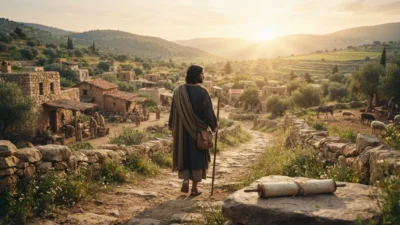
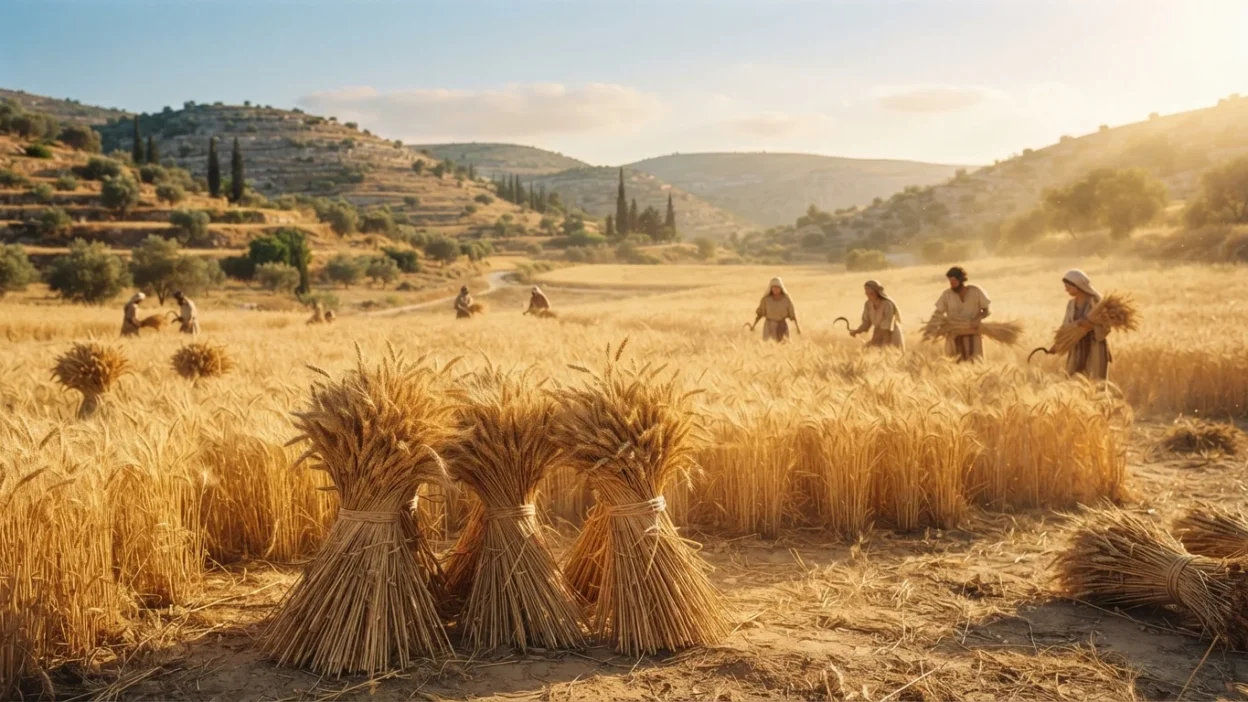
The sheaves meaning in the Bible is closely connected with agriculture, harvest, provision, and spiritual symbolism. In biblical times, a sheaf was a bundle of grain stalks gathered together during the harvest. Because farming played such an important role in daily life, images of fields, grain, sowing, and harvesting were naturally used throughout Scripture to communicate deeper truths about God’s provision, human labor, blessing, and spiritual growth.
Understanding the sheaves meaning in the Bible also helps explain important passages, especially Joseph’s famous dream in Genesis and the harvest imagery found throughout Scripture. A sheaf could represent the literal result of agricultural work, but in symbolic contexts, it could point to people, nations, blessing, abundance, or the results of one’s actions. By exploring the biblical background, symbolism, and spiritual lessons of sheaves, readers can better understand why this simple agricultural image carries such powerful meaning.
Quick Answer: What Do Sheaves Mean in the Bible?
A sheaf is a bundle of harvested grain stalks tied together. In the Bible, sheaves can symbolize harvest, provision, abundance, people, blessing, spiritual growth, and the results of faithful labor. In Joseph’s dream, sheaves also symbolically represented his family members and his future position of authority.
What Is a Sheaf in the Bible?
A sheaf is a bundle of stalks of grain, such as wheat or barley, gathered together after harvesting.
In ancient agricultural societies, grain was cut, collected, and tied into bundles before further processing.
The word appears in biblical passages involving farming and harvest.
However, the sheaves meaning in the Bible can extend beyond its literal definition.
Because the Bible frequently uses agricultural images to communicate spiritual truth, a sheaf may also represent the fruit or outcome of work, God’s provision, or a gathered group of people.
| Symbol | Literal Meaning | Possible Biblical Symbolism |
|---|---|---|
| Sheaf | Bundle of grain | Harvest and results |
| Grain | Agricultural crop | Provision and life |
| Harvest | Gathering crops | Blessing or spiritual fruit |
| Field | Place of cultivation | The world or a place of labor |
| Sowing | Planting seeds | Actions, faith, or teaching |
The exact meaning depends on the context of each passage.
Origin and History of Sheaves
Sheaves were an important part of agricultural life in the ancient world.
People depended heavily on crops for food, trade, and survival.
The harvest season was therefore a time of great importance.
Grain such as wheat and barley was cut by hand and gathered into bundles.
These bundles could then be transported, stored, or taken to a threshing floor.
The process of gathering sheaves required effort, patience, and cooperation.
This agricultural background explains why sheaves became a natural symbol of provision and abundance.
For ancient communities, a successful harvest meant food, security, and hope for the future.
The Biblical Connection of Sheaves
The sheaves meaning in the Bible is most clearly illustrated through Joseph’s dream in Genesis 37.
Joseph told his brothers about a dream in which they were binding sheaves in a field.
In the dream, Joseph’s sheaf stood upright while the sheaves belonging to his brothers gathered around and bowed down.
His brothers understood the symbolism immediately.
They interpreted the dream as suggesting that Joseph would one day rule over them.
This made them angry because Joseph was younger than many of them.
Later events in Joseph’s life showed how the dream became connected with his future position in Egypt.
| Element in Joseph’s Dream | Symbolic Meaning |
|---|---|
| Joseph’s sheaf | Joseph himself |
| Brothers’ sheaves | Joseph’s brothers |
| Standing sheaf | Future prominence |
| Bowing sheaves | Submission or recognition |
| Field | Shared family setting and life |
Joseph’s dream demonstrates that biblical symbols can represent people and relationships.
Sheaves in Joseph’s Dream
Joseph’s dream is one of the most memorable examples of agricultural symbolism in the Bible.
The brothers were working in a field and binding sheaves together.
Suddenly, Joseph’s sheaf stood upright.
The other sheaves gathered around it and bowed down.
The image was simple, but the message was powerful.
Joseph’s brothers understood that the sheaves represented people.
The dream suggested that Joseph would eventually hold a position of authority.
Years later, Joseph became an important ruler in Egypt.
When his brothers came to Egypt seeking food during a famine, they bowed before him without immediately recognizing him.
For many readers, this connection shows the long-term fulfillment associated with Joseph’s earlier dream.
Sheaves as a Symbol of Harvest
The sheaves meaning in the Bible is also strongly connected with harvest.
A sheaf represents the visible result of planting, nurturing, waiting, and working.
Before a farmer can gather a sheaf, seeds must first be planted.
The crops must grow.
The farmer must wait for the proper season.
Finally, the grain is harvested and gathered.
Spiritually, this process can symbolize the principle that actions often produce results over time.
Good work may not produce immediate results.
Faithfulness may require patience.
The image of the harvest reminds readers that growth is often gradual.
A sheaf represents the fruit that eventually comes from consistent effort.
Spiritual Meaning of Sheaves in the Bible
The spiritual meaning of sheaves can be understood through several symbolic themes.
1. Fruitfulness
A sheaf represents a completed harvest.
Spiritually, it can symbolize the fruit produced by faithful living.
2. God’s Provision
Harvest was essential for survival.
Sheaves can therefore remind believers of God’s provision and care.
3. Patience
A harvest does not happen immediately.
The image encourages patience and trust during periods of growth.
4. Gathering
Individual stalks are gathered into bundles.
This can symbolize unity, community, or people being brought together.
5. Joy After Labor
Harvest often followed a season of difficult work.
The gathering of sheaves can symbolize joy after perseverance.
| Spiritual Theme | Symbolic Meaning |
|---|---|
| Fruitfulness | Results of faithful living |
| Provision | God’s care and abundance |
| Patience | Waiting for growth |
| Unity | Gathering together |
| Joy | Reward after labor |
These meanings are symbolic interpretations and should always be understood according to the context of individual biblical passages.
“Bringing in the Sheaves” and Biblical Joy
One of the best-known biblical images involving sheaves appears in Psalm 126:5–6.
The passage describes people who sow with tears later returning with joy, carrying their sheaves.
This creates a powerful picture of hope.
Sowing with tears represents seasons of difficulty, grief, sacrifice, or uncertainty.
Carrying sheaves represents the joyful results that come after faithful endurance.
The message does not necessarily promise that every difficulty will immediately result in material success.
Instead, it expresses confidence that sorrow and faithful labor are not meaningless.
For believers, the image can offer encouragement during difficult seasons.
Sheaves and the Principle of Sowing and Reaping
The Bible often connects sowing and reaping with the relationship between actions and outcomes.
A farmer cannot expect a harvest without planting.
Likewise, spiritual growth often requires faithfulness, patience, and intentional action.
The sheaves meaning in the Bible can therefore remind readers that choices have consequences.
Positive actions can produce beneficial results.
Negative actions can also bring harmful consequences.
This principle should not be simplified into the idea that every successful person is automatically more faithful or that every person experiencing hardship has done something wrong.
Life is more complex than that.
However, the agricultural image teaches that what is planted can eventually influence what is harvested.
Sheaves as a Symbol of People
Joseph’s dream provides a clear example of sheaves representing people.
This symbolism can also help readers understand the broader biblical use of harvest imagery.
Jesus used agricultural language when speaking about fields and harvest.
In some contexts, the harvest represents people who are ready to receive God’s message.
The gathering of crops can therefore become a symbol of people being brought together.
Individual stalks form a sheaf.
Similarly, individuals can become part of a larger community.
This symbolic connection emphasizes unity and shared purpose.
Sheaves and God’s Provision
For ancient Israel, a good harvest was closely connected with survival.
Grain provided food for families and communities.
Because of this, harvest imagery often communicates the idea of provision.
A field full of mature crops represented abundance.
A gathered sheaf represented food that had been received and preserved.
Spiritually, this can remind believers to recognize both human effort and dependence on God.
Farmers could plant and work, but they could not control every element of growth.
Rain, weather, soil conditions, and seasons all affected the harvest.
The image of sheaves therefore combines work, dependence, and gratitude.
Sheaves Compared With Other Biblical Symbols
Understanding related agricultural symbols can make the meaning clearer.
| Symbol | Main Meaning |
|---|---|
| Seed | Beginning or potential |
| Field | Place of growth or labor |
| Grain | Life and provision |
| Sheaf | Gathered result or harvest |
| Harvest | Completion and gathering |
| Vine | Spiritual life and fruitfulness |
A sheaf is especially connected with the result of a longer process.
The seed represents the beginning.
The sheaf represents what has been gathered after growth and labor.
Common Misconceptions About Sheaves
Misconception 1: Every mention of a sheaf has the same meaning
Biblical symbols depend on context.
Sometimes a sheaf simply refers to an actual bundle of grain.
Misconception 2: Sheaves always predict wealth
Harvest can symbolize blessing, but biblical passages should not automatically be interpreted as promises of financial prosperity.
Misconception 3: Joseph’s dream was only about farming
The agricultural image symbolically represented Joseph and his brothers.
Misconception 4: Harvest always means judgment
In some biblical passages, harvest imagery can be connected with judgment, but in other contexts it represents provision, joy, or spiritual gathering.
Misconception 5: Sheaves are a mystical code
The Bible uses understandable images from everyday life.
Their meaning should be interpreted through context rather than secret symbolism.
Why Do People Search for Sheaves Meaning in the Bible?
People search sheaves meaning in the Bible after reading passages about Joseph’s dream, Psalm 126, or songs and sermons using harvest imagery.
The word is not common in everyday modern English, so readers may first want to know its literal definition.
Others are interested in its symbolic or spiritual meaning.
The image is especially meaningful because it connects ordinary agricultural work with deeper ideas about faith, patience, growth, provision, and joy.
Understanding both the literal and symbolic meanings helps prevent misunderstanding.
Cultural and Modern Usage of Sheaves
Today, sheaves are still used as symbols of harvest and abundance.
They may appear in Christian artwork, church decorations, harvest celebrations, logos, and literature.
The phrase “bringing in the sheaves” became especially familiar through a well-known Christian hymn inspired by Psalm 126.
In modern Christian teaching, sheaves may symbolize spiritual fruit, answered prayer, faithful service, or people being gathered into God’s kingdom.
However, the meaning should remain connected to the original biblical context.
The symbol is powerful because it represents the journey from planting to growth and finally to gathering.
What Can Christians Learn From the Symbol of Sheaves?
The image of sheaves offers several practical lessons.
Be patient. Growth often takes time.
Remain faithful. A season of hard work may come before visible results.
Trust God. Human effort matters, but people cannot control everything.
Celebrate progress. Harvest is a reminder to be grateful for the results of growth.
Value community. Individual stalks are gathered together, creating a larger bundle.
Maintain hope. Difficult seasons do not always last forever.
These lessons make the sheaves meaning in the Bible relevant even for modern readers who have little connection with farming.
Final Thought
The sheaves meaning in the Bible begins with a simple agricultural definition: bundles of harvested grain gathered together after a season of growth. Yet Scripture uses this familiar image to communicate deeper truths about provision, patience, fruitfulness, unity, authority, and joy. Joseph’s dream shows how sheaves could symbolically represent people and future events, while Psalm 126 connects carrying sheaves with joy following seasons of tears and labor.
Spiritually, sheaves remind believers that meaningful growth often requires time, effort, and faith. They encourage patience when results are not immediately visible and gratitude when the harvest finally comes. Whether understood literally or symbolically, the image of gathered sheaves remains a powerful reminder that seeds planted faithfully can eventually produce a meaningful harvest.
FAQs
1. What are sheaves in the Bible?
Sheaves are bundles of harvested grain stalks, such as wheat or barley, gathered and tied together.
2. What do sheaves symbolize spiritually?
They can symbolize harvest, provision, spiritual fruitfulness, patience, unity, joy, and the results of faithful labor.
3. What did the sheaves mean in Joseph’s dream?
Joseph’s sheaf represented Joseph, while his brothers’ sheaves represented his brothers bowing before him.
4. What does “bringing in the sheaves” mean?
The phrase is associated with Psalm 126 and symbolizes joyful results or harvest after a season of labor, tears, or difficulty.
5. Do sheaves always have a symbolic meaning in the Bible?
No. Sometimes the word simply refers to actual bundles of harvested grain. Context determines whether symbolism is intended.
6. What do sheaves teach Christians today?
They can teach patience, faithfulness, gratitude, hope, and trust that growth often takes time.
7. Are sheaves connected with prosperity?
They can symbolize abundance and provision, but they should not automatically be interpreted as promises of financial wealth.