The Old Testament miracles meaning in the Bible goes far beyond extraordinary events. Miracles in the Old Testament reveal God’s power, authority, protection, judgment, mercy, and faithfulness. From the parting of the Red Sea to miraculous provision in the wilderness, these events show how God interacted with His people during important moments in biblical history. They often occurred when human strength was insufficient and divine intervention was needed.
Understanding the old testament miracles meaning in the Bible can help readers see why these supernatural events were included in Scripture. They were not simply stories designed to amaze people. Each miracle had a purpose within its historical and spiritual setting. Some demonstrated God’s sovereignty, while others delivered His people, confirmed His messengers, provided necessities, or called people back to faith and obedience.
Quick Answer: What Do Old Testament Miracles Mean in the Bible?
Old Testament miracles are supernatural acts that demonstrate God’s power and involvement in human history. They often reveal His authority, deliverance, provision, judgment, mercy, and faithfulness while pointing people toward trust in Him.
What Is the Meaning of Old Testament Miracles in the Bible?
The old testament miracles meaning in the Bible can be understood as divine acts that go beyond ordinary human ability and natural expectations.
These miracles appear throughout the Old Testament and occur in different forms. Some involve nature, some involve healing, some provide food or protection, and others involve supernatural judgment.
The purpose was not always simply to prove that something supernatural could happen. Miracles often communicated something about God’s character.
| Miracle Theme | Biblical Meaning |
|---|---|
| Deliverance | God rescues His people |
| Provision | God supplies human needs |
| Protection | God guards His servants |
| Judgment | God demonstrates justice |
| Healing | God shows mercy and power |
| Authority | God confirms His divine authority |
| Revelation | God makes His purposes known |
Origin and Historical Background
The Old Testament records miracles across many centuries of Israel’s history.
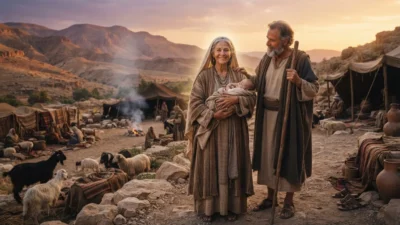
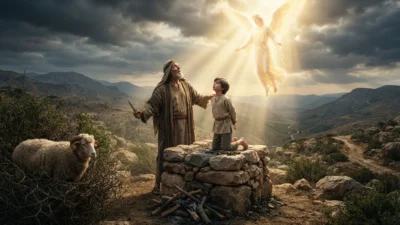
Some of the earliest major miracles appear in the stories of the patriarchs and Exodus. Later miracles occur during the periods of the judges, kings, prophets, exile, and restoration.
Moses, Elijah, Elisha, Joshua, and other biblical figures are associated with significant supernatural events.
These accounts are connected to real biblical settings, including Egypt, the wilderness, Canaan, Israel, and surrounding nations.
| Period | Examples of Miraculous Events |
|---|---|
| Patriarchal period | Miraculous births and divine interventions |
| Exodus | Plagues and the Red Sea |
| Wilderness | Manna and water from the rock |
| Conquest | Jericho and the Jordan crossing |
| Prophetic period | Miracles through Elijah and Elisha |
| Exile | Daniel’s supernatural deliverance |
Major Old Testament Miracles
The Old Testament contains many remarkable events. Some are especially important because they shape major biblical themes.
Creation
Genesis begins with God creating the heavens and the earth. Creation establishes the foundation for understanding God’s authority over everything that exists.
The Flood
The flood during Noah’s time demonstrates both divine judgment and preservation. Noah and his family are protected while widespread wickedness is judged.
The Plagues of Egypt
The ten plagues demonstrate God’s power over Egypt and ultimately lead toward Israel’s freedom.
The Red Sea
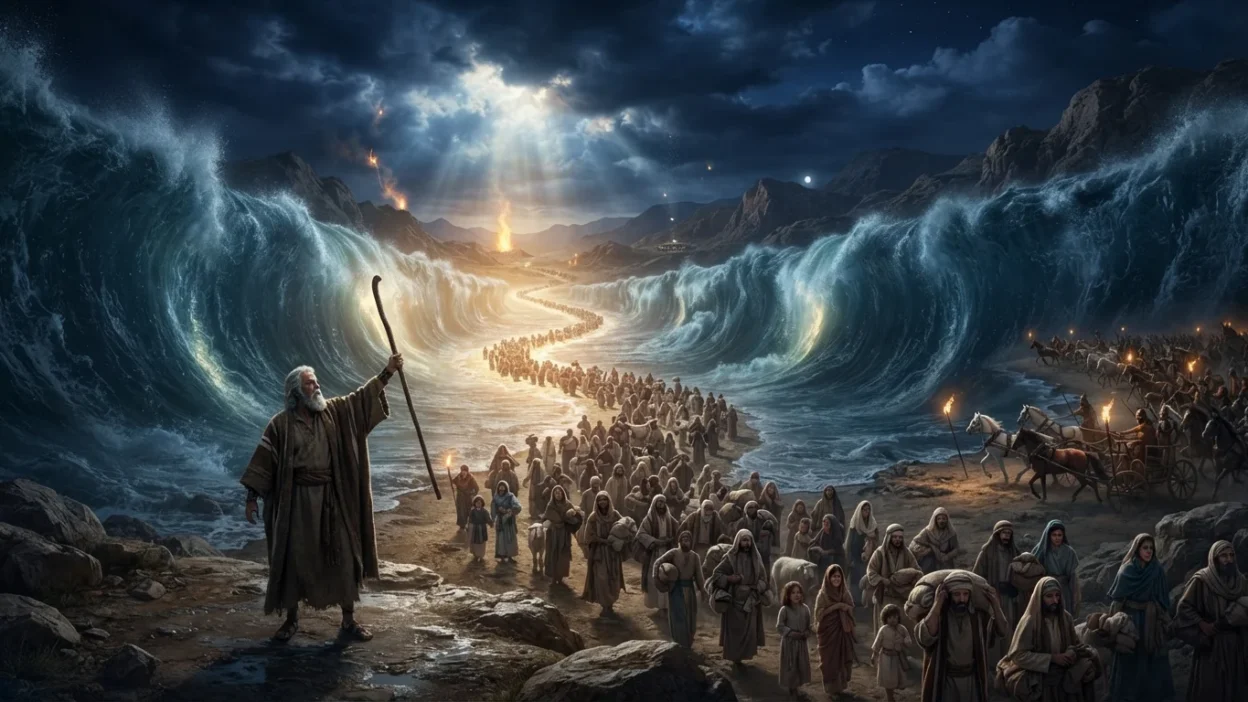
The crossing of the Red Sea is one of the most famous miracles in Scripture. The Israelites are trapped between the sea and the Egyptian army, yet God provides a way of escape.
Manna in the Wilderness
Israel receives miraculous food during its wilderness journey. This event highlights God’s provision when ordinary resources are unavailable.
Water From the Rock
God provides water for the Israelites in the wilderness through an extraordinary event associated with Moses.
Jericho
The fall of Jericho demonstrates God’s ability to give Israel victory in an unexpected way.
Elijah and the Widow
During a period of famine, Elijah becomes connected with God’s miraculous provision for a widow and her household.
Elijah and Fire From Heaven
Elijah’s confrontation with the prophets of Baal demonstrates God’s supremacy and challenges Israel’s divided worship.
Elisha’s Miracles
Elisha is associated with numerous miracles, including healing, provision, resurrection, and supernatural protection.
The Religious Connection of Old Testament Miracles
Miracles are deeply connected to biblical faith.
They often occur at important turning points. A miracle may confirm a prophet’s message, deliver God’s people, reveal divine authority, or demonstrate God’s response to human circumstances.
The miracles of Moses are closely associated with Israel’s liberation from Egypt.
The miracles of Elijah and Elisha are frequently connected with Israel’s spiritual condition and the prophetic ministry.
This shows that miracles are not isolated supernatural spectacles. They belong to a larger story about God’s relationship with humanity.
Spiritual Meaning of Old Testament Miracles
The old testament miracles meaning in the Bible has an important spiritual dimension.
Miracles repeatedly teach believers that God’s power is greater than human limitations.
1. God Has Ultimate Authority
Miracles involving nature demonstrate that creation remains under God’s authority.
The sea, storms, animals, fire, and other elements appear throughout biblical miracle accounts.
2. God Can Provide in Difficult Times
The manna in the wilderness is a strong example of supernatural provision.
It reminds readers that human resources are not the only source of hope.
3. God Delivers His People
The Exodus story demonstrates God’s ability to rescue people from circumstances they cannot overcome by themselves.
4. God Is Merciful
Several miracles involve healing, restoration, or provision.
These events reveal God’s compassion alongside His power.
5. Faith Matters
Miracles frequently occur in circumstances where trust and obedience are central.
They remind believers that faith involves relying on God even when circumstances appear impossible.
Symbolic Meaning of Old Testament Miracles
Many miracles also carry symbolic lessons.
The Red Sea can symbolize deliverance from oppression.
Manna can represent dependence on divine provision.
Healing can symbolize restoration.
Fire can represent divine holiness, authority, or judgment depending on the context.
The wilderness miracles can symbolize God’s ability to sustain people during difficult seasons.
| Miracle | Symbolic Lesson |
|---|---|
| Red Sea | Deliverance and freedom |
| Manna | Daily dependence |
| Water from rock | Provision in hardship |
| Jericho | Trust and obedience |
| Elijah’s fire | God’s supremacy |
| Elisha’s healing | Mercy and restoration |
| Daniel’s deliverance | Faithfulness under pressure |
These symbolic applications should complement the historical context rather than replace it.
Miracles and God’s Character
One of the most important reasons miracles appear in Scripture is to reveal God’s character.
They show Him as powerful, faithful, just, merciful, protective, and sovereign.
For example, the Exodus miracles reveal God’s ability to confront oppression and rescue His people.
The miracles associated with Elijah demonstrate divine authority in contrast with false worship.
The miracles of Elisha frequently highlight God’s compassion toward individuals and communities.
Therefore, biblical miracles can be studied as revelations of who God is, not merely what God can do.
Old Testament Miracles Compared With New Testament Miracles
Miracles occur in both Testaments, but they appear within different historical settings.
| Old Testament | New Testament |
|---|---|
| Often connected with prophets | Frequently associated with Jesus and His apostles |
| Exodus and Israel’s history are major contexts | Jesus’ ministry is a central context |
| Miracles confirm prophetic authority | Miracles reveal Jesus’ identity and kingdom |
| Nature, judgment, provision, and deliverance | Healing, deliverance, resurrection, provision |
| Often connected with Israel’s covenant story | Connected with the Gospel and expansion of God’s kingdom |
Both Testaments present miracles as meaningful acts rather than entertainment.
Why Do People Search for Old Testament Miracles?
People search for the old testament miracles meaning in the Bible because they want to understand whether biblical miracles have a deeper message.
Some readers are studying individual miracles such as the Red Sea, manna, Jericho, Elijah’s fire, or Elisha’s healing.
Others want to understand whether miracles still have spiritual meaning for modern believers.
The subject can also help readers understand God’s character and the larger biblical story.
For students of Scripture, studying miracles provides an important way to connect historical events with theological themes.
Common Misconceptions About Biblical Miracles
One misconception is that every unusual event in the Bible has exactly the same purpose.
In reality, biblical miracles have different functions depending on their context.
Another misconception is that miracles are included only to create wonder.
Many miracles communicate judgment, mercy, provision, authority, or deliverance.
It is also important not to assume that every miracle should be treated as a simple formula for receiving supernatural results today.
Biblical miracles occur according to God’s purposes and cannot be reduced to a method for controlling divine power.
Cultural and Modern Usage
Old Testament miracles continue to influence Christian preaching, literature, art, education, and popular culture.
Stories such as Noah’s flood, Moses crossing the Red Sea, Daniel in the lions’ den, and Elijah’s confrontation with Baal remain widely recognized.
Modern Christians may also use these stories as illustrations of faith during difficult circumstances.
However, responsible interpretation requires remembering the original biblical setting.
A miracle should first be understood in its own story before being applied to modern life.
Lessons for Christians Today
The old testament miracles meaning in the Bible offers several practical lessons.
First, human limitations do not limit God’s power.
Second, difficult circumstances can become opportunities to trust God.
Third, divine provision does not always arrive in the form people expect.
Fourth, miracles should lead people toward faith and obedience rather than pride.
Finally, biblical miracles encourage believers to recognize God’s sovereignty even when they cannot immediately see how circumstances will change.
Are Old Testament Miracles Meant to Be Taken Literally?
Different readers interpret particular miracle accounts differently, but within the biblical narrative, miracles are presented as meaningful divine interventions.
The important point for interpretation is to consider the context, genre, historical setting, and theological purpose of each passage.
Rather than assuming every miracle has the same message, readers should ask:
- What happened?
- Why did it happen?
- Who was involved?
- What did it reveal about God?
- How did people respond?
- What lesson does the surrounding passage communicate?
This approach leads to a more balanced understanding of biblical miracles.
Final Thought
The old testament miracles meaning in the Bible points readers toward the power, authority, mercy, and faithfulness of God. These extraordinary events are woven into major moments of biblical history, from creation and the Exodus to the ministries of Elijah and Elisha. Their importance is not simply that something supernatural happened. Each miracle contributes to a larger message about God’s relationship with humanity.
They can teach lessons about trusting God, depending on His provision, obeying His direction, and recognizing His sovereignty. When studied carefully in their original context, Old Testament miracles become more than fascinating stories. They become meaningful reminders that faith often begins where human strength ends and that God’s purposes remain greater than our limitations.
FAQs
1. What are Old Testament miracles?
Old Testament miracles are extraordinary events presented in Scripture as acts of divine intervention, often revealing God’s power, mercy, judgment, or authority.
2. What is the main purpose of miracles in the Old Testament?
Their purposes vary, but they commonly demonstrate God’s sovereignty, deliver His people, provide for their needs, confirm His messengers, or communicate judgment.
3. What is the most famous Old Testament miracle?
The parting of the Red Sea is among the most famous Old Testament miracles because it represents God’s dramatic deliverance of Israel from Egypt.
4. What do miracles teach Christians today?
They can encourage believers to trust God’s power, remain faithful during difficulties, depend on divine provision, and recognize God’s authority.
5. Did Moses perform miracles?
The biblical account associates Moses with several major miraculous events, particularly during the Exodus and Israel’s wilderness journey.
6. Which prophets performed miracles?
Elijah and Elisha are especially associated with numerous miracles, including acts involving provision, healing, resurrection, and divine judgment.
7. Are Old Testament miracles symbolic?
Many miracles have symbolic or theological significance in addition to their role within the biblical narrative. Their meaning should be understood from their context.