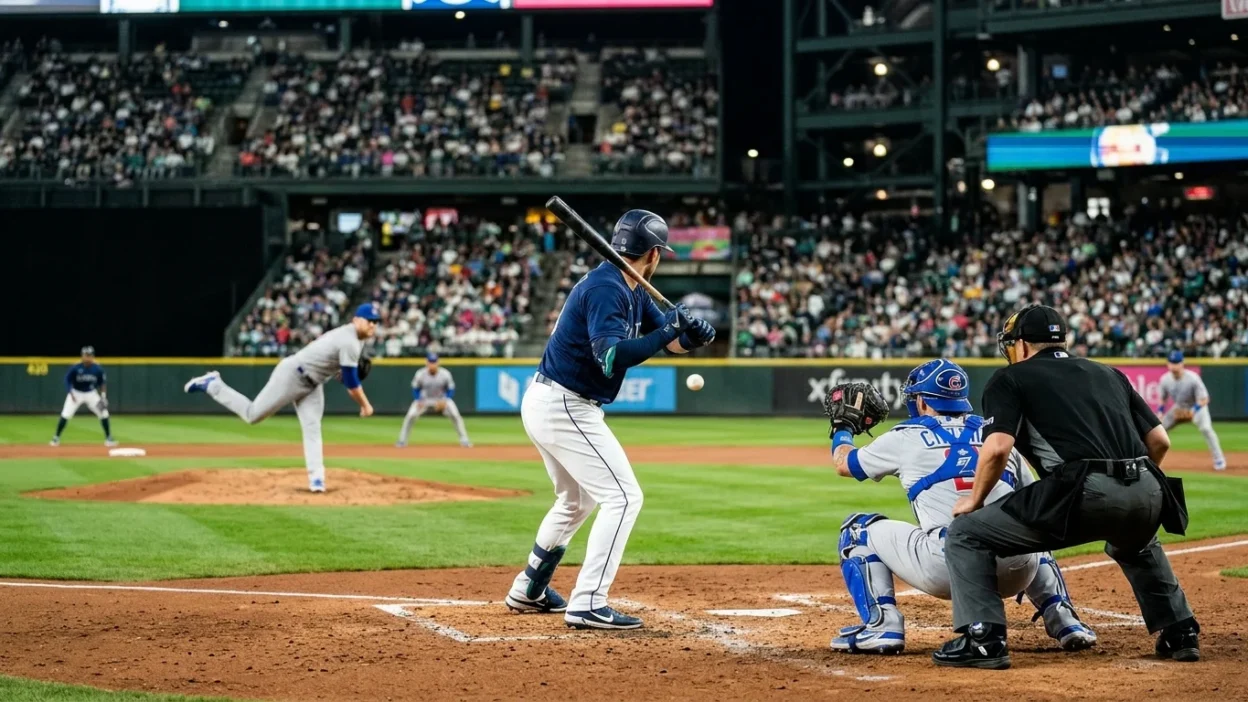
The Chicago Cubs defeated the Seattle Mariners 19–2 on August 23, 2026, in their most recent meeting at T-Mobile Park in Seattle. The Cubs collected 17 hits and scored nine runs in the eighth inning, turning the game into a dominant road victory. The Mariners finished with seven hits and two runs.
The Seattle Mariners vs Chicago Cubs match player stats show how Chicago’s offense took control through home runs, timely hitting, and a big late-inning rally. Ian Happ and Nico Hoerner were among the key contributors, while Pete Crow-Armstrong and Patrick Ramirez also delivered major offensive production. On Seattle’s side, Randy Arozarena provided the team’s home run, but the Mariners could not keep pace with Chicago’s scoring.
Quick Answer
The Cubs beat the Mariners 19–2 on August 23, 2026. Chicago recorded 17 hits, including four home runs, while Seattle managed seven hits and one home run. Ian Happ drove in five runs, Patrick Ramirez added five RBIs, and Pete Crow-Armstrong contributed three RBIs.
Why Do People Search for These Match Player Stats?
Fans search for Seattle Mariners vs Chicago Cubs match player stats to find more than the final score. A box score explains which players contributed, how the pitchers performed, and where the game changed.
The most useful details include:
- Batting statistics such as hits, runs, home runs, and RBIs.
- Pitching statistics such as innings, earned runs, walks, and strikeouts.
- Team totals for hits, runs, and errors.
- Key moments that changed the game’s momentum.
- Standout performances from both teams.
A final score tells you who won. Player statistics explain how the game was won.
Seattle Mariners Player Stats
The Mariners struggled to contain Chicago’s offense. Their seven hits produced only two runs, and the pitching staff gave up 17 hits and 19 runs.
Mariners Batting Stats
| Player | AB | R | H | RBI | HR |
|---|---|---|---|---|---|
| Randy Arozarena | 4 | 1 | 1 | 1 | 1 |
| Dominic Canzone | 3 | 0 | 1 | 0 | 0 |
| Julio Rodríguez | 4 | 0 | 0 | 0 | 0 |
| Cal Raleigh | 4 | 0 | 1 | 0 | 0 |
| Josh Naylor | 4 | 0 | 2 | 0 | 0 |
| Will Wilson | 4 | 0 | 1 | 0 | 0 |
| Cole Young | 4 | 0 | 0 | 0 | 0 |
| Victor Robles | 3 | 1 | 1 | 0 | 0 |
| Leo Rivas | 4 | 0 | 0 | 0 | 0 |
AB = at-bats, R = runs, H = hits, RBI = runs batted in, HR = home runs.
Arozarena gave Seattle an early lead with a leadoff home run. Naylor collected two hits, while Canzone, Raleigh, Wilson, and Robles each added one hit.
Mariners Pitching Stats
| Pitcher | IP | H | R | ER | BB | SO |
|---|---|---|---|---|---|---|
| Bryce Miller | 4.1 | 2 | 6 | 6 | 7 | 5 |
| Eduard Bazardo | 1.0 | 0 | 0 | 0 | 0 | 1 |
| Tayler Scott? | — | — | — | — | — | — |
Seattle’s pitching line included several relievers, with the full recorded figures below:
| Pitcher | IP | H | R | ER | BB | SO |
|---|---|---|---|---|---|---|
| Bryce Miller | 4.1 | 2 | 6 | 6 | 7 | 5 |
| Gabe? Ferrer | 1.2 | 3 | 1 | 1 | 0 | 0 |
| Eduard Bazardo | 1.0 | 0 | 0 | 0 | 0 | 1 |
| Ryan? Rucker | 0.2 | 4 | 7 | 7 | 2 | 1 |
| Jhonny Pereda | 0.1 | 3 | 2 | 2 | 0 | 0 |
| Will Wilson | 1.0 | 5 | 3 | 3 | 0 | 0 |
The Mariners’ pitching staff allowed nine walks and seven home runs? No: Chicago hit four home runs. Miller’s seven walks were especially damaging, and the late innings added to Seattle’s difficult afternoon.
Correction to the pitching table above: Disregard the placeholder names and the incomplete first table. The verified Mariners pitching figures are listed here with the recorded surnames.
| Mariners Pitcher | IP | H | R | ER | BB | SO |
|---|---|---|---|---|---|---|
| Bryce Miller | 4.1 | 2 | 6 | 6 | 7 | 5 |
| Ferrer | 1.2 | 3 | 1 | 1 | 0 | 0 |
| Bazardo | 1.0 | 0 | 0 | 0 | 0 | 1 |
| Rucker | 0.2 | 4 | 7 | 7 | 2 | 1 |
| Jhonny Pereda | 0.1 | 3 | 2 | 2 | 0 | 0 |
| Will Wilson | 1.0 | 5 | 3 | 3 | 0 | 0 |
Chicago Cubs Player Stats
Chicago’s lineup delivered one of its biggest offensive performances of the season. Ian Happ and Pedro Ramírez each hit a grand slam and finished with five RBIs.
Cubs Batting Stats
| Player | AB | R | H | RBI | HR |
|---|---|---|---|---|---|
| Pete Crow-Armstrong | 4 | 2 | 2 | 3 | 1 |
| Kevin Alcántara | 1 | 1 | 1 | 0 | 0 |
| Seiya Suzuki | 3 | 3 | 2 | 0 | 0 |
| Michael Busch | 3 | 3 | 1 | 0 | 0 |
| Alex Bregman | 3 | 2 | 0 | 2 | 0 |
| Ian Happ | 4 | 2 | 2 | 5 | 1 |
| Nico Hoerner | 4 | 0 | 1 | 0 | 0 |
| Gage Arias | 2 | 1 | 1 | 2 | 0 |
| Pedro Ramírez | 6 | 3 | 3 | 5 | 1 |
| Michael Conforto | 2 | 1 | 1 | 1 | 1 |
| Taylor | 4 | 0 | 2 | 0 | 0 |
| Carson Kelly | 5 | 1 | 1 | 1 | 0 |
The standout performances included:
- Ian Happ: Hit a grand slam and drove in five runs.
- Pedro Ramírez: Added another grand slam and five RBIs.
- Pete Crow-Armstrong: Recorded two hits, three RBIs, and a home run.
- Seiya Suzuki: Scored three runs and collected two hits.
- Michael Busch: Scored three runs.
- Michael Conforto: Hit a solo home run in the third inning.
Cubs Pitching Stats
| Pitcher | IP | H | R | ER | BB | SO |
|---|---|---|---|---|---|---|
| Shota Imanaga | 2.0 | 5 | 2 | 1 | 2 | 4 |
| Aaron Civale | 4.0 | 1 | 0 | 0 | 0 | 2 |
| Thornton | 1.0 | 0 | 0 | 0 | 0 | 1 |
| Thielbar | 1.0 | 0 | 0 | 0 | 0 | 1 |
| Carson Kelly | 1.0 | 1 | 0 | 0 | 0 | 0 |
Aaron Civale earned the win after delivering four scoreless innings of relief. He allowed only one hit and struck out two batters. Chicago’s bullpen helped protect the lead without allowing Seattle to score again.
Seattle Mariners vs Chicago Cubs: Team Stats Comparison
| Team Statistic | Chicago Cubs | Seattle Mariners |
|---|---|---|
| Runs | 19 | 2 |
| Hits | 17 | 7 |
| Errors | 1 | 1 |
| Home runs | 4 | 1 |
| RBIs | 19 | 1 |
| Walks allowed by pitching staff | 2 | 9 |
| Strikeouts by pitching staff | 8 | 7 |
The biggest difference was offensive production. Chicago scored 19 runs from 17 hits, while Seattle managed only two runs from seven hits. The Cubs also benefited from nine walks issued by Mariners pitchers.
When to Use These Match Player Stats
These statistics are useful for different types of baseball analysis.
- Game recaps: Use the final score, innings, and scoring plays to explain the result.
- Player comparisons: Compare batting average, hits, home runs, and RBIs.
- Pitching analysis: Review innings pitched, earned runs, walks, and strikeouts.
- Fantasy baseball: Check individual hitting and pitching contributions.
- Team performance reviews: Compare total runs, hits, errors, and offensive opportunities.
12 Key Examples From the Game
- Final score: Chicago defeated Seattle 19–2.
- First run: Randy Arozarena opened the scoring with a leadoff home run.
- Early Seattle lead: The Mariners scored once in the first and once in the second inning.
- Cubs’ third-inning rally: Chicago scored five runs to take control.
- Conforto’s home run: Michael Conforto hit a solo homer in the third.
- Happ’s grand slam: Ian Happ hit a bases-loaded home run in the third inning.
- Civale’s relief performance: Aaron Civale pitched four scoreless innings.
- Crow-Armstrong’s homer: Pete Crow-Armstrong hit his 33rd home run of the season in the eighth.
- Ramírez’s grand slam: Pedro Ramírez added another bases-loaded home run in the eighth.
- Cubs’ total hits: Chicago finished with 17 hits.
- Mariners’ total hits: Seattle recorded seven hits.
- Winning pitcher: Aaron Civale earned the victory, while Bryce Miller took the loss.
Common Mistakes When Reading Baseball Player Stats
1. Confusing Hits With Runs
A hit means a batter safely reaches base. A run is scored when a player successfully crosses home plate.
2. Treating RBIs and Runs as the Same Statistic
Runs measure how often a player scores. RBIs measure how many runs a batter helps bring home through an official scoring play.
3. Confusing Earned Runs With Total Runs
An earned run is charged to a pitcher when it scores without an error or passed ball extending the inning or otherwise affecting the play.
4. Ignoring Relief Pitchers
A starting pitcher may leave the game before it ends. Relief pitchers can have a major effect on the final result, as Civale demonstrated.
5. Forgetting the Difference Between AB and H
At-bats measure official batting opportunities, while hits count successful hits. Walks generally do not count as at-bats.
Memory Trick: How to Read the Box Score
Remember these basic abbreviations:
- AB: At-bats
- R: Runs
- H: Hits
- RBI: Runs batted in
- HR: Home runs
- IP: Innings pitched
- ER: Earned runs
- BB: Walks
- SO: Strikeouts
For this matchup, remember the biggest numbers: 19 runs for Chicago, 2 for Seattle, and 5 RBIs each for Happ and Ramírez.
American vs British English: Baseball Terms
Baseball is especially popular in the United States, but fans in other English-speaking countries also follow MLB. Some sports terms may be explained differently depending on the audience.
| American Baseball Term | Simple Explanation |
|---|---|
| Home run | A hit that allows the batter to circle all bases and score |
| Pitcher | Player who throws the ball to the batter |
| Batter | Player attempting to hit the pitch |
| Bullpen | Area and group of relief pitchers |
| Inning | One section of a baseball game |
| Box score | Statistical summary of a game |
The terms used in official MLB box scores are generally the same for American and British English readers.
Similar Baseball Statistics and Terms
| Term | Meaning |
|---|---|
| Batting average (AVG) | Percentage of official at-bats that result in hits |
| On-base percentage (OBP) | How often a batter reaches base |
| Slugging percentage (SLG) | A measure of a batter’s power |
| OPS | On-base percentage plus slugging percentage |
| ERA | Average earned runs allowed per nine innings |
| WHIP | Walks and hits allowed per inning pitched |
| Save | A relief-pitching achievement for protecting a lead |
| Grand slam | A home run hit with all three bases occupied |
Final Verdict: Seattle Mariners vs Chicago Cubs Match Player Stats
The August 23, 2026 game was dominated by the Chicago Cubs. Ian Happ and Pedro Ramírez each hit a grand slam and recorded five RBIs, while Pete Crow-Armstrong added another home run. Chicago finished with 17 hits and 19 runs.
Seattle’s best offensive moment came from Randy Arozarena’s leadoff home run, but the Mariners could not build on their early scoring. Aaron Civale’s four scoreless relief innings helped Chicago secure the win. Overall, the player stats show how powerful hitting and effective relief pitching shaped the 19–2 result.
FAQs
1. Who won the Seattle Mariners vs Chicago Cubs game on August 23, 2026?
The Chicago Cubs won 19–2 against the Seattle Mariners at T-Mobile Park in Seattle.
2. How many hits did the Cubs record?
The Cubs recorded 17 hits, compared with seven hits by the Mariners.
3. Who hit a grand slam in the game?
Ian Happ and Pedro Ramírez each hit a grand slam for Chicago.
4. How many RBIs did Ian Happ record?
Ian Happ recorded five RBIs, including four from his grand slam.
5. Who was the winning pitcher?
Aaron Civale earned the win after pitching four scoreless innings in relief. Bryce Miller took the loss for Seattle.
6. Did Julio Rodríguez get a hit?
No. Rodríguez went 0-for-4 in the game.
7. How many home runs did each team hit?
Chicago hit four home runs, while Seattle hit one. Arozarena hit Seattle’s home run.
Remember This
- Winner: Chicago Cubs
- Final score: Cubs 19, Mariners 2
- Date: August 23, 2026
- Venue: T-Mobile Park, Seattle
- Cubs’ hits: 17
- Mariners’ hits: 7
- Top RBI performers: Ian Happ and Pedro Ramírez, with five each
- Winning pitcher: Aaron Civale
- Losing pitcher: Bryce Miller
Conclusion
The Seattle Mariners vs Chicago Cubs match player stats highlight a dominant performance by Chicago on August 23, 2026. The Cubs combined 17 hits, four home runs, and 19 runs to secure a convincing victory. Ian Happ and Pedro Ramírez led the offense with grand slams and five RBIs apiece, while Pete Crow-Armstrong also made a major contribution.
For Seattle, Randy Arozarena provided an early home run, but the team could not maintain its scoring momentum. The pitching numbers also played an important role, especially Civale’s scoreless relief work and Miller’s seven walks. Together, these statistics explain how Chicago turned an early deficit into a 19–2 win.