The creation of adam meaning in the bible is one of the most important themes in the opening chapters of Genesis. The biblical account of Adam’s creation explores where humanity came from, how human beings relate to God, and why people have a special responsibility within creation. Adam’s story is not simply about the beginning of one individual; it is also presented as a reflection of humanity’s identity and purpose.
Understanding the creation of adam meaning in the bible involves examining the biblical description of Adam being formed from the ground and receiving life from God. The story highlights themes of human dignity, dependence on God, responsibility, work, relationships, and mortality. For Christians and other Bible readers, Adam’s creation provides an important foundation for understanding humanity’s place in the biblical story.
Quick Answer: What Does the Creation of Adam Mean in the Bible?
The creation of adam meaning in the bible refers to the biblical account of God forming Adam from the dust of the ground and giving him life. It symbolizes humanity’s connection to the earth, dependence on God, unique dignity, responsibility, and purpose within creation.
What Does the Creation of Adam Mean?
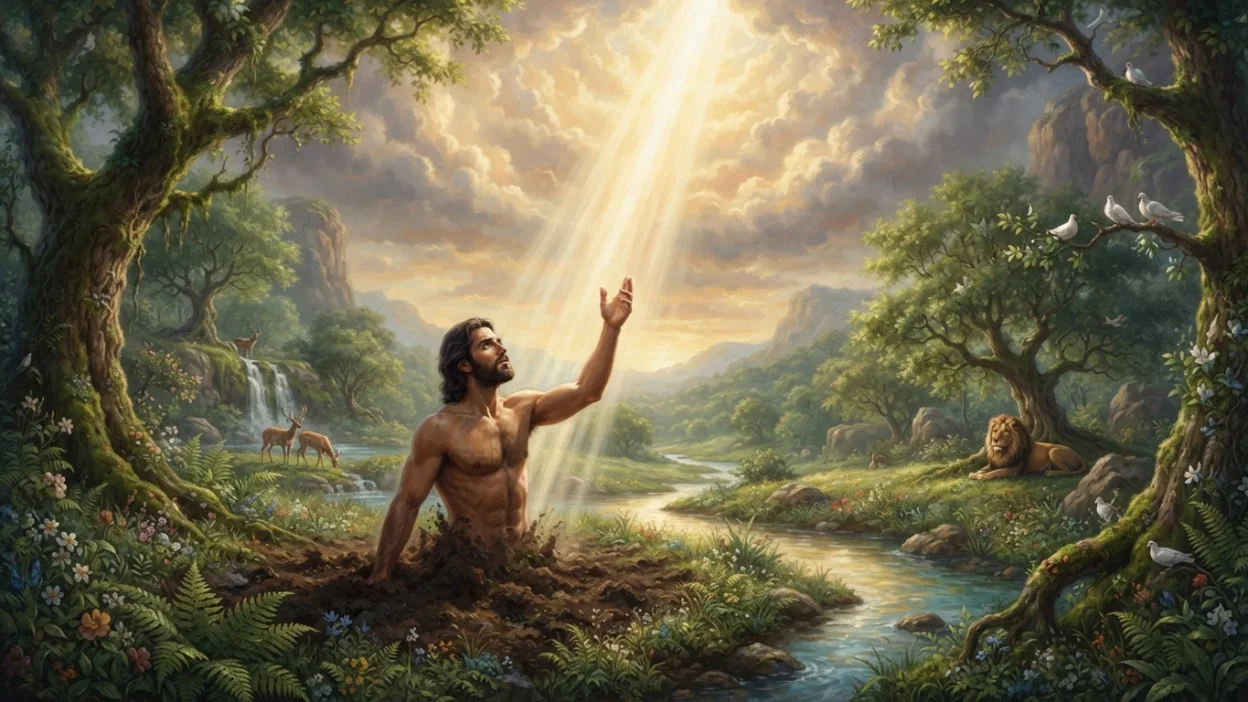
The creation of Adam is described in Genesis as a deliberate act of God.
Adam is portrayed as being formed from the ground and given life by God. This imagery communicates an important relationship between humanity and both the Creator and creation.
The name Adam is closely related to Hebrew words associated with humanity and the ground or earth. This connection provides an important symbolic foundation for the story.
Adam therefore represents both an individual and humanity more broadly.
The account teaches that human beings are earthly creatures with a unique life and purpose given by God.
Creation of Adam Meaning Table
| Aspect | Meaning |
|---|---|
| Adam | Humanity or human being |
| Ground | Connection with the earth |
| Formation | God’s creative work |
| Breath of life | Life received from God |
| Human purpose | Responsibility and relationship |
| Spiritual theme | Dependence on the Creator |
The Biblical Account of Adam’s Creation
The creation of Adam appears in the second creation account in Genesis.
The narrative describes the formation of a human being from the dust of the ground. God then gives life to the formed human, resulting in a living person.
This account differs in style from the broader creation sequence found earlier in Genesis.
Rather than focusing on the creation of the universe as a whole, the narrative provides a more detailed picture of human origins, the garden, work, relationships, and responsibility.
The creation of adam meaning in the bible is therefore connected with the larger biblical understanding of humanity’s place in God’s creation.
The Origin and History of the Adam Creation Story
The story of Adam comes from the ancient biblical tradition preserved in Genesis.
For thousands of years, Jewish and Christian communities have studied the account as an important explanation of humanity’s origin and relationship with God.
Different traditions have interpreted the story in different ways.
Some understand Adam as a historical individual created directly by God. Others place greater emphasis on the theological and symbolic meaning of the narrative.
Regardless of interpretation, the story has had an enormous influence on religious thought, philosophy, literature, art, and Western culture.
Origin and History Table
| Aspect | Description |
|---|---|
| Biblical book | Genesis |
| Main figure | Adam |
| Creation material | Dust or ground |
| Source of life | God |
| Major themes | Creation, purpose, responsibility, relationship |
| Religious influence | Jewish and Christian traditions |
Why Was Adam Formed From the Ground?
The connection between Adam and the ground is one of the most meaningful details in the story.
Human beings are physically connected with the earth. People depend on the natural world for food, shelter, water, and other necessities.
The imagery of dust also reminds readers of human mortality.
According to the broader Genesis narrative, human beings eventually return to the ground after death.
This creates a powerful cycle: humanity comes from the earth and ultimately returns to it.
Spiritually, this can encourage humility.
Human beings have dignity and purpose, but they are not independent of God or creation.
The Breath of Life and Human Existence
Another important aspect of the creation of adam meaning in the bible is the giving of life.
The Genesis narrative presents human life as something received from God.
The imagery of divine breath emphasizes that humanity’s existence is not presented as accidental or meaningless.
Life is portrayed as a gift.
This concept has influenced Jewish and Christian understandings of human dignity for centuries.
It also creates a connection between physical existence and spiritual responsibility.
Human beings are alive because God gives life, and therefore life should be treated with reverence and responsibility.
Adam and the Image of God
The broader Genesis creation account describes humanity as being created in the image of God.
This idea is central to biblical anthropology.
Being made in God’s image does not mean that human beings physically look like God.
Instead, it is commonly understood as expressing humanity’s unique dignity, moral capacity, relational nature, and responsibility within creation.
The creation of Adam can therefore be connected with the belief that human life has special value.
This concept has influenced discussions about human rights, dignity, morality, and the treatment of other people.
The Spiritual Meaning of the Creation of Adam
The spiritual meaning of the creation of adam meaning in the bible centers on identity, dependence, purpose, and responsibility.
Adam’s creation teaches that human beings are not self-created.
Life is received rather than manufactured by the individual.
This can encourage humility and gratitude.
The story also suggests that humanity has a purpose within creation.
Adam is placed in the garden with responsibilities involving cultivation and care.
The spiritual lesson is therefore not simply that God created humanity, but that human beings were created for meaningful participation in God’s creation.
Key Spiritual Lessons
- Human life has value.
- People depend on God for existence.
- Humanity has responsibility toward creation.
- Work can have meaningful purpose.
- Humility is important.
- Human beings are relational by nature.
Symbolic Meaning of Adam’s Creation
The story of Adam contains several powerful symbols.
Dust
Dust represents humanity’s connection with the earth and reminds people of their mortality.
Breath
Breath symbolizes life received from God.
Garden
The garden represents provision, beauty, responsibility, and an environment where humanity can live in relationship with God.
Image of God
The image of God symbolizes human dignity and unique responsibility.
Work
Adam’s responsibility in the garden symbolizes meaningful human activity and stewardship.
Together, these symbols give the creation of adam meaning in the bible a deeper spiritual significance.
Adam’s Purpose and Responsibility
Adam is not presented as a passive creation.
He is given responsibilities within the garden.
He is expected to cultivate and care for his environment.
This establishes an important biblical connection between humanity and stewardship.
Human beings are not merely consumers of creation.
They are presented as caretakers with responsibilities.
This principle has influenced Christian discussions about work, agriculture, environmental care, and responsible use of natural resources.
The creation story therefore connects human identity with responsibility.
Adam and Eve: Creation and Relationship
The creation of Adam also leads into the biblical account of Eve.
Genesis presents Adam as being alone before the creation of the woman.
The narrative emphasizes the importance of companionship and relationship.
Human beings are portrayed as relational creatures who need community rather than complete isolation.
The relationship between Adam and Eve becomes central to the later story of the Garden of Eden.
Their creation therefore introduces themes of marriage, companionship, family, and human relationships.
Adam and Eve Comparison Table
| Adam | Eve |
|---|---|
| First human male in Genesis | First human female in Genesis |
| Connected with the ground | Associated with life |
| Represents humanity | Represents life and human relationship |
| Given responsibility in the garden | Shares the human experience and responsibility |
| Part of the creation narrative | Part of the creation narrative |
Creation of Adam Compared With Other Creation Themes
| Theme | Biblical Focus | Main Idea |
|---|---|---|
| Creation of light | Beginning of ordered creation | Order and separation |
| Creation of land | Formation of the natural world | Habitable creation |
| Creation of animals | Living creatures | Diversity of life |
| Creation of humanity | Adam and Eve | Human dignity and responsibility |
| Sabbath | Completion and rest | Sacred rhythm and worship |
This comparison shows that the creation of humanity is presented as part of a larger biblical vision of an ordered and purposeful creation.
Why Do People Search for Creation of Adam Meaning in the Bible?
People search for the creation of adam meaning in the bible for many reasons.
Some want to understand the origin of humanity according to Scripture.
Others are interested in the meaning of Adam’s name and the symbolism of dust and breath.
Common questions include:
- How was Adam created?
- Why was Adam made from dust?
- What does Adam’s name mean?
- What does the breath of life represent?
- Why is humanity made in God’s image?
- What was Adam’s purpose?
- What can Adam’s creation teach modern believers?
These questions make the subject relevant to biblical studies and personal spiritual reflection.
Common Misconceptions About Adam’s Creation
One common misconception is that Adam’s creation is described in exactly the same way throughout Genesis.
The opening chapters contain different literary presentations of creation. Readers should recognize the differences in style and emphasis.
Another misconception is that the dust imagery means humanity has no spiritual value.
The opposite is closer to the theological emphasis: humanity is formed from the earth but receives life and dignity from God.
Some readers also assume that the creation account is intended to answer every scientific question about human origins.
Genesis is primarily a theological and religious text. Its central concerns include God, creation, humanity, purpose, responsibility, and relationship.
Cultural and Modern Meaning of Adam’s Creation
The story of Adam’s creation has influenced art and culture for centuries.
One of the most famous artistic interpretations is Michelangelo’s depiction of the creation of Adam on the ceiling of the Sistine Chapel.
The scene has become a powerful cultural symbol of human creation and divine connection.
Modern discussions of Adam’s creation also involve theology, philosophy, literature, science, and questions about human identity.
Some people interpret the account literally, while others emphasize its symbolic or theological meaning.
These different approaches demonstrate the lasting influence of the story.
What the Creation of Adam Teaches About Human Dignity
The creation of adam meaning in the bible is closely connected with the value of human life.
Adam is intentionally formed and given life by God.
Humanity is also presented as bearing God’s image.
Together, these ideas support the biblical view that people possess inherent dignity.
This means that human worth should not depend only on wealth, intelligence, social status, physical ability, or achievement.
The creation story provides a foundation for viewing human life as valuable because of its relationship to the Creator.
Human Dependence and Humility
The imagery of dust and divine breath creates a balance between dignity and humility.
Human beings have remarkable value, but they remain dependent creatures.
They are connected with the earth and subject to mortality.
This balance is spiritually important.
People do not need to think of themselves as worthless, but neither should they consider themselves completely self-sufficient.
The story encourages gratitude, humility, and responsible living.
The Lasting Importance of Adam’s Creation
The creation of adam meaning in the bible remains important because it addresses questions that every generation asks.
Where did humanity come from?
Why are human beings valuable?
What is the purpose of life?
How should people treat creation?
What does it mean to live responsibly?
The Genesis account provides theological answers centered on God as Creator and humanity as a purposeful creation.
Its message continues to influence religious beliefs and cultural conversations about human identity.
Final Thought
The creation of adam meaning in the bible presents humanity as both deeply valuable and completely dependent on God. Adam is formed from the ground, connecting human beings with the earth, while the giving of life emphasizes dependence on the Creator. The account also introduces ideas of human dignity, purpose, work, relationships, stewardship, and mortality. Adam is not merely presented as the first human figure; he represents humanity’s place within the biblical story of creation.
The symbolism of dust and life encourages both humility and gratitude. While Jewish and Christian traditions differ in how they interpret the account historically and symbolically, its central themes remain significant. The story continues to invite readers to consider where human life comes from and how people should live responsibly within creation.
FAQs
1. What is the creation of Adam in the Bible?
It is the Genesis account describing God forming Adam from the ground and giving him life.
2. What does Adam mean in the Bible?
Adam is closely associated with humanity and the ground or earth in Hebrew.
3. Why was Adam created from dust?
The dust imagery emphasizes humanity’s connection with the earth, dependence on God, and mortality.
4. What does the breath of life symbolize?
It symbolizes life given by God and emphasizes the divine source of human existence.
5. What is the spiritual meaning of Adam’s creation?
It can symbolize human dignity, dependence on God, purpose, stewardship, humility, and responsibility.
6. Was Adam created in God’s image?
The Genesis creation account presents humanity as being made in the image of God, a concept commonly associated with human dignity and responsibility.
7. What can Adam’s creation teach us today?
It can encourage people to value human life, remain humble, care for creation, and recognize that life carries purpose and responsibility.

William Noah is a spiritual writer at BibLoft, exploring hidden meanings, symbols, and divine insights. He shares thoughtful interpretations that inspire self-awareness, inner growth, and spiritual understanding.