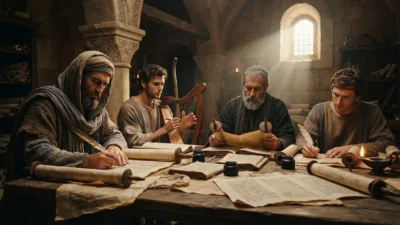

The book of jubilees meaning is a topic that often interests Bible readers, students of ancient history, and people exploring religious texts outside the traditional biblical canon. The Book of Jubilees is an ancient Jewish religious work that retells parts of the stories found in Genesis and Exodus while adding explanations, timelines, and interpretations not found in the standard biblical text.
Understanding the book of jubilees meaning requires looking at its historical background and religious purpose. The book is sometimes called “Little Genesis” because it retells biblical history from creation through the time of Moses. Although it is not included in the Jewish Bible or most Christian Bibles, it has historical importance and remains part of the biblical canon of the Ethiopian Orthodox Tewahedo Church.
Quick Answer: What Does the Book of Jubilees Mean?
The Book of Jubilees is an ancient Jewish religious text that retells and expands stories from Genesis and Exodus. It organizes biblical history around periods of time called jubilees and emphasizes God’s covenant, religious law, sacred calendars, and the identity of God’s people.
What Is the Book of Jubilees?
The Book of Jubilees is an ancient work that presents a rewritten version of biblical history.
Its narrative begins with creation and continues through major events involving Adam, Noah, Abraham, Isaac, Jacob, and Moses.
The book retells familiar biblical stories while adding details and interpretations.
One of its most important features is its organization of history into periods called jubilees.
A jubilee consists of forty-nine years, usually understood as seven cycles of seven years.
The book uses this system to create a carefully structured timeline of sacred history.
The book of jubilees meaning is therefore closely connected with the idea that history follows an ordered divine pattern.
| Feature | Meaning |
|---|---|
| Main Subject | Retelling biblical history |
| Primary Biblical Connection | Genesis and Exodus |
| Time Structure | Jubilees and seven-year cycles |
| Main Themes | Covenant, law, identity, sacred time |
| Historical Importance | Ancient Jewish religious literature |
Why Is It Called the Book of Jubilees?
The book receives its name from the way it divides history.
According to its structure, important events are organized into jubilees, weeks of years, and individual years.
This system creates a detailed chronological framework.
The number seven plays an important role throughout the book.
Seven-day weeks, seven-year cycles, and periods of forty-nine years all reflect a structured understanding of sacred time.
The name therefore emphasizes more than a calendar.
It expresses the idea that human history is ordered and meaningful within a larger divine plan.
This is one reason the book of jubilees meaning is often associated with sacred time and spiritual order.
The Origin and History of the Book of Jubilees
Most scholars date the Book of Jubilees to the Second Temple Jewish period, generally around the second century BCE.
It was originally written in Hebrew.
For many centuries, the complete text survived mainly through an Ethiopic translation.
Fragments of the work were later discovered among the Dead Sea Scrolls, confirming that the book was known in ancient Jewish communities and originally existed in Hebrew.
The discovery of Hebrew fragments significantly increased scholarly interest in the text.
The Book of Jubilees provides valuable insight into how some ancient Jewish communities interpreted biblical stories.
It reflects religious concerns about law, identity, worship, and the proper observance of sacred time.
What Does the Book of Jubilees Say About Biblical History?
The Book of Jubilees retells many events already found in Genesis.
However, it often expands the stories.
For example, it adds explanations about the lives of biblical figures and presents additional details about events not fully described in Genesis.
The book also emphasizes the importance of God’s covenant with humanity and with the descendants of Abraham.
It presents biblical history as a carefully ordered sequence.
Rather than viewing events as random, the narrative suggests that history unfolds according to a divine plan.
This perspective is central to understanding the book of jubilees meaning.
The Biblical and Religious Connection
The Book of Jubilees has a strong connection with the Bible because much of its content is based on Genesis and Exodus.
However, it should not be confused with the biblical books themselves.
The text is considered non-canonical in Judaism and in most Christian traditions.
This means it is not included in the standard Jewish or Protestant biblical canon.
It is also not part of the Roman Catholic biblical canon.
However, the Book of Jubilees holds canonical status within the Ethiopian Orthodox Tewahedo tradition.
This makes it an important example of how different religious traditions have preserved and recognized different collections of sacred writings.
Is the Book of Jubilees Part of the Bible?
The answer depends on which religious tradition is being discussed.
| Tradition | Status of the Book of Jubilees |
|---|---|
| Judaism | Not part of the Hebrew Bible |
| Protestant Christianity | Not part of the biblical canon |
| Roman Catholic Church | Not part of the biblical canon |
| Eastern Orthodox traditions generally | Not part of the standard biblical canon |
| Ethiopian Orthodox Tewahedo Church | Recognized as canonical |
This distinction is important.
The book of jubilees meaning should be understood within its historical and religious context rather than assuming it has the same status in every Christian tradition.
Major Themes in the Book of Jubilees
Several major themes appear throughout the text.
Covenant
The book strongly emphasizes God’s covenant relationship with key biblical figures.
Law
Religious laws and commandments receive significant attention.
Sacred Time
The calendar and proper observance of holy times are important themes.
Identity
The text emphasizes the distinct religious identity of God’s people.
Obedience
Faithfulness to divine commands is presented as essential.
These themes reveal the concerns of the ancient religious community that produced and preserved the work.
The Spiritual Meaning of the Book of Jubilees
The spiritual interpretation of the book of jubilees meaning often focuses on order, faithfulness, and sacred time.
The book presents history as meaningful rather than accidental.
Events occur within a structured framework.
Symbolic Spiritual Themes
| Symbolic Theme | Spiritual Interpretation |
|---|---|
| Jubilee cycles | Divine order and completeness |
| The number seven | Spiritual rhythm and sacred structure |
| Covenant | Relationship and commitment |
| Law | Faithful living |
| Sacred calendar | Remembering God in daily life |
| Biblical history | Learning from previous generations |
For readers who approach the text spiritually, the Book of Jubilees can symbolize the importance of living with purpose and recognizing patterns of faithfulness throughout history.
However, spiritual interpretations should be distinguished from the question of whether the book belongs to a particular biblical canon.
Why Is the Number Seven Important in Jubilees?
The number seven appears repeatedly in the structure of the book.
Biblical traditions often connect seven with cycles of time, including the seven-day week and the Sabbath.
The Book of Jubilees expands this pattern by organizing history into weeks of years and larger jubilee periods.
This numerical structure gives the text a strong sense of order.
For many readers, the repeated use of seven symbolizes completeness and sacred rhythm.
It also reflects the importance of remembering that religious life was connected with calendars, festivals, and regular patterns of worship.
Why Do People Search for Book of Jubilees Meaning?
People search for the book of jubilees meaning for many reasons.
Some discover the book while researching the Dead Sea Scrolls.
Others hear that it contains additional stories about familiar biblical figures.
Some readers want to know whether the book was removed from the Bible.
Others are curious about its connection with the Ethiopian Orthodox Bible.
The text has also become popular in discussions about ancient Jewish literature and so-called “lost books” of the Bible.
These questions often lead readers to explore the difference between canonical Scripture and historically important religious writings.
Common Misconceptions About the Book of Jubilees
Misconception 1: It Was Simply Removed From Every Bible
The history of biblical canon is more complicated.
Different religious communities recognized different collections of sacred writings.
The Book of Jubilees was not part of the Jewish or most Christian biblical canons, but it remains canonical in the Ethiopian Orthodox Tewahedo tradition.
Misconception 2: It Replaces Genesis
The Book of Jubilees does not replace Genesis.
It retells and expands many stories from Genesis and Exodus.
Misconception 3: Everything in the Book Is Found in the Bible
The book contains additional interpretations and details that do not appear in the biblical text.
Misconception 4: It Is a Modern Discovery
The Book of Jubilees is an ancient text known through manuscript traditions and supported by discoveries among the Dead Sea Scrolls.
Misconception 5: It Has the Same Authority in Every Christian Church
Different religious traditions have different views regarding its authority and canonical status.
Cultural and Modern Interest in the Book of Jubilees
The Book of Jubilees remains important in academic and religious discussions.
Scholars study it to understand Second Temple Judaism and ancient interpretations of Scripture.
It is also studied alongside other ancient writings connected with the Dead Sea Scrolls.
Modern readers are interested because the book provides a different perspective on familiar biblical stories.
Online discussions have also increased public curiosity.
Many people search for ancient texts that are not included in standard Bible editions.
This interest makes it important to distinguish between historical significance and canonical authority.
A text can be historically valuable without being considered Scripture by every religious tradition.
How Should Christians Read the Book of Jubilees?
Christians should first understand the status of the book within their own religious tradition.
For most Christian traditions, it can be read as ancient religious literature rather than as part of the biblical canon.
It may provide insight into ancient Jewish thought and biblical interpretation.
However, readers should avoid assuming that every statement in the book has the same authority as canonical Scripture.
Historical context is important.
Comparing the Book of Jubilees with Genesis and Exodus can help readers identify where it follows the biblical narrative and where it adds interpretation.
This approach encourages thoughtful and responsible study.
The Deeper Meaning of the Book of Jubilees
The deeper book of jubilees meaning can be understood through its view of time, faithfulness, and history.
The book presents the past as a sacred story with patterns and purpose.
Its structured calendar suggests that time itself can be understood as meaningful.
The repeated focus on covenant reminds readers of commitment and relationship.
Its emphasis on obedience reflects the belief that faith should shape everyday life.
Whether read as canonical Scripture within the Ethiopian Orthodox tradition or as ancient Jewish literature in other traditions, the Book of Jubilees remains valuable for understanding how ancient communities interpreted their sacred history.
Final Thought
The book of jubilees meaning goes beyond simply identifying an ancient religious text. The Book of Jubilees offers a carefully structured retelling of biblical history, emphasizing covenant, law, obedience, sacred time, and divine order. Its connection with Genesis and Exodus makes it especially interesting for readers who want to understand how ancient Jewish communities interpreted familiar biblical stories.
Although it is not included in the Jewish Bible or most Christian biblical canons, it remains canonical in the Ethiopian Orthodox Tewahedo Church and holds significant historical value. Studying the Book of Jubilees can help modern readers better understand Second Temple Judaism, ancient biblical interpretation, and the long history of religious literature surrounding the Bible.
FAQs
1. What is the Book of Jubilees?
The Book of Jubilees is an ancient Jewish religious text that retells and expands parts of Genesis and Exodus.
2. Why is it called the Book of Jubilees?
It organizes biblical history into cycles of jubilees, generally structured around periods of forty-nine years.
3. Is the Book of Jubilees in the Bible?
It is not included in the Jewish Bible or most Christian Bibles, but it is canonical in the Ethiopian Orthodox Tewahedo Church.
4. When was the Book of Jubilees written?
Most scholars date it to the Second Temple period, generally around the second century BCE.
5. What language was the Book of Jubilees originally written in?
It was originally written in Hebrew, and Hebrew fragments were discovered among the Dead Sea Scrolls.
6. Does the Book of Jubilees contain stories not found in Genesis?
Yes. It retells biblical stories while adding interpretations, details, and explanations not found in Genesis and Exodus.
7. What is the main spiritual theme of the Book of Jubilees?
Major themes include divine order, covenant, obedience, sacred time, and faithfulness to religious law.