
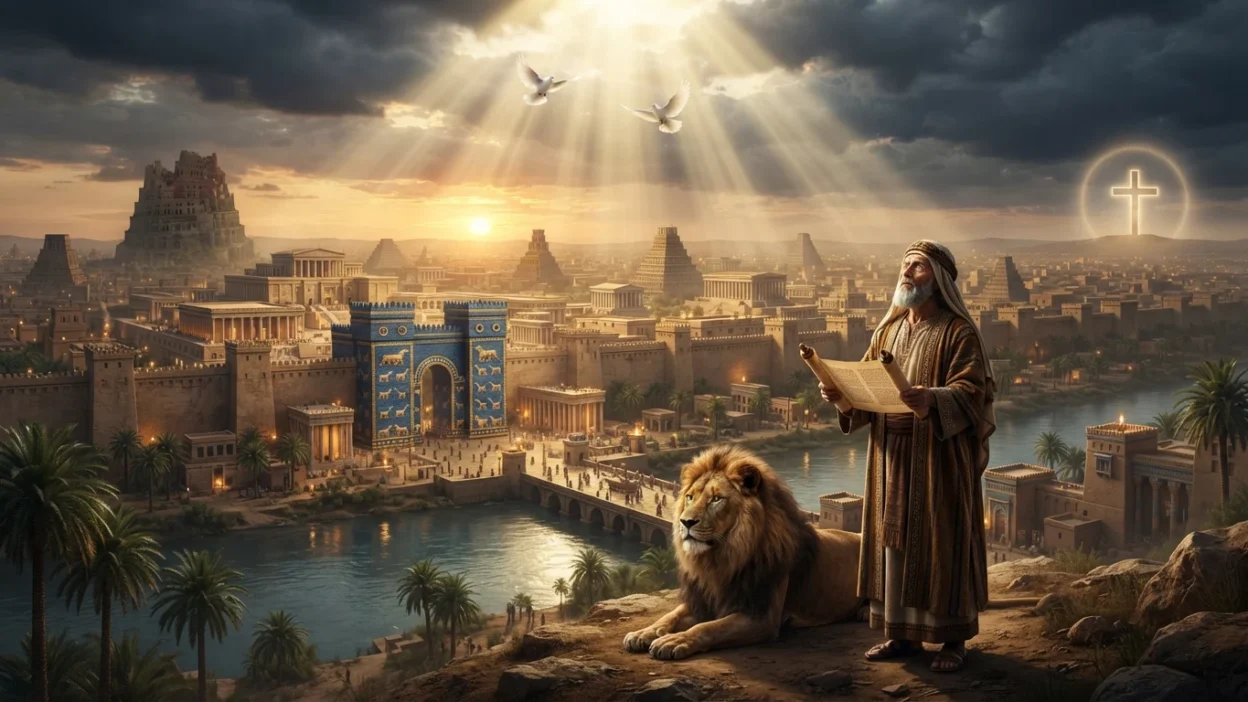
The Babylon meaning in the Bible is one of the most fascinating topics in biblical study. Babylon was not only an ancient city and powerful empire but also a symbol of human pride, rebellion against God, and spiritual corruption. Understanding the Babylon meaning in the Bible helps readers see how this historic city became a powerful spiritual image throughout both the Old and New Testaments.
The Babylon meaning in the Bible goes beyond geography. While Babylon played a major role in Israel’s history, it also represents the world’s opposition to God and the consequences of sin. At the same time, the Bible reminds believers that God remains sovereign over every nation and will ultimately establish His eternal kingdom. This article explores Babylon’s origin, biblical importance, spiritual symbolism, and lasting lessons for Christians today.
Quick Answer
The Babylon meaning in the Bible refers to both an ancient Mesopotamian city and a powerful spiritual symbol. Biblically, Babylon represents human pride, rebellion, idolatry, worldly power, and opposition to God, while also demonstrating God’s justice, sovereignty, and ultimate victory.
What Does Babylon Mean in the Bible?
The Babylon meaning in the Bible includes both a historical city and a symbolic message.
Historically, Babylon was one of the greatest cities of the ancient world and the capital of the Babylonian Empire.
Spiritually, Babylon represents:
- Pride
- Human rebellion
- Idolatry
- Worldly power
- Spiritual corruption
- Opposition to God’s kingdom
Throughout Scripture, Babylon reminds believers of the dangers of trusting human power instead of God.
Meaning of Babylon
| Aspect | Meaning |
|---|---|
| Biblical Meaning | City of rebellion and worldly power |
| Historical Location | Ancient Mesopotamia |
| Spiritual Symbolism | Pride, sin, idolatry |
| First Major Reference | Genesis 11 (Tower of Babel) |
| Final Biblical Symbol | Revelation 17–18 |
Origin and History of Babylon
Babylon was located in ancient Mesopotamia, near present-day Iraq.
Its history begins shortly after the Flood when people gathered to build the Tower of Babel.
Instead of honoring God, they attempted to make a name for themselves. God responded by confusing their language and scattering the nations across the earth.
Centuries later, Babylon became one of the world’s greatest empires under King Nebuchadnezzar, conquering Jerusalem and taking many Israelites into exile.
Origin of Babylon
| Category | Details |
|---|---|
| Location | Mesopotamia |
| Modern Country | Iraq |
| Early Biblical Connection | Tower of Babel |
| Famous King | Nebuchadnezzar |
| Biblical Theme | Human pride and God’s sovereignty |
Babylon Throughout the Bible
Babylon appears throughout both the Old and New Testaments.
Important events include:
- The Tower of Babel (Genesis 11)
- Judah’s exile to Babylon
- Daniel serving in Babylon
- The fiery furnace
- Belshazzar’s feast
- Symbolic Babylon in Revelation
These events show both God’s judgment and His faithfulness to His people.
Babylon’s Role in Israel’s History
Babylon played a significant role in biblical history.
The Babylonian Empire conquered Jerusalem in 586 BC.
Many Israelites, including Daniel, Ezekiel, and other captives, were taken into exile.
Although this judgment resulted from Israel’s disobedience, God promised restoration and eventually brought His people back to their homeland.
Spiritual Meaning of Babylon in the Bible
The Babylon meaning in the Bible carries profound spiritual symbolism.
Spiritually, Babylon represents:
- Pride without God
- Trust in worldly power
- Idolatry
- Moral corruption
- Spiritual confusion
- Rebellion against God’s authority
At the same time, Babylon reminds believers that God’s kingdom will always triumph over human kingdoms.
Symbolic Babylon in Revelation
In the Book of Revelation, Babylon becomes a symbol rather than merely a city.
It represents:
- A corrupt world system
- False religion
- Economic greed
- Political oppression
- Spiritual deception
Its final destruction demonstrates God’s complete victory over evil.
Comparison of Babylon in the Old and New Testaments
| Old Testament Babylon | New Testament Babylon |
|---|---|
| Historical empire | Symbolic world system |
| Conquered Judah | Opposes God’s people |
| Led Israel into exile | Represents spiritual corruption |
| Ruled by earthly kings | Represents worldly rebellion |
| Eventually defeated | Ultimately judged by God |
This comparison shows how Babylon’s meaning expands throughout Scripture.
Cultural and Modern Usage
Today, the name Babylon is often used as a symbol of:
- Corruption
- Materialism
- Pride
- Immorality
- Political power
- Rebellion against God
Many Christians use the term to describe systems or cultures that reject biblical truth.
Why People Search for Babylon Meaning in the Bible
People often search this topic because they want to know:
- What does Babylon symbolize?
- Why was Babylon important?
- Is Babylon mentioned in Revelation?
- What happened at Babel?
- Why did Israel go into exile?
- What lessons does Babylon teach today?
Understanding these questions provides deeper insight into biblical prophecy and history.
Common Misconceptions About Babylon
Several misunderstandings exist.
Babylon Is Only a City
The Bible also uses Babylon as a powerful spiritual symbol.
Babylon Was Always Evil
God used Babylon as an instrument of judgment, though He later judged Babylon itself.
Babylon and Babel Are Unrelated
The names are historically and biblically connected through the theme of human pride and confusion.
Babylon Exists Only in History
Revelation uses Babylon symbolically to describe worldly systems opposed to God.
Lessons Christians Learn from Babylon
The story of Babylon teaches important spiritual truths.
- Pride leads to destruction.
- God rules over every nation.
- Faithfulness is possible even in difficult cultures.
- God protects those who trust Him.
- Worldly kingdoms are temporary.
- God’s eternal kingdom will never fail.
These lessons continue to encourage believers today.
Final Thought
The Babylon meaning in the Bible reveals much more than the story of an ancient empire. It represents humanity’s tendency toward pride, idolatry, and self-reliance while demonstrating God’s justice, mercy, and sovereign control over history. From the Tower of Babel to the visions of Revelation, Babylon consistently reminds believers that every earthly kingdom is temporary, but God’s kingdom is everlasting.
Understanding the Babylon meaning in the Bible encourages Christians to remain faithful in a world that often opposes God’s truth. Like Daniel and other faithful believers in Babylon, Christians are called to trust God, live with integrity, and place their hope in His eternal kingdom rather than worldly power.
FAQs
1. What is the Babylon meaning in the Bible?
Babylon represents an ancient empire as well as a symbol of pride, rebellion, idolatry, and opposition to God.
2. Where was Babylon located?
Babylon was located in ancient Mesopotamia, in present-day Iraq.
3. Why is Babylon important in the Bible?
It conquered Judah, took Israel into exile, and later became a symbol of worldly rebellion against God.
4. Is Babylon mentioned in Revelation?
Yes. Revelation uses Babylon as a symbolic representation of a corrupt world system opposed to God.
5. What is the spiritual meaning of Babylon?
It symbolizes pride, spiritual corruption, false worship, and trust in worldly power instead of God.
6. What can Christians learn from Babylon?
Believers learn to trust God, reject pride, remain faithful, and look forward to God’s eternal kingdom.
7. Is Babylon the same as Babel?
They are closely connected. Babel marks the beginning of human rebellion, while Babylon becomes its fullest biblical symbol.