
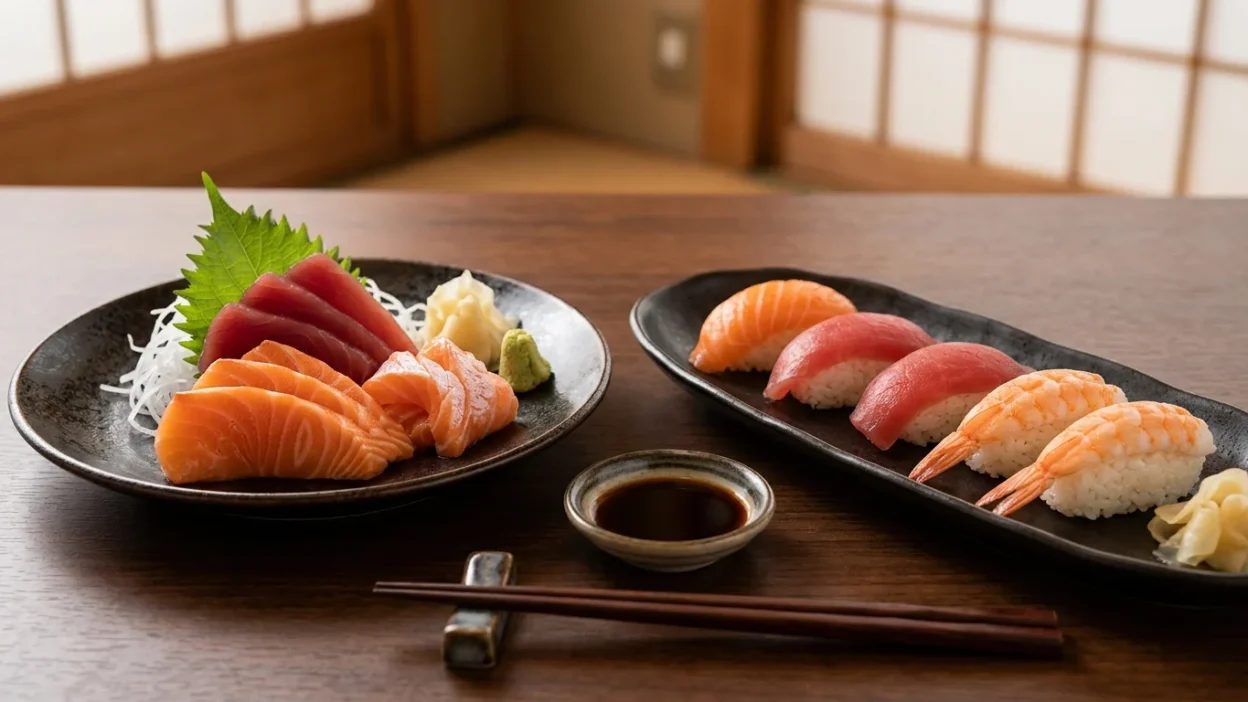
Sashimi and nigiri are two popular Japanese dishes often found on sushi restaurant menus. Although both feature fresh fish or seafood, they are not the same. The main difference between sashimi and nigiri is that sashimi consists of thinly sliced raw fish or seafood served without rice, while nigiri is made with a small mound of seasoned sushi rice topped with a slice of fish or another ingredient. Understanding this difference makes it easier to choose the right dish when ordering Japanese food.
Both dishes highlight the flavor and quality of their ingredients, but they offer different eating experiences. Sashimi focuses on the natural taste and texture of seafood, while nigiri combines seafood with slightly seasoned rice. Whether you are new to Japanese cuisine or already enjoy sushi, learning how these dishes differ can help you understand menus and order with confidence.
Quick Answer
Sashimi is thinly sliced raw fish or seafood served without rice. Nigiri is a type of sushi made with hand-shaped seasoned rice topped with fish, seafood, or another ingredient. The simplest way to remember the difference is that sashimi has no rice, while nigiri always includes sushi rice.
Why Do People Confuse Sashimi and Nigiri?
People often confuse sashimi and nigiri because both are associated with Japanese cuisine and commonly feature raw seafood. Restaurants may also serve them next to each other on the same menu.
There are a few reasons for the confusion:
- Similar ingredients: Both dishes can use tuna, salmon, yellowtail, and other seafood.
- Similar appearance: Both may feature neatly sliced pieces of fish.
- Restaurant menus: They are often listed in the sushi section.
- Raw seafood: Many versions of both dishes use raw fish, although some nigiri toppings are cooked.
- Japanese food terminology: Beginners may not know that sushi refers to vinegared rice rather than simply raw fish.
The key difference is the rice. Sashimi is served without it, while nigiri combines a topping with a small portion of sushi rice.
What Is Sashimi?
Sashimi is a traditional Japanese dish consisting of carefully prepared, thin slices of raw fish or seafood. It is usually served without rice, allowing diners to enjoy the natural flavor, texture, and freshness of the main ingredient.
Common sashimi ingredients include:
- Salmon
- Tuna
- Yellowtail
- Sea bream
- Octopus
- Scallops
- Squid
Sashimi is often arranged neatly on a plate and served with garnishes such as shredded daikon radish, shiso leaves, and wasabi. Soy sauce may also be provided for dipping.
What Does Sashimi Taste Like?
Sashimi tastes different depending on the seafood used. Salmon is often rich and buttery, while tuna can have a mild or meaty flavor. Sea bream is generally delicate, and scallops can taste slightly sweet.
Because sashimi does not include rice, the seafood’s natural taste and texture are the main focus.
What Is Nigiri?
Nigiri is a type of sushi made by shaping a small amount of seasoned sushi rice by hand and placing a topping over it. The topping is commonly a slice of raw fish, but it can also be cooked seafood, egg, or another ingredient.
Popular nigiri varieties include:
- Salmon nigiri
- Tuna nigiri
- Shrimp nigiri
- Yellowtail nigiri
- Eel nigiri
- Tamago nigiri, made with Japanese omelet
The rice is usually seasoned with rice vinegar, sugar, and salt. The topping may be placed directly on the rice, sometimes with a small amount of wasabi between them.
What Does Nigiri Taste Like?
Nigiri offers a combination of flavors and textures. The seasoned rice adds a mild tangy sweetness, while the topping provides its own seafood or other flavor.
For example, salmon nigiri combines soft, rich salmon with slightly sweet and tangy rice. Eel nigiri often has a sweeter taste because the cooked eel is commonly brushed with a savory sauce.
Sashimi vs Nigiri: Comparison Table
| Feature | Sashimi | Nigiri |
|---|---|---|
| Meaning | Thinly sliced seafood | Hand-shaped sushi rice with a topping |
| Rice | No rice | Includes seasoned sushi rice |
| Main ingredient | Fish or seafood | Rice with fish or another topping |
| Preparation | Seafood is sliced | Rice is shaped and topped |
| Serving style | Served on a plate | Served as individual pieces |
| Common ingredients | Salmon, tuna, yellowtail | Salmon, tuna, shrimp, eel |
| Taste | Focuses on seafood flavor | Combines rice and topping flavors |
| Texture | Depends on the seafood | Soft rice with a seafood or other topping |
| Category | Not technically sushi | A type of sushi |
| Best for | People who want seafood without rice | People who enjoy seafood with rice |
When Should You Use Each?
Sashimi and nigiri are both good choices, but the right option depends on what you want to eat.
Choose Sashimi When:
- You want to enjoy seafood without rice.
- You prefer the natural flavor of fish.
- You want a dish focused mainly on seafood texture.
- You are looking for a low-carbohydrate option compared with rice-based sushi.
- You enjoy simple Japanese seafood preparations.
Choose Nigiri When:
- You want seafood served with seasoned rice.
- You enjoy the combination of rice and fish.
- You are new to Japanese food and want to try a classic sushi style.
- You prefer smaller, individually prepared portions.
- You want to try different toppings, including cooked seafood and egg.
Neither dish is automatically better. Your preference depends on taste, texture, and whether you want rice with your seafood.
12 Examples of Sashimi and Nigiri
These examples show how the same seafood can be served in different ways.
- Salmon sashimi: Thin slices of salmon served without rice.
- Salmon nigiri: A slice of salmon placed over seasoned sushi rice.
- Tuna sashimi: Fresh tuna sliced and served on its own.
- Tuna nigiri: A piece of tuna placed on a small rice mound.
- Yellowtail sashimi: Thinly sliced yellowtail served without rice.
- Yellowtail nigiri: Yellowtail served over hand-shaped sushi rice.
- Octopus sashimi: Thin slices of octopus served without rice, depending on the preparation.
- Shrimp nigiri: Cooked shrimp placed over seasoned sushi rice.
- Scallop sashimi: Raw scallop slices served without rice.
- Scallop nigiri: A scallop placed on top of sushi rice.
- Eel nigiri: Cooked eel served over rice, often with a sweet savory sauce.
- Tamago nigiri: A piece of Japanese rolled omelet placed over sushi rice.
Notice that sashimi is defined by its sliced seafood presentation, while nigiri is defined by its rice base and topping.
Common Mistakes When Comparing Sashimi and Nigiri
People sometimes use these terms incorrectly. Here are common mistakes to avoid:
1. Calling Sashimi a Type of Sushi
Sashimi is often served in sushi restaurants, but it is not technically sushi because it does not contain sushi rice.
2. Thinking Nigiri Always Contains Raw Fish
Nigiri can include cooked toppings. Shrimp, eel, and Japanese omelet are common examples.
3. Assuming All Japanese Seafood Dishes Are the Same
Japanese cuisine includes several different preparations. Sashimi, nigiri, and maki each have their own ingredients and serving styles.
4. Thinking Sashimi and Nigiri Have the Same Ingredients
They can use the same seafood, but the preparation and presentation are different.
5. Believing Sashimi Always Means Raw Fish
Sashimi commonly features raw fish, but the term also covers certain other seafood preparations. The exact ingredients and preparation can vary.
What Is an Easy Memory Trick for Sashimi vs Nigiri?
Use this simple memory trick:
- Sashimi = Seafood without rice.
- Nigiri = Seafood on rice.
Think of sashimi as a dish that highlights sliced seafood on its own. Think of nigiri as a small piece of sushi where rice forms the base and another ingredient sits on top.
This quick distinction can help you remember the difference when reading a Japanese restaurant menu.
American vs British English: Is There a Difference?
Sashimi and nigiri have the same meanings in American and British English. Neither term changes its definition based on the variety of English being used.
Both spellings are standard:
- Sashimi
- Nigiri
The pronunciation may vary slightly between speakers, but the spelling and food meanings remain the same. These are Japanese culinary terms used internationally.
Similar Japanese Food Words
Understanding a few related terms can make Japanese restaurant menus easier to read.
| Word | Meaning |
|---|---|
| Sushi | Food prepared with seasoned vinegared rice |
| Maki | Sushi rice and fillings rolled in seaweed |
| Temaki | Hand-rolled cone-shaped sushi |
| Chirashi | A bowl of sushi rice topped with assorted ingredients |
| Gunkan | A small oval-shaped rice base wrapped with seaweed and topped with ingredients |
| Sashimi | Thinly sliced fish or seafood served without rice |
| Nigiri | Hand-shaped sushi rice topped with an ingredient |
These dishes may share ingredients, but their shapes, preparation methods, and serving styles are different.
Final Verdict: Sashimi vs Nigiri
The main difference between sashimi and nigiri is the presence of rice. Sashimi consists of thinly sliced fish or seafood served without rice, while nigiri is made with seasoned sushi rice topped with fish, seafood, egg, or another ingredient.
Choose sashimi if you want to focus on the natural taste and texture of seafood. Choose nigiri if you enjoy seafood combined with soft, slightly tangy sushi rice. Both are popular Japanese dishes, and trying them side by side is an easy way to understand their differences.
FAQs
1. Is sashimi the same as nigiri?
No. Sashimi is sliced fish or seafood served without rice. Nigiri is a type of sushi made with seasoned rice topped with fish or another ingredient.
2. Which is healthier, sashimi or nigiri?
It depends on the ingredients and your dietary needs. Sashimi usually contains fewer carbohydrates because it has no rice. Nigiri provides carbohydrates from its rice and may offer a more balanced combination of ingredients.
3. Does nigiri always have raw fish?
No. Nigiri can have raw or cooked toppings. Shrimp, eel, and Japanese omelet are common cooked options.
4. Is sashimi considered sushi?
No. Sashimi is not technically sushi because it does not contain seasoned vinegared rice. It is often served in sushi restaurants, which can cause confusion.
5. Can you eat sashimi without soy sauce?
Yes. You can enjoy sashimi without soy sauce. Some people prefer its natural flavor, while others use soy sauce, wasabi, or other traditional accompaniments.
6. Does nigiri have seaweed?
Not always. Traditional nigiri usually consists of rice with a topping and may not contain seaweed. Some varieties use a small strip of nori to hold the topping in place.
7. Is nigiri better for beginners than sashimi?
Nigiri can be a comfortable starting point for beginners because the rice balances the flavor of the topping. However, the best choice depends on personal taste.
Remember This
- Sashimi: Sliced fish or seafood without rice.
- Nigiri: Seasoned sushi rice topped with fish or another ingredient.
- Sushi: A category of Japanese food made with seasoned vinegared rice.
- Main difference: Sashimi has no rice, but nigiri does.
Conclusion
Sashimi and nigiri may look similar because both are popular Japanese dishes that often feature fresh seafood. However, their preparation and ingredients make them different. Sashimi is served as thin slices of fish or seafood without rice, while nigiri combines a small portion of seasoned sushi rice with a topping.
Once you understand this simple distinction, choosing between sashimi and nigiri becomes much easier. If you prefer seafood on its own, try sashimi. If you enjoy the taste of seafood with seasoned rice, nigiri may be the better choice. Both offer a delicious introduction to Japanese cuisine.

William Noah is a spiritual writer at BibLoft, exploring hidden meanings, symbols, and divine insights. He shares thoughtful interpretations that inspire self-awareness, inner growth, and spiritual understanding.