Christmas is one of the most widely celebrated Christian holidays in the world, but many people wonder about the Christmas meaning in the Bible. The Bible does not give a specific date for Jesus Christ’s birth or command Christians to celebrate Christmas as an annual holiday. However, it gives great importance to the birth of Jesus, His identity, His mission, and the salvation He brings.
Understanding the Christmas meaning in the Bible means looking beyond decorations, gifts, meals, and celebrations. At its heart, Christmas points Christians toward the birth of Jesus Christ and the message of God’s love, hope, peace, and salvation. Although the modern Christmas celebration developed centuries after the New Testament period, its central focus comes from the biblical accounts of Jesus’ birth and the significance Christians attach to His coming into the world.
Quick Answer: What Does Christmas Mean in the Bible?
The Bible does not use the word “Christmas” or give a specific date for Jesus’ birth. Christmas is a later Christian tradition celebrating the birth of Jesus Christ. Biblically, its central message focuses on God’s love, salvation, hope, peace, and the coming of Christ into the world.
What Is the Christmas Meaning in the Bible?
The Christmas meaning in the Bible is closely connected with the birth of Jesus Christ. The Gospel accounts of Matthew and Luke describe His birth and provide important details about the events surrounding it.
The biblical story presents Jesus’ birth as part of God’s larger plan of salvation. His arrival was not portrayed as an ordinary birth. Christians understand it as the coming of the promised Messiah and Savior.
Christmas therefore represents more than a historical celebration. It reminds believers of God’s initiative to reach humanity and bring redemption.
The main ideas associated with the biblical meaning of Christmas include:
| Biblical Theme | Meaning |
|---|---|
| Jesus’ Birth | The arrival of Christ into the world |
| Salvation | God’s plan to rescue humanity from sin |
| Hope | Confidence in God’s promises |
| Peace | Reconciliation and spiritual peace through Christ |
| Love | God’s love demonstrated through Christ |
| Light | Christ overcoming spiritual darkness |
Where Did the Word Christmas Come From?
The word “Christmas” developed from the expression “Christ’s Mass,” referring to a Christian worship service celebrating Christ.
The word itself does not appear in the Bible. Instead, it developed within Christian tradition many centuries after the events described in the Gospels.
This distinction is important. The biblical accounts describe Jesus’ birth, while the word Christmas belongs to the history of Christian worship and culture.
Over time, Christians developed special celebrations connected with the birth of Jesus. These traditions eventually became what many cultures now recognize as Christmas.
The Biblical Story Behind Christmas
The biblical Christmas story is primarily found in the opening chapters of Matthew and Luke.
Matthew focuses on events involving Joseph, Mary, Jesus, Herod, and the wise men. Luke gives details about Mary, Joseph, the journey to Bethlehem, the birth of Jesus, and the shepherds.
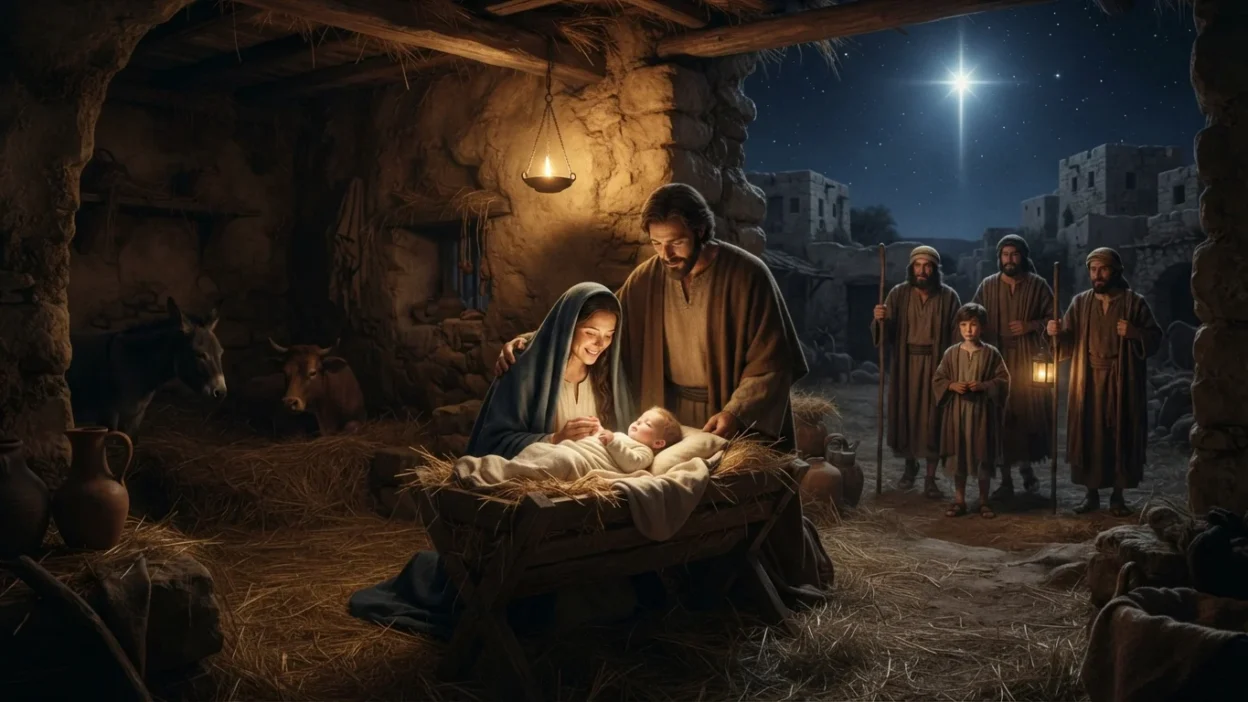
According to Luke’s account, Jesus was born in Bethlehem and placed in a manger because there was no suitable guest accommodation available.
The shepherds were among the first people connected with the announcement of Jesus’ birth. Matthew later describes wise men who traveled to honor the child.
Together, these accounts form the foundation for the Christian understanding of Jesus’ birth.
Is Christmas Mentioned in the Bible?
No, the word “Christmas” is not mentioned in the Bible.
The Bible also does not identify December 25 as the exact date of Jesus’ birth. Scripture provides information about the circumstances surrounding His birth but does not give a precise calendar date.
This means Christians should distinguish between the biblical event and the later holiday tradition.
The event—the birth of Jesus—is clearly recorded in Scripture. The annual celebration known as Christmas developed later in Christian history.
This difference does not automatically make the celebration meaningless. Instead, it helps Christians understand which parts come directly from Scripture and which developed through church tradition.
When Did Christians Begin Celebrating Christmas?
The celebration of Jesus’ birth developed gradually in the early centuries of Christianity. Christians initially placed greater emphasis on events such as Jesus’ death and resurrection.
By the fourth century, December 25 had become associated with celebrating Christ’s birth in parts of the Christian world.
The reasons for choosing this date are debated by historians. Some theories connect it with existing Roman festivals, while others point to early Christian calculations concerning the date of Jesus’ conception.
The exact historical development is complex, but the important point is that December 25 was established as a traditional celebration long after Jesus’ earthly life.
| Topic | Biblical Information | Later Tradition |
|---|---|---|
| Jesus’ Birth | Clearly described | Central reason for Christmas |
| Birth Date | Not specified | December 25 became traditional |
| Bethlehem | Identified as Jesus’ birthplace | Frequently represented in nativity scenes |
| Shepherds | Included in Luke’s account | Common Christmas imagery |
| Wise Men | Included in Matthew’s account | Common Christmas tradition |
| Christmas Tree | Not biblical | Developed as a cultural tradition |
What Is the Spiritual Meaning of Christmas?
The spiritual meaning of Christmas centers on Jesus Christ and God’s plan of salvation.
For Christians, the birth of Jesus represents hope entering a world affected by sin and brokenness. His coming is connected with the fulfillment of God’s promises and the beginning of His earthly mission.
Christmas can therefore remind believers of several important spiritual truths.
1. God Keeps His Promises
Jesus’ birth is connected with promises and prophecies found throughout the Old Testament. Christians see His arrival as part of God’s continuing plan.
2. God Shows His Love
The birth of Christ points believers toward the love of God. Christianity teaches that God acted through Christ to bring humanity closer to Him.
3. There Is Hope in Darkness
The Christmas story begins in humble circumstances, yet it carries a message of hope. This makes Christmas especially meaningful for people experiencing difficult seasons.
4. Christ Brings Peace
Jesus is associated with reconciliation between humanity and God. His coming therefore represents spiritual peace and restoration.
5. Humility Matters
Jesus was born in humble surroundings rather than royal luxury. His birth reminds Christians that God’s work is not always connected with worldly status or power.
What Does Christmas Symbolize Spiritually?
Christmas can carry several powerful spiritual symbols for Christians.
| Symbol | Spiritual Meaning |
|---|---|
| Bethlehem | God working through humble beginnings |
| Manger | Humility and simplicity |
| Star | Guidance and hope |
| Light | Christ overcoming darkness |
| Shepherds | Good news reaching ordinary people |
| Gifts | Giving, worship, and generosity |
| Peace | Reconciliation through Christ |
These symbols can help believers move beyond the commercial side of the holiday and focus on its spiritual message.
Christmas and the Birth of Jesus
The birth of Jesus is the central biblical event associated with Christmas.
Christian theology teaches that Jesus is more than an important teacher or historical figure. He is understood as the Messiah and Son of God.
The Gospel accounts emphasize different aspects of His birth, but together they present a story of divine purpose, human obedience, humility, worship, and hope.
Mary’s willingness to participate in God’s plan and Joseph’s obedience are also important elements of the story. Their experiences show that responding to God can require trust even when circumstances are difficult to understand.
Why Do People Search for the Christmas Meaning in the Bible?
People search for the Christmas meaning in the Bible for many reasons.
Some want to understand whether Christmas is actually biblical. Others want to know where the holiday came from or whether December 25 is Jesus’ actual birthday.
Parents may also want a simple explanation to share with their children. Christians may be looking for a deeper spiritual meaning beyond food, presents, decorations, and family gatherings.
Others may be researching the subject for Bible studies, sermons, Christian blogs, church lessons, or personal devotion.
At its deepest level, the question encourages people to return to the biblical story and consider why the birth of Jesus matters.
Common Misconceptions About Christmas
Several misunderstandings surround Christmas and the Bible.
Misconception 1: The Bible Says Jesus Was Born on December 25
It does not. Scripture does not provide an exact date for Jesus’ birth.
Misconception 2: Christmas Is a Biblical Command
The Bible does not command Christians to observe an annual Christmas holiday.
Misconception 3: Everything Associated With Christmas Is Biblical
Many popular traditions, including Christmas trees, Santa Claus, certain decorations, and modern gift customs, developed through later cultures and traditions.
Misconception 4: The Bible Does Not Discuss Jesus’ Birth
It does. Matthew and Luke provide important accounts concerning Jesus’ birth.
Misconception 5: Christmas Is Only About Giving Presents
Gifts can be part of the celebration, but the Christian focus is the birth and significance of Jesus Christ.
Christmas vs. Easter: What Is the Difference?
Christmas and Easter are two major Christian celebrations, but they focus on different events.
| Christmas | Easter |
|---|---|
| Celebrates Jesus’ birth | Celebrates Jesus’ resurrection |
| Focuses on His arrival | Focuses on His victory over death |
| Associated with Bethlehem | Associated with Jerusalem |
| Themes include hope and incarnation | Themes include resurrection and eternal life |
| Traditionally celebrated December 25 | Date varies each year |
Both celebrations point toward central Christian beliefs about Jesus Christ.
Christmas focuses on the beginning of His earthly life, while Easter focuses on His death and resurrection and their importance for salvation.
Christmas Meaning in Modern Culture
Modern Christmas has developed far beyond its original religious setting.
For many people, Christmas includes family gatherings, food, music, decorations, shopping, travel, and exchanging gifts. In some cultures, it is celebrated primarily as a cultural holiday rather than a religious one.
Christians may choose to use these traditions while keeping Jesus at the center of their celebration.
A meaningful Christmas does not necessarily depend on expensive gifts or elaborate decorations. Families can celebrate by praying, reading the biblical birth narratives, helping people in need, sharing meals, and showing kindness.
The spiritual value of Christmas comes from what it points toward, not from how elaborate the celebration becomes.
How Christians Can Apply the Message of Christmas
The Christmas meaning in the Bible can influence everyday Christian life.
Believers can use the season as an opportunity to practice generosity toward people who are struggling. They can forgive others, strengthen family relationships, encourage those who feel lonely, and remember people who may not have the resources to celebrate.
Christmas can also encourage humility. Jesus’ birth took place in circumstances that were far from worldly luxury.
The celebration can therefore become an opportunity to reflect on faith rather than focusing exclusively on material possessions.
Christians can ask themselves:
- Am I showing God’s love to others?
- Am I grateful for what I have?
- Am I helping someone in need?
- Am I making Christ the center of my celebration?
- Am I sharing hope and peace with others?
Is It Wrong for Christians to Celebrate Christmas?
Christians have different opinions about Christmas.
Some celebrate it enthusiastically as an opportunity to honor Jesus. Others avoid it because they believe the holiday developed from traditions that are not commanded in Scripture.
Romans 14 provides a broader biblical principle about differences in how believers observe particular days. The important issue for many Christians is acting according to conscience and honoring God.
Therefore, Christians should approach the subject thoughtfully rather than judging everyone who makes a different choice.
The focus should remain on faith, conscience, love, and the significance of Christ.
What Christmas Teaches Us About Giving
Giving is one of the strongest themes associated with modern Christmas.
From a Christian perspective, giving can reflect gratitude and generosity. The arrival of Christ is understood as an expression of God’s gracious action toward humanity.
This does not mean Christmas should become centered on materialism.
Instead, Christians can use gift-giving as a reminder to be generous throughout the entire year.
Helping someone who is struggling, supporting a charitable cause, visiting someone who is lonely, or simply offering encouragement can express the deeper spirit of Christian generosity.
Final Thought
The Christmas meaning in the Bible is ultimately about Jesus Christ and the significance of His coming into the world. Scripture does not provide December 25 as His birth date, nor does it command Christians to celebrate Christmas as an annual holiday. Nevertheless, the biblical accounts of Jesus’ birth carry a powerful message of hope, humility, love, peace, and salvation.
Christmas can be a meaningful opportunity to remember these truths and place Christ above the commercial traditions surrounding the season. Whether someone celebrates Christmas traditionally or chooses not to observe it, understanding its biblical foundation helps keep the focus on the person and mission of Jesus rather than simply on the holiday itself.
FAQs
1. What does Christmas mean in the Bible?
Christmas itself is not a biblical word. Christians use it to describe a traditional celebration of the birth of Jesus Christ.
2. Does the Bible say Jesus was born on December 25?
No. The Bible does not provide an exact date for Jesus’ birth, so December 25 is a traditional date rather than a confirmed biblical date.
3. Is Christmas mentioned in Scripture?
The word Christmas is not mentioned in Scripture, but the birth of Jesus is described in the Gospels of Matthew and Luke.
4. What is the spiritual meaning of Christmas?
Its spiritual meaning centers on Jesus Christ, God’s love, salvation, hope, peace, humility, and the fulfillment of divine promises.
5. Why do Christians celebrate Christmas?
Many Christians celebrate Christmas as an opportunity to remember and honor the birth of Jesus Christ and reflect on His significance.
6. Is celebrating Christmas a biblical command?
No. Scripture does not command Christians to observe an annual holiday called Christmas.
7. What is the main message of Christmas?
The central Christian message is that Jesus Christ came into the world as part of God’s plan of salvation, bringing hope and pointing people toward God.