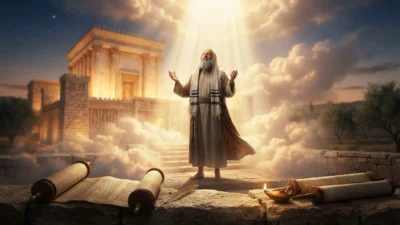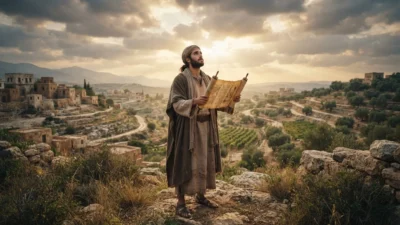

The book of enoch meaning in the bible is a topic that raises many questions among Christians, Bible readers, and people interested in ancient religious writings. The Book of Enoch is an ancient Jewish text associated with Enoch, the man described in Genesis as someone who “walked with God.” However, the book itself is not included in most modern Christian Bibles.
Understanding the book of enoch meaning in the bible requires looking at its historical background, its connection with biblical passages, and its spiritual themes. Although the Book of Enoch is generally considered non-canonical by most Jewish and Christian traditions, it has influenced religious thought for centuries and remains important for understanding the ancient world surrounding the Bible.
Quick Answer: What Does the Book of Enoch Mean in the Bible?
The book of enoch meaning in the bible refers to the significance and connection of the ancient Book of Enoch with biblical history and teachings. The book is not part of most biblical canons, but its themes about angels, judgment, righteousness, and the coming of God’s kingdom have connections with several biblical ideas.
What Is the Book of Enoch?
The Book of Enoch is an ancient collection of Jewish religious writings traditionally connected with Enoch, a biblical figure mentioned in Genesis.
Genesis describes Enoch as a man who had a special relationship with God:
This brief biblical description created great interest around Enoch. Over time, ancient writers developed stories and teachings associated with him.
The Book of Enoch contains visions, warnings, prophecies, descriptions of angels, and teachings about God’s future judgment. It is often called 1 Enoch because other ancient writings also carry Enoch’s name.
Meaning Table
| Aspect | Meaning |
|---|---|
| Main subject | Ancient religious writings connected with Enoch |
| Traditional author | Enoch, according to ancient tradition |
| Main themes | Angels, judgment, righteousness, heaven |
| Biblical status | Non-canonical in most Christian Bibles |
| Spiritual focus | God’s justice and victory over evil |
Who Was Enoch in the Bible?
Enoch appears in the genealogy found in Genesis 5. Although only a few verses describe him, his story is memorable because the Bible says he “walked with God.”
According to Genesis, Enoch did not experience death in the ordinary way described for other people in the genealogy. Instead, God took him.
The New Testament also mentions Enoch. Hebrews presents him as an example of faith, explaining that he was taken away because he pleased God.
This biblical description of Enoch helped make him an important figure in later Jewish religious literature.
The Origin and History of the Book of Enoch
The Book of Enoch was not written as a single work at one specific time. Scholars generally understand it as a collection of ancient writings composed over several centuries.
Its different sections likely developed during the Second Temple period of Jewish history.
The book was originally written in ancient languages, and parts of it were discovered among the Dead Sea Scrolls. The most complete surviving version is preserved in the Ethiopian Ge’ez language.
Origin and History Table
| Historical Aspect | Information |
|---|---|
| Ancient setting | Second Temple Jewish period |
| Traditional connection | Enoch, from Genesis |
| Type of literature | Apocalyptic and religious writings |
| Major discoveries | Fragments among the Dead Sea Scrolls |
| Complete preservation | Ethiopian Ge’ez tradition |
The history of the book shows that ancient Jewish communities were deeply interested in questions about angels, evil, heaven, judgment, and the future.
Is the Book of Enoch Part of the Bible?
For most Christians and Jews, the Book of Enoch is not part of the biblical canon.
The Protestant Bible does not include it. It is also not part of the Jewish Bible or the Roman Catholic biblical canon.
However, 1 Enoch is included in the biblical canon of the Ethiopian Orthodox Tewahedo Church.
This difference is important when discussing the book of enoch meaning in the bible. A book can be historically important and influential without being considered Scripture by every religious tradition.
The Book of Enoch and the Bible
Although the Book of Enoch is not included in most Bibles, some of its themes have similarities with biblical teachings.
These include:
- The existence of angels
- The conflict between good and evil
- God’s judgment
- Punishment for wickedness
- The reward of the righteous
- The coming of divine justice
The New Testament letter of Jude also contains language that closely resembles a prophecy found in the Book of Enoch.
This connection does not necessarily mean that the entire Book of Enoch is considered biblical Scripture. Instead, it shows that some ideas and traditions associated with Enoch were known in the ancient religious world.
What Does the Book of Enoch Teach About Angels?
One of the most famous sections of the Book of Enoch describes a group of angels sometimes called the Watchers.
According to the story, these heavenly beings rebel against God’s order and bring corruption to humanity.
The narrative expands on the mysterious passage in Genesis 6, which speaks about the “sons of God” and the “daughters of men.”
For centuries, readers have debated exactly who these figures were. The Book of Enoch provides one ancient interpretation by identifying the “sons of God” with rebellious angels.
However, this interpretation is not universally accepted by Christians or biblical scholars.
The Spiritual Meaning of the Book of Enoch
The spiritual meaning behind the book of enoch meaning in the bible is often connected with the battle between righteousness and corruption.
The book presents a world where evil may appear powerful for a time, but God’s justice ultimately wins.
Symbolically, its major themes can represent:
- Light overcoming darkness
- Righteousness overcoming corruption
- Divine justice overcoming oppression
- Faithfulness during difficult times
- God’s authority over spiritual and earthly powers
The Book of Enoch reminds readers that actions have consequences and that moral choices matter.
From a spiritual perspective, the message encourages believers to remain faithful even when the world around them appears unjust.
Symbolic Meaning of the Watchers
The Watchers can also be understood symbolically.
Their rebellion represents what happens when created beings reject God’s authority. Their story becomes a warning about pride, disobedience, and corruption.
Whether someone reads the account literally or symbolically, the central spiritual lesson remains similar: rebellion against goodness eventually produces destructive consequences.
The story also emphasizes that no power, whether human or spiritual, stands above God’s authority.
This symbolic interpretation is one reason why people continue searching for the book of enoch meaning in the bible today.
Why Do People Search for the Book of Enoch Meaning in the Bible?
Many people become curious about the Book of Enoch after reading about angels, giants, Nephilim, or mysterious biblical passages.
Genesis 6 is especially important because it contains a brief and difficult description of unusual events before the Flood.
The Book of Enoch offers a much longer explanation, which makes it attractive to readers seeking answers.
People also search for the topic because they want to know:
- Why was the Book of Enoch removed or excluded?
- Did Jesus know about the Book of Enoch?
- Why does Jude appear to reference Enoch?
- What does the book say about fallen angels?
- Is the Book of Enoch historically reliable?
- Should Christians read it?
These questions show the continuing fascination surrounding ancient religious literature.
Common Misconceptions About the Book of Enoch
A major misconception is that the Book of Enoch was simply “removed from the Bible.”
The historical situation is more complicated. Different religious communities developed different standards for deciding which books belonged in their biblical canon.
Another misconception is that every statement in the Book of Enoch must be accepted as biblical truth simply because Jude contains language similar to Enochic tradition.
Quoting or referring to a source does not automatically make every part of that source Scripture.
It is also incorrect to assume that all Christians completely reject the book. While most Christian traditions do not include it in their canon, the Ethiopian Orthodox Tewahedo Church does recognize it as Scripture.
Book of Enoch Compared With the Bible
The following comparison helps explain the relationship between the two.
| Topic | Bible | Book of Enoch |
|---|---|---|
| Enoch | Briefly described in Genesis and Hebrews | Major central figure |
| Angels | Mentioned throughout Scripture | Detailed stories about Watchers |
| Judgment | Major biblical theme | Major central theme |
| Canonical status | Scripture in recognized biblical canons | Non-canonical in most traditions |
| Giants and Nephilim | Briefly mentioned in Genesis | Expanded interpretation |
| Heavenly visions | Found in prophetic books | Detailed descriptions of heaven |
The comparison shows why the Book of Enoch can be useful for historical study while still having a different status from the Bible in most Christian traditions.
Cultural and Modern Interest in the Book of Enoch
Modern interest in the Book of Enoch has grown through books, documentaries, websites, social media, and discussions about biblical mysteries.
Popular topics often include:
- Fallen angels
- The Watchers
- Nephilim
- Ancient giants
- Heaven and hell
- End-times prophecy
This interest sometimes leads to exaggerated claims. Some modern discussions present the Book of Enoch as a hidden book containing secrets deliberately kept from the public.
Historical evidence, however, shows a more complex story involving religious traditions, canon formation, language, and ancient communities.
Understanding the historical context is important when studying the book of enoch meaning in the bible.
Should Christians Read the Book of Enoch?
Christians may read the Book of Enoch as an ancient religious and historical text, depending on their personal beliefs and church tradition.
It can help readers understand some of the religious ideas circulating during ancient Jewish history.
However, Christians who follow traditions that do not consider it Scripture should avoid treating every passage as equal to the Bible.
A balanced approach is to study the Book of Enoch alongside biblical Scripture, historical research, and trusted theological interpretation.
For many readers, its greatest value is understanding the religious environment in which biblical ideas about angels, judgment, and the coming kingdom were discussed.
The Lasting Importance of the Book of Enoch
The book of enoch meaning in the bible remains important because it connects readers with ancient questions about God, angels, evil, justice, and human responsibility.
Its influence demonstrates that the biblical world existed within a larger environment of religious discussion and interpretation.
The book also shows how ancient communities attempted to explain difficult passages and mysteries found in Scripture.
Even though most Christian traditions do not consider it part of the Bible, the Book of Enoch remains valuable for understanding ancient Jewish thought and the development of religious ideas.
Final Thought
The book of enoch meaning in the bible is best understood by separating biblical Scripture from ancient religious literature while still recognizing the historical connection between them. The Book of Enoch expands on themes that also appear in the Bible, including angels, judgment, righteousness, and the struggle between good and evil. Its stories have fascinated readers for centuries because they explore mysteries only briefly mentioned in Scripture.
For most Christians, the book is not part of the biblical canon, but it remains an important historical text. Its spiritual themes can encourage reflection on faithfulness, justice, humility, and God’s ultimate authority over evil.
FAQs
1. What is the Book of Enoch?
The Book of Enoch is an ancient collection of Jewish religious writings traditionally associated with the biblical figure Enoch.
2. Is the Book of Enoch included in the Bible?
It is not included in most Jewish and Christian Bibles, although it is part of the Ethiopian Orthodox Tewahedo biblical canon.
3. Why is the Book of Enoch important?
It provides insight into ancient Jewish beliefs about angels, judgment, evil, and the spiritual world.
4. Does the Bible mention the Book of Enoch?
The New Testament book of Jude contains language closely related to a prophecy found in 1 Enoch.
5. What are the Watchers in the Book of Enoch?
The Watchers are described as angels who rebelled against God’s authority and contributed to corruption on earth.
6. Was the Book of Enoch removed from the Bible?
It is more accurate to say that it was not included in most biblical canons rather than simply claiming it was “removed.”
7. What is the main spiritual message of the Book of Enoch?
Its central spiritual themes include God’s justice, the consequences of rebellion, the importance of righteousness, and the ultimate defeat of evil.

William Noah is a spiritual writer at BibLoft, exploring hidden meanings, symbols, and divine insights. He shares thoughtful interpretations that inspire self-awareness, inner growth, and spiritual understanding.