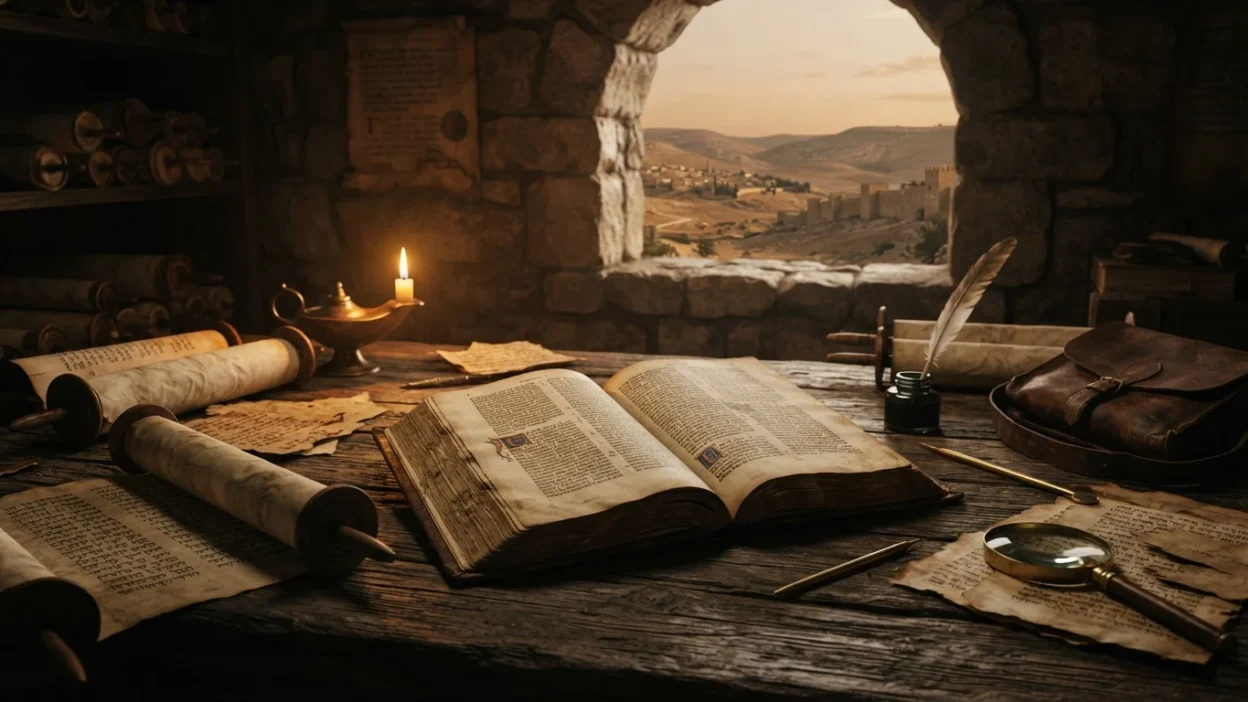
The bible contradictions meaning is a topic that many readers search when they find passages that appear to disagree with each other. The Bible contains different books, authors, historical settings, literary styles, and perspectives, which can sometimes make certain verses seem difficult to reconcile. Understanding these differences can help readers examine challenging passages more carefully.
The bible contradictions meaning does not always refer to an actual error or disagreement. In many cases, an apparent contradiction may result from differences in context, translation, audience, chronology, or literary purpose. Learning how to study these passages carefully can provide a clearer understanding of why people debate biblical contradictions and what they may mean.
Quick Answer: What Does Bible Contradictions Meaning Refer To?
Bible contradictions meaning refers to passages in Scripture that appear to conflict with each other. Some are genuine points of debate, while others may be explained through context, language, translation, perspective, or differences in how events are described.
What Are Bible Contradictions?
Bible contradictions are usually described as statements, events, numbers, or teachings that appear inconsistent when compared with other parts of Scripture.
For example, two biblical accounts may describe the same event differently. One account may include details that another leaves out. Readers may then wonder whether the accounts disagree or simply focus on different aspects of the same event.
This distinction is important. A difference is not always a contradiction.
A true contradiction generally means that two statements cannot both be correct in the same sense and under the same conditions. An apparent contradiction, however, may have an explanation when historical context and language are considered.
Bible Contradictions Meaning Table
| Term | Simple Meaning |
|---|---|
| Contradiction | Two claims that cannot both be true in the same sense |
| Apparent contradiction | A disagreement that may have an explanation |
| Difference | Two accounts presenting different details |
| Context | The historical and literary setting of a passage |
| Interpretation | Understanding the intended meaning of a text |
Why Do Bible Contradictions Seem to Exist?
The Bible was written over a long period and contains many different types of literature. These include history, poetry, prophecy, wisdom literature, letters, laws, and symbolic visions.
Different authors often wrote for different audiences and purposes.
Because of this, one writer may describe an event briefly while another provides additional information. Two authors may also emphasize different details because they want to communicate different lessons.
When readers expect every biblical account to use identical wording and identical details, differences can appear to be contradictions.
Understanding literary purpose is therefore an important part of studying the bible contradictions meaning.
The Historical Origin of Bible Contradiction Debates
Questions about difficult biblical passages are not new. Jewish and Christian readers have discussed challenging Scriptures for centuries.
Ancient interpreters often compared passages and attempted to understand how they related to one another. As biblical manuscripts were copied, translated, and studied across different cultures, additional questions developed about language and interpretation.
Modern biblical scholarship has expanded these discussions by examining:
- Ancient languages
- Historical background
- Manuscript differences
- Archaeological evidence
- Literary styles
- Translation methods
The debate about biblical contradictions has therefore developed over many centuries.
Historical Background Table
| Period | Development |
|---|---|
| Ancient Jewish period | Early interpretation of difficult texts |
| Early Christianity | Comparison of Gospel accounts and teachings |
| Medieval period | Theological explanations and commentaries |
| Reformation era | Increased focus on biblical interpretation |
| Modern scholarship | Historical, linguistic, and textual analysis |
Bible Contradictions and Different Perspectives
One important issue is perspective.
Imagine several people describing the same historical event. Each person may remember or emphasize different details. One may focus on the location, while another focuses on the people involved.
The accounts may be different without necessarily being false.
A similar principle can apply when comparing biblical narratives. Different writers may select different details based on their audience and purpose.
This does not automatically solve every difficult passage, but it helps explain why differences should not immediately be called contradictions.
The Role of Context in Understanding Difficult Passages
Context is one of the most important tools for understanding the bible contradictions meaning.
A verse should not always be interpreted by itself. Readers should consider the surrounding chapter, the purpose of the book, the historical setting, and the original audience.
Questions that can help include:
- Who wrote the passage?
- Who was the original audience?
- What type of literature is being used?
- What happened before and after the passage?
- Is the language literal or symbolic?
- Could translation affect the wording?
These questions can prevent misunderstandings and provide a more complete interpretation.
Translation Differences and Bible Contradictions
The Bible was originally written primarily in Hebrew, Aramaic, and Greek. Modern readers usually encounter it through translations.
Different languages do not always have exact word-for-word equivalents. Translators sometimes must choose between several possible meanings.
As a result, two English translations may use different wording while communicating a similar idea.
Translation differences can occasionally make a passage appear more difficult than it originally was.
However, translation is not the explanation for every challenge. Some passages remain debated even when scholars examine the original languages.
A careful approach recognizes both the value and limitations of translation.
Common Types of Apparent Bible Contradictions
The bible contradictions meaning can involve several different categories.
Numerical Differences
Some passages contain different numbers when compared with parallel accounts. These differences may result from manuscript transmission, copying practices, translation issues, or different methods of counting.
Chronological Differences
Ancient writers did not always organize events according to modern expectations of strict chronological order. Sometimes events were arranged according to theme or purpose.
Different Details
One account may mention information that another account does not include.
Theological Questions
Some readers believe that different passages create tension between ideas such as justice and mercy, faith and works, or divine authority and human responsibility.
These topics often require careful interpretation rather than quick conclusions.
Bible Contradictions: Difference vs. True Contradiction
Not every difference is a contradiction.
| Situation | Difference | Possible Contradiction |
|---|---|---|
| Two accounts include different details | Often compatible | Depends on the claims |
| Events appear in a different order | May reflect literary structure | Requires further study |
| Numbers are different | Could involve transmission issues | May remain a textual difficulty |
| Teachings seem different | May have different contexts | Requires interpretation |
| Language varies | Often caused by translation | Depends on original meaning |
This comparison shows why careful study is important before deciding that a contradiction exists.
The Spiritual Meaning of Bible Contradictions
The spiritual meaning connected with the bible contradictions meaning can involve humility, patience, and deeper study.
Difficult passages remind readers that ancient religious texts are complex and should not always be understood through quick or isolated readings.
Symbolically, challenging passages can represent the difference between surface-level understanding and deeper reflection.
They may encourage readers to:
- Seek wisdom
- Study historical context
- Avoid quick assumptions
- Compare multiple passages
- Recognize personal limitations
- Remain open to learning
For believers, difficult questions can become opportunities for spiritual growth rather than reasons to stop studying.
Symbolic Interpretation of Difficult Biblical Passages
Symbolically, an apparent contradiction can represent a challenge that requires greater understanding.
Two passages may initially seem to pull in opposite directions, but closer examination may reveal a larger message.
For example, biblical themes often balance ideas that seem difficult to hold together, including:
- Justice and mercy
- Judgment and forgiveness
- Divine power and human responsibility
- Faith and action
- Individual choices and community responsibility
These themes may create tension, but tension is not always the same as contradiction.
The symbolic lesson is that truth can sometimes require careful thought rather than a simple answer.
Why Do People Search for Bible Contradictions Meaning?
People search for bible contradictions meaning for many reasons.
Some are trying to strengthen their faith by finding answers to difficult questions. Others are skeptical and want to examine whether the Bible contains errors.
Students and researchers may also search for academic explanations.
Common reasons include:
- Comparing different Gospel accounts
- Understanding difficult Old Testament passages
- Investigating historical claims
- Responding to criticism of the Bible
- Learning about translation differences
- Exploring faith and doubt
The topic attracts people from different religious and nonreligious backgrounds.
Common Misconceptions About Bible Contradictions
One misconception is that every difference between two biblical passages proves an error.
Different accounts can provide complementary information.
Another misconception is that every difficult passage has an easy explanation. Some textual and historical questions remain genuinely debated among scholars.
It is also misleading to assume that all Christians interpret the Bible in exactly the same way. Different traditions may approach difficult passages through different theological and historical methods.
A balanced discussion should avoid both extremes: claiming that every challenge destroys the Bible or claiming that every question can be solved with a simple answer.
Cultural and Modern Usage of Bible Contradiction Discussions
Today, discussions about biblical contradictions are common in books, podcasts, videos, social media, universities, and religious communities.
Online debates often focus on short lists of alleged contradictions. While these lists can introduce important questions, they sometimes remove passages from their wider context.
Modern readers also have access to ancient manuscripts, academic research, and multiple Bible translations. This makes deeper study more accessible than ever.
The bible contradictions meaning has therefore become part of larger conversations about faith, history, interpretation, and religious authority.
How to Study Apparent Bible Contradictions
A careful method can help readers study difficult passages more effectively.
First, read the full context rather than only one verse.
Second, compare multiple translations.
Third, identify the type of literature being studied.
Fourth, consider the historical and cultural background.
Finally, recognize when a question remains uncertain.
Good biblical study does not require pretending that difficult questions do not exist. Instead, it involves examining those questions carefully and honestly.
Final Thought
The bible contradictions meaning is more complex than simply deciding whether the Bible contains errors or whether every passage has an immediate explanation. Some differences can be understood through context, literary purpose, translation, or perspective, while other passages continue to be debated by scholars and religious communities. The most helpful approach is careful and honest study.
Readers should avoid taking verses out of context or assuming that every difference automatically proves a contradiction. At the same time, difficult questions should not be ignored. Studying challenging passages can encourage deeper knowledge, greater humility, and a better understanding of the Bible’s history, language, and spiritual themes.
FAQs
1. What does bible contradictions meaning refer to?
It refers to passages that appear to disagree with other passages in the Bible.
2. Are all differences in the Bible contradictions?
No. Different accounts may provide different details without making opposing claims.
3. Why do biblical accounts sometimes describe events differently?
Different authors wrote for different audiences and often emphasized different details or themes.
4. Can translation create apparent contradictions?
Yes. Differences between languages and translation choices can sometimes affect how a passage is understood.
5. Do scholars agree about all Bible contradictions?
No. Some passages have widely accepted explanations, while others remain debated.
6. What is the best way to study difficult Bible passages?
Read the full context, compare related passages, consider historical background, and examine reliable translations.
7. What is the spiritual lesson behind difficult biblical passages?
They can encourage humility, patience, deeper study, wisdom, and thoughtful reflection.