
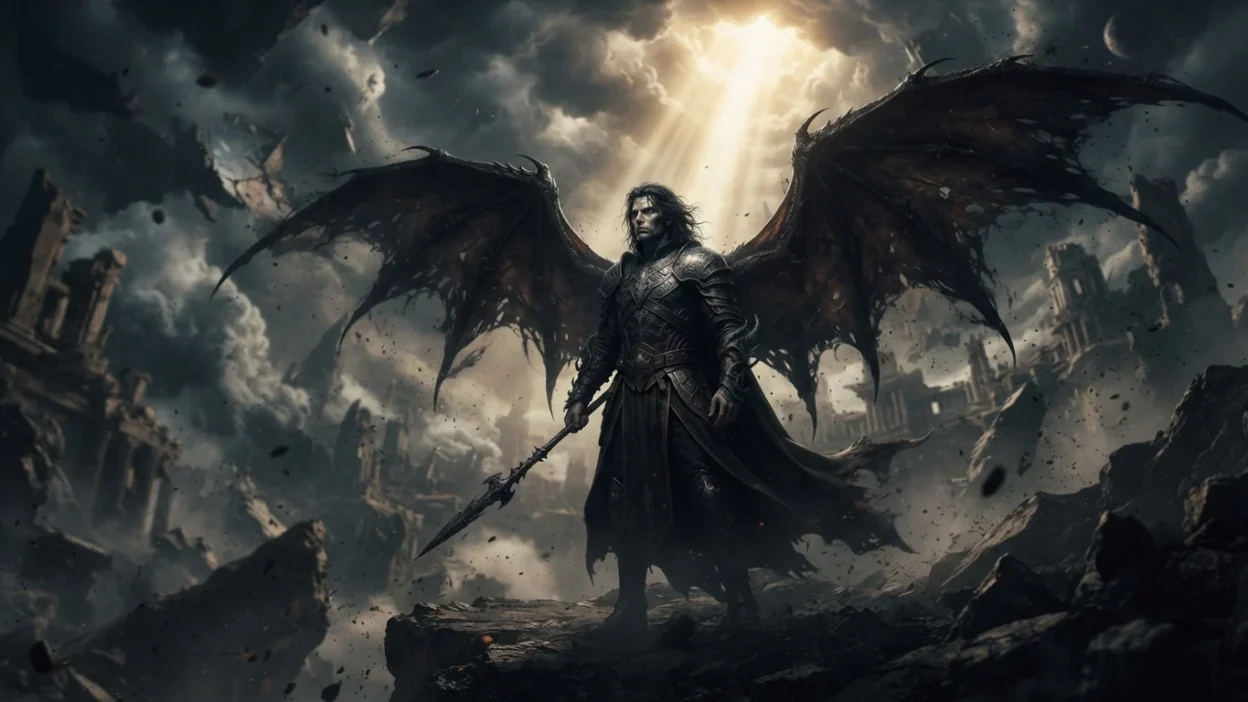
The idea of a biblically accurate Satan is very different from the popular image of a red creature with horns, a pitchfork, and a pointed tail. Much of that familiar appearance comes from later art, literature, folklore, and cultural traditions rather than a direct description found in Scripture. The Bible presents Satan primarily as a spiritual adversary, deceiver, tempter, accuser, and enemy of God’s purposes.
Understanding the biblically accurate Satan requires looking carefully at the different passages that describe his character, actions, and spiritual nature. Scripture does not provide one complete physical portrait of Satan. Instead, it gives several important descriptions and images that help Christians understand who Satan is, how he operates, and why believers are warned to remain spiritually alert.
Quick Answer
A biblically accurate Satan is not simply a horned red monster. The Bible primarily presents Satan as a powerful spiritual adversary who opposes God, deceives people, tempts humanity, and seeks to turn people away from God. Scripture also uses imagery such as a serpent, dragon, tempter, and accuser to describe his activities and character.
What Does Biblically Accurate Satan Mean?
The phrase biblically accurate Satan usually refers to an understanding of Satan based on biblical descriptions rather than popular artwork or fictional traditions.
In Scripture, Satan is presented as a spiritual being who opposes God and works against His purposes. His name or title is associated with the idea of an adversary or opponent.
Rather than focusing primarily on Satan’s physical appearance, the Bible focuses heavily on his character and actions. He is connected with deception, temptation, accusation, rebellion, and spiritual opposition.
This is important because many modern images of Satan combine biblical symbolism with ideas developed much later in history.
How Does the Bible Describe Satan?
The Bible uses several different descriptions and symbols when discussing Satan.
He is called an adversary, tempter, accuser, and deceiver. In different passages, he is associated with a serpent and a dragon. These images communicate qualities such as cunning, danger, hostility, and destructive power.
The biblical descriptions should not necessarily be combined into one literal physical body. Instead, they often communicate spiritual realities.
For example, the serpent imagery emphasizes deception and subtlety, while dragon imagery communicates terrifying power and opposition.
| Biblical Description | What It Communicates |
|---|---|
| Adversary | Opposition to God and His people |
| Tempter | Attempts to lead people into sin |
| Accuser | Brings accusations against people |
| Serpent | Deception and cunning |
| Dragon | Destructive power and hostility |
| Deceiver | Distortion of truth |
Is Satan a Red Creature With Horns?
One of the biggest misconceptions about Satan is that the Bible describes him as a red humanoid creature with horns, a pitchfork, and a pointed tail.
Scripture does not provide this complete description.
The familiar appearance developed through centuries of artistic representation and cultural storytelling. Artists often used frightening or animal-like features to symbolize evil, chaos, rebellion, and danger.
The popular red devil image therefore should not automatically be treated as a literal biblical portrait.
The Bible’s focus is much more serious. Satan is presented as a spiritual enemy whose greatest danger is deception rather than simply frightening physical appearance.
Satan as a Serpent
The serpent is one of the most important images associated with Satan in biblical theology.
Genesis describes the serpent as the creature involved in tempting Eve in the Garden of Eden. Later biblical writing identifies the ancient serpent with the devil and Satan.
This connection helps explain why serpent imagery frequently appears in Christian discussions of Satan.
The serpent represents subtlety and deception. The danger is not simply that Satan appears frightening. His influence can involve lies, distortion, temptation, and manipulation.
This makes the serpent image especially meaningful for understanding Satan’s methods.
Satan as a Dragon
The Book of Revelation presents some of the strongest symbolic imagery connected with Satan. Satan is identified with the great dragon and the ancient serpent.
The dragon represents hostility, power, destruction, and opposition to God.
This imagery is far removed from the harmless cartoon version of a little red devil. Biblical symbolism portrays Satan as a serious spiritual enemy.
At the same time, the biblical message emphasizes that Satan is ultimately subject to God’s authority and judgment.
Was Satan Originally an Angel?
Christian interpretation has traditionally connected Satan with the idea of a fallen angel or rebellious heavenly being.
Several biblical passages contribute to discussions about Satan’s origin, although not every passage commonly associated with Satan is explicitly identified as describing him.
Isaiah 14 discusses the king of Babylon, while Ezekiel 28 addresses the king of Tyre. These passages have historically been interpreted by many Christians as having deeper symbolic connections with Satan’s fall, but the immediate contexts concern human rulers.
Therefore, a careful biblical approach should distinguish between what Scripture explicitly says and what later theological interpretation concludes.
The central biblical idea remains that Satan is a spiritual being who rebelled against God and became an adversary.
Satan and Pride
Pride is frequently connected with traditional Christian teaching about Satan’s rebellion.
The concept of a spiritual being attempting to exalt himself against God became a major theme in Christian interpretation of Satan.
The broader biblical message consistently warns against pride because pride turns people away from dependence on God.
Satan’s role in Scripture therefore becomes a powerful illustration of rebellion, self-exaltation, and opposition to divine authority.
Satan as the Tempter
One of Satan’s major roles is temptation.
The Gospel accounts describe Satan testing Jesus in the wilderness. The temptation involved challenges related to identity, power, worship, and trust in God.
Jesus resisted these temptations by remaining faithful to God’s will.
This account teaches an important lesson about Satan’s activity: temptation may appeal to legitimate desires but attempt to satisfy them through disobedience.
For Christians, the story emphasizes the importance of spiritual discernment and faithfulness.
Satan as the Accuser
Satan is also associated with accusation.
The Book of Job provides an important example. Satan appears as an adversarial figure who challenges Job’s motives and faithfulness.
The New Testament also describes Satan as an accuser.
This image is spiritually significant because accusation can produce fear, shame, hopelessness, and separation from God.
Christian theology therefore contrasts Satan’s accusing role with God’s mercy, forgiveness, and restoration.
Satan as a Deceiver
Deception is one of the most consistent themes connected with Satan.
The Bible warns that evil does not always present itself openly. Deception can involve false appearances, distorted truth, misleading ideas, and spiritual confusion.
This is why Christians are repeatedly encouraged to develop wisdom and discernment.
The biblically accurate Satan is therefore more dangerous as a deceiver than as a frightening monster.
| Popular Image | Biblical Emphasis |
|---|---|
| Red skin | Spiritual opposition |
| Horns | Deception and temptation |
| Pitchfork | Accusation and opposition |
| Pointed tail | Serpent and dragon symbolism |
| Cartoon monster | Powerful spiritual adversary |
| Physical fear | Spiritual deception |
What Does Satan Look Like According to the Bible?
The Bible does not give enough information to construct one definitive physical portrait of Satan.
There are symbolic descriptions, but these should not automatically be treated as a literal anatomy.
Satan’s connection with the serpent and dragon provides powerful visual symbolism. Other passages contribute to theological discussions about his former heavenly status and appearance.
Some biblical passages also warn that Satan can disguise himself as an angel of light. This is particularly important because it suggests that evil does not necessarily appear ugly or frightening.
Therefore, a truly biblically informed image of Satan could emphasize supernatural presence, deception, fallen glory, spiritual darkness, and opposition to God rather than simply horns and red skin.
The Spiritual Meaning of Satan
The spiritual meaning of Satan in Scripture centers on opposition to God and the corruption of what is good.
Satan represents rebellion against divine authority, deception instead of truth, accusation instead of restoration, temptation instead of obedience, and pride instead of humility.
For believers, studying Satan is not intended to create fascination with evil. Instead, it should encourage spiritual awareness.
The Bible repeatedly directs attention toward God, righteousness, faith, truth, prayer, and perseverance.
The lesson is not to become obsessed with Satan but to understand the reality of spiritual opposition while remaining focused on God.
Satan and Spiritual Warfare
The New Testament presents Christian life as involving spiritual warfare.
Believers are encouraged to resist evil, remain spiritually alert, strengthen their faith, and depend upon God.
The imagery of spiritual armor emphasizes truth, righteousness, faith, salvation, and God’s word.
This teaches Christians that spiritual warfare is not primarily about physical combat. It concerns faithfulness, thoughts, choices, truth, temptation, and perseverance.
The biblically accurate understanding of Satan therefore leads naturally to the importance of spiritual discipline.
Common Misconceptions About Satan
Several popular ideas about Satan should be treated carefully.
First, the Bible does not describe him simply as the ruler of an independent kingdom equal to God’s kingdom. Satan is a created being and remains under God’s ultimate authority.
Second, the Bible does not present hell as Satan’s personal throne in the way popular culture often portrays it.
Third, the Bible does not give a complete physical description featuring horns, a pitchfork, red skin, and a tail.
Finally, Satan should not be understood as equal to God. Christianity teaches that God is the Creator, while Satan is a created spiritual being.
Satan vs. Jesus
The contrast between Satan and Jesus is central to Christian theology.
Satan is associated with temptation, deception, accusation, and rebellion. Jesus is presented as obedient to God, truthful, righteous, and victorious over sin and death.
The temptation of Jesus demonstrates this contrast clearly. Satan attempts to lead Jesus away from God’s purpose, while Jesus remains faithful.
| Satan | Jesus |
|---|---|
| Deception | Truth |
| Temptation | Obedience |
| Accusation | Redemption |
| Pride | Humility |
| Rebellion | Faithfulness |
| Destruction | Life |
This comparison helps explain why Satan’s role is ultimately subordinate within the biblical story.
Why People Search for Biblically Accurate Satan
People often search for this topic because they have seen conflicting images of Satan in movies, paintings, games, social media, and religious artwork.
Some want to know whether the traditional horned devil is actually biblical. Others want to understand the serpent and dragon imagery found in Scripture.
The topic can also help readers distinguish between biblical teaching and cultural traditions.
A careful study encourages people to examine Scripture rather than assuming every familiar religious image comes directly from the Bible.
What Can Christians Learn From Satan’s Story?
The story and symbolism surrounding Satan provide several important spiritual lessons.
Christians are reminded to take temptation seriously, practice humility, recognize deception, avoid unnecessary spiritual pride, and remain dependent on God.
The biblical emphasis is not simply that evil exists. It is that believers should remain faithful when confronted by evil.
The example of Jesus demonstrates that spiritual strength is connected with obedience, truth, Scripture, prayer, and trust in God.
Ultimately, studying Satan should point believers toward God rather than toward fascination with darkness.
Final Thought
The biblically accurate Satan is much more complex than the familiar image of a red devil with horns and a pitchfork. Scripture presents Satan primarily through descriptions of his spiritual character and activity. He is an adversary, tempter, deceiver, and accuser, and biblical imagery connects him with the serpent and dragon. These descriptions communicate spiritual realities rather than providing one complete physical portrait.
Understanding Satan correctly also requires keeping the focus on God. Satan is not God’s equal, nor does Scripture present evil as ultimately victorious. For Christians, the biblical teaching about Satan is a reminder to remain humble, spiritually alert, faithful, and grounded in truth. Rather than becoming fascinated with his appearance, believers can learn from Scripture about resisting temptation and trusting God’s authority.
FAQs
Is the traditional red devil image biblical?
No. The Bible does not describe Satan as a red humanoid creature with horns, a pitchfork, and a pointed tail. That image largely developed through later artistic and cultural traditions.
Does the Bible say Satan has horns?
The Bible does not provide a straightforward description saying Satan personally has horns.
Is Satan a fallen angel?
Christian tradition commonly understands Satan as a fallen spiritual or angelic being. However, Scripture does not provide one single passage giving a complete biography of Satan’s origin.
Why is Satan called a serpent?
The serpent is associated with deception in Genesis, and later biblical writing connects the ancient serpent with Satan. The imagery emphasizes cunning and deception.
Why is Satan called a dragon?
Revelation uses dragon imagery to represent Satan’s destructive power, hostility, and opposition to God.
Is Satan equal to God?
No. Biblical Christianity does not present Satan as God’s equal. God is the Creator, while Satan is a created spiritual being who remains under God’s ultimate authority.
What is the main lesson about Satan in the Bible?
The main lesson is to recognize spiritual deception and temptation while remaining faithful to God. Christians are encouraged to resist evil, practice discernment, and trust God’s authority.