
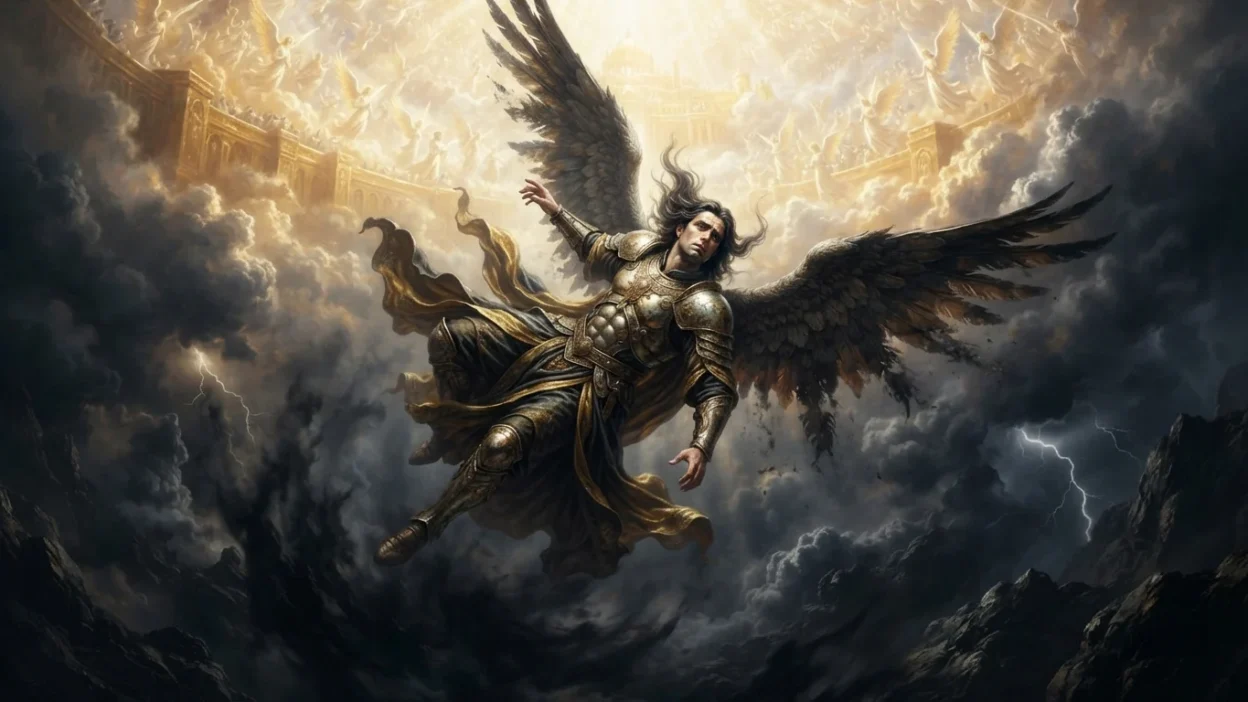
The phrase biblically accurate Lucifer is often used online when people want to understand what the Bible actually says about Lucifer rather than relying on movies, artwork, folklore, or modern fictional portrayals. The subject can be confusing because the name Lucifer appears in some English Bible traditions, while other translations use expressions such as morning star or day star. Different Christian traditions also interpret several passages about Satan and the fall in different ways.
Understanding the biblically accurate Lucifer requires examining the relevant passages in their historical and literary contexts. Isaiah 14, Ezekiel 28, Luke 10, Revelation 12, and other passages are frequently connected with discussions about Satan and his fall. However, not every passage traditionally associated with Lucifer explicitly identifies its subject as Satan. Looking carefully at these distinctions provides a more accurate picture of biblical teaching.
Quick Answer
A biblically accurate Lucifer is not necessarily the popular red-skinned character with horns, wings, and a pitchfork seen in modern culture. The biblical discussion is more complex.
The name Lucifer comes from the Latin translation of Isaiah 14:12 and means light-bearer or morning star. The passage originally addresses the king of Babylon, while Christian tradition has often connected it symbolically with Satan’s fall.
What Does Lucifer Mean in the Bible?
The word Lucifer is traditionally associated with the Latin word lucifer, meaning light-bearer or morning star.
In Isaiah 14:12, the Hebrew expression is commonly translated as something like morning star or shining one. The passage describes the downfall of a proud figure who sought an exalted position but was brought low.
The English word Lucifer became especially familiar through the Latin Vulgate translation.
This creates an important distinction between the biblically accurate Lucifer and later popular interpretations. Lucifer was not originally presented in the Hebrew text as a personal name in the same way modern readers often assume.
Basic Meaning
| Term | Meaning | Context |
|---|---|---|
| Lucifer | Light-bearer | Latin tradition |
| Morning star | Shining celestial image | Isaiah 14 |
| Satan | Adversary/accuser | Various biblical passages |
| Devil | Slanderer/adversary | New Testament tradition |
Origin and History of the Name Lucifer
The history of Lucifer begins with the Latin translation tradition.
The Latin word lucifer could refer to the morning star, particularly Venus, which appears brightly before sunrise. The term itself was not originally an exclusively evil word.
Over time, Christian writers began using Lucifer as a name associated with Satan before his fall. This interpretation became influential in Christian theology, literature, art, and popular culture.
The development of the term demonstrates why readers should distinguish between the biblical Hebrew text, ancient translations, theological interpretation, and later cultural traditions.
Historical Development
| Period | Development |
|---|---|
| Hebrew Bible | Isaiah uses imagery concerning a fallen exalted figure |
| Greek tradition | Related celestial imagery is translated into Greek |
| Latin tradition | Lucifer becomes associated with the morning-star image |
| Early Christianity | Some writers connect the imagery with Satan’s fall |
| Medieval period | Lucifer becomes widely recognized as a name for Satan |
| Modern culture | Lucifer appears in books, films, television, art, and games |
Is Lucifer Actually Satan?
This is one of the most important questions surrounding the topic.
Isaiah 14 is directly presented as a taunt or oracle concerning the king of Babylon. The passage describes arrogance, ambition, downfall, and humiliation.
Because of its imagery about a figure falling from an exalted position, many Christian interpreters have connected it with Satan’s rebellion and fall.
However, the text itself does not simply say, Lucifer was Satan before his fall.
This distinction matters when discussing a biblically accurate Lucifer. A careful reading should acknowledge both the immediate historical context of Isaiah 14 and the longstanding Christian interpretation that sees a deeper connection with Satan.
Ezekiel 28 and the Lucifer Connection
Ezekiel 28 is another passage frequently connected with Lucifer.
Its immediate context concerns the ruler of Tyre. The passage describes extraordinary pride, beauty, wealth, and eventual judgment.
Some Christian theologians have understood the language as going beyond an ordinary human ruler and symbolically describing Satan.
Others emphasize that the passage should primarily be interpreted within its historical context concerning the king or ruler of Tyre.
Therefore, Ezekiel 28 can contribute to Christian discussions about Satan’s pride and fall, but it should not be presented as an unquestioned biography of Lucifer.
The Spiritual Meaning of Lucifer
The spiritual meaning traditionally associated with Lucifer centers on pride, rebellion, ambition, deception, and falling away from God.
The biblical passages commonly associated with Lucifer repeatedly emphasize the danger of exalting oneself.
This provides an important spiritual lesson. The central problem is not physical appearance but rebellion against God’s authority.
The traditional Christian interpretation of Lucifer’s fall can therefore serve as a warning about unchecked pride.
Symbolic Themes
| Symbol | Spiritual idea |
|---|---|
| Light | Glory, brilliance, or exalted status |
| Pride | Desire for self-exaltation |
| Fall | Judgment and loss of position |
| Darkness | Separation from righteousness |
| Rebellion | Rejection of God’s authority |
| Deception | Turning people away from truth |
What Does the Bible Say About Satan?
The Bible uses several descriptions for Satan, particularly in the New Testament.
Satan is portrayed as an adversary and accuser. Other passages describe him as a tempter, deceiver, or enemy of God’s people.
Revelation presents dramatic imagery involving the dragon, the ancient serpent, the devil, and Satan. Christian theology commonly connects these descriptions with the same spiritual adversary.
However, biblical references should still be examined individually rather than assuming that every symbolic image provides a literal physical description.
What Does Biblically Accurate Lucifer Look Like?
There is no single biblical passage that provides a complete physical portrait of Lucifer.
Popular art frequently depicts Lucifer or Satan with red skin, horns, wings, a tail, and a pitchfork. These features are largely products of artistic tradition, folklore, medieval imagery, and later popular culture.
The Bible’s descriptions are primarily theological and symbolic rather than a detailed character-design sheet.
Some passages use imagery involving stars, dragons, serpents, angels, and heavenly beings. These should not automatically be combined into one literal physical appearance.
Thus, a biblically accurate Lucifer cannot simply be reduced to the familiar horned figure of popular culture.
Why Do People Search for Biblically Accurate Lucifer?
People search for this topic for several reasons.
Some are curious about the difference between biblical teaching and modern artwork. Others have encountered dramatic images of Lucifer online and want to know whether those images are supported by Scripture.
Artists and content creators may also search for accurate biblical imagery when creating Christian artwork.
Another reason is the popularity of discussions about angels, demons, Satan, and spiritual beings. Social media has increased interest in comparing biblical descriptions with traditional and fictional representations.
Common Misconceptions About Lucifer
Lucifer Is Clearly Satan’s Original Name
The Bible does not straightforwardly present Lucifer as Satan’s personal name before his rebellion. The association developed through interpretation and Christian tradition.
Lucifer Is Always a Name for Evil
The Latin term itself means light-bearer or morning star and was not inherently a name for Satan in every historical context.
Isaiah 14 Is Only About Satan
The immediate context of Isaiah 14 concerns the king of Babylon. Many Christian interpreters also see a broader theological pattern involving Satan’s pride, but the distinction should be maintained.
Ezekiel 28 Is Definitely a Biography of Lucifer
Ezekiel 28 directly addresses the ruler of Tyre. Its extraordinary imagery has led to theological interpretations connecting it with Satan, but that interpretation should be distinguished from the passage’s immediate historical setting.
Satan Has a Pitchfork
The familiar pitchfork is a cultural image rather than a biblical description.
Lucifer and Other Biblical Spiritual Beings
It is also useful to distinguish Lucifer from other spiritual beings described in Scripture.
| Being or term | Biblical association |
|---|---|
| Satan | Adversary and spiritual enemy |
| Devil | Slanderer/adversary |
| Angel | Messenger or heavenly being |
| Cherub | Heavenly being associated with God’s presence |
| Seraphim | Heavenly beings described in Isaiah |
| Dragon | Symbolic imagery associated with Satan in Revelation |
These terms should not automatically be treated as interchangeable.
Lucifer in Christian Theology
Christian theology has traditionally taught that Satan was originally a powerful spiritual being who rebelled against God.
The exact sequence and details of this rebellion are not presented in one complete biblical narrative.
Instead, theologians have connected passages from Isaiah, Ezekiel, Luke, Revelation, and other books to construct an understanding of Satan’s rebellion, fall, and opposition to God.
This theological framework is widespread in Christianity, but readers should recognize where Scripture speaks directly and where later theological synthesis is being used.
Lucifer in Modern Culture
Lucifer has become a major cultural figure.
He appears in novels, paintings, movies, television programs, music, comics, games, and other forms of entertainment. Modern portrayals may present Lucifer as a tragic hero, charismatic antihero, romantic character, or misunderstood rebel.
These portrayals can be creative interpretations, but they should not automatically be confused with biblical teaching.
The cultural Lucifer is often substantially different from the adversarial figure described in Christian Scripture.
Biblical Lucifer vs Popular Lucifer
| Feature | Biblical discussion | Popular culture |
|---|---|---|
| Name | Connected to Latin translation tradition | Commonly treated as Satan’s personal name |
| Appearance | No complete physical description | Often horns, red skin, tail, or wings |
| Character | Associated with pride and rebellion in traditional interpretation | May be hero, villain, or antihero |
| Source | Biblical texts and theological interpretation | Art, folklore, entertainment |
| Purpose | Spiritual and theological teaching | Often storytelling and symbolism |
What Can Christians Learn From Lucifer’s Story?
The traditional Christian understanding of Lucifer offers several spiritual lessons.
First, pride can become destructive when a person seeks to place self above God.
Second, outward brilliance or status does not guarantee righteousness.
Third, rebellion against God has serious consequences within biblical theology.
Finally, Christians are encouraged to remain humble, faithful, and dependent on God.
The focus should not simply be on creating a frightening image of Lucifer. The more important biblical lesson concerns God’s authority and the danger of pride and rebellion.
Final Thought
The subject of the biblically accurate Lucifer is more complicated than many online images suggest. The word Lucifer comes from the Latin tradition and is connected with the morning-star imagery of Isaiah 14. The immediate context of that passage concerns the king of Babylon, while Christian tradition has long connected its language about pride and downfall with Satan. Ezekiel 28 has similarly been interpreted by many Christians in connection with Satan, although its immediate context concerns the ruler of Tyre.
A careful biblical approach distinguishes Scripture from later tradition, artwork, folklore, and fiction. Rather than focusing only on Lucifer’s appearance, the broader spiritual message concerns pride, rebellion, judgment, deception, and God’s authority. Studying these themes in context can provide a clearer understanding of what the Bible actually teaches.
FAQs
Is Lucifer mentioned in the Bible?
The English word Lucifer appears in some traditional Bible translations, especially in Isaiah 14:12. Modern translations often use terms such as morning star or shining one.
Is Lucifer the same as Satan?
Christian tradition commonly identifies Lucifer with Satan before his fall, but the Bible does not present this identification as one simple biography. The relevant passages require contextual interpretation.
What did Lucifer look like according to the Bible?
The Bible does not provide one complete physical description of Lucifer. Popular features such as horns and a pitchfork come from later cultural traditions.
Why is Lucifer associated with Satan?
The association developed from Christian interpretation of passages such as Isaiah 14 and Ezekiel 28, combined with New Testament teaching about Satan’s rebellion and defeat.
Does Isaiah 14 directly describe Satan?
Its immediate historical context concerns the king of Babylon. Many Christian interpreters understand the passage’s imagery as also having a theological connection with Satan’s pride and fall.
Does Ezekiel 28 describe Lucifer?
Ezekiel 28 directly addresses the ruler of Tyre. Some Christian interpretations connect its descriptions of pride and downfall with Satan, but this goes beyond treating the passage only as a historical oracle.
Is the horned Lucifer image biblical?
No. The familiar horned, red-skinned figure with a pitchfork is primarily a product of later artistic and cultural traditions rather than a complete biblical description.