
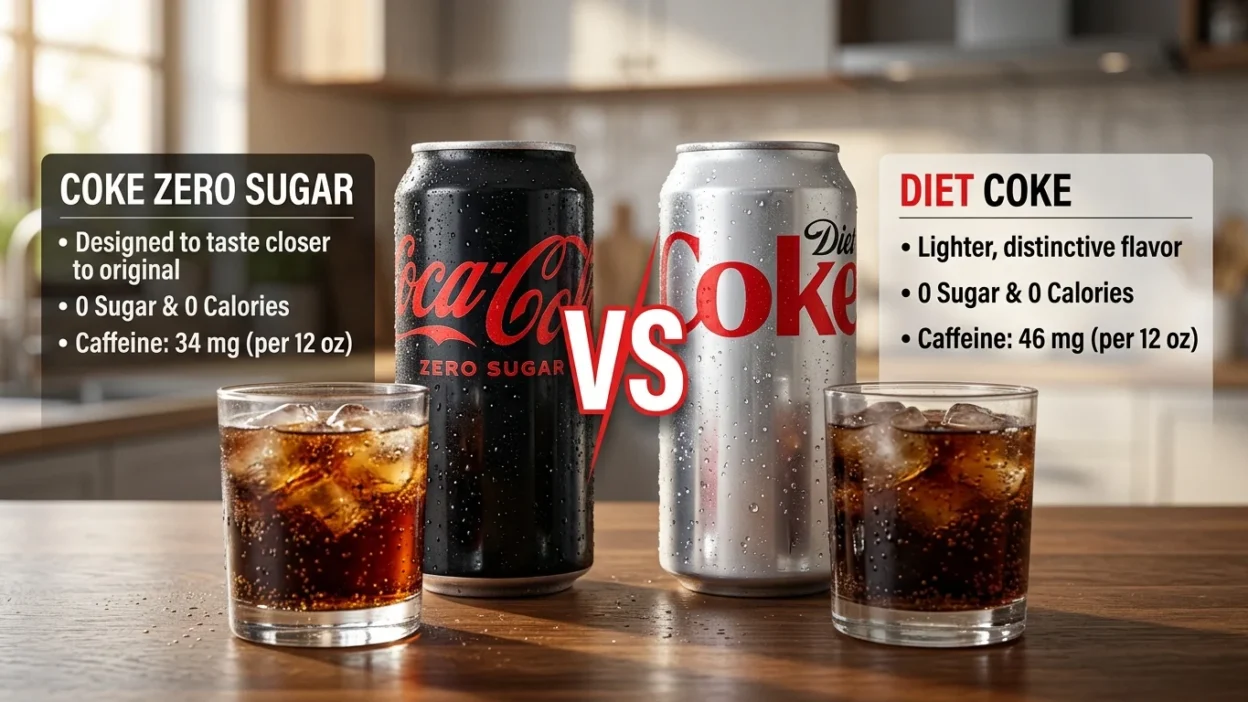
Coke Zero vs Diet Coke is a common comparison for people who want the familiar taste of Coca-Cola without the sugar and calories of regular Coke. Although both drinks are sugar-free and contain very few or no calories, they are not exactly the same. Their flavor profiles, ingredient formulations, and caffeine content can differ by product version and country.
Coke Zero Sugar is designed to taste more like original Coca-Cola, while Diet Coke has its own lighter, distinctive flavor. Both use non-sugar sweeteners, but the exact ingredients and nutrition information should be checked on the local product label. Caffeine levels can also vary depending on the market and formulation.
Choosing between them mostly comes down to personal taste, caffeine preference, and what is available where you live. Understanding the differences can help you decide which drink better fits your everyday preferences without assuming that one is automatically healthier for everyone.
Quick Answer: Coke Zero vs Diet Coke
Coke Zero Sugar and Diet Coke both contain zero sugar and zero calories per 12-ounce serving in the United States. The main difference is taste: Coke Zero Sugar is designed to resemble original Coca-Cola, while Diet Coke has a lighter, distinctive flavor. Diet Coke also contains more caffeine in the US version.
Why Do People Confuse Coke Zero and Diet Coke?
People often confuse these drinks because both are made by Coca-Cola and offer a sugar-free alternative to regular Coke. Their packaging, color, carbonation, and general cola flavor can also make them seem almost identical.
However, they were developed for different taste preferences. Diet Coke launched in 1982, while Coca-Cola Zero debuted in 2005 and was later reformulated and renamed Coca-Cola Zero Sugar in 2016.
The key point is that both drinks avoid sugar, but they do not have the same recipe or flavor profile.
What Is Coke Zero Sugar?
Coke Zero Sugar, often called Coke Zero, is a sugar-free soft drink designed to deliver a taste closer to original Coca-Cola.
It is a popular choice for people who enjoy the traditional Coca-Cola flavor but want to avoid the sugar and calories found in regular Coke.
Main Features of Coke Zero Sugar
- Taste: Designed to resemble original Coca-Cola.
- Sugar: Zero grams per 12-ounce serving in the US.
- Calories: Zero per 12-ounce serving in the US.
- Sweeteners: The US formula uses aspartame and acesulfame potassium, among other ingredients.
- Caffeine: 34 mg per 12-ounce serving in the US.
- Best for: People who prefer a flavor closer to regular Coke without sugar.
The exact ingredients can vary by country, so check the label on your local can or bottle.
What Is Diet Coke?
Diet Coke is another sugar-free Coca-Cola beverage, but it has a flavor profile of its own. It was introduced in 1982 and became a popular option for people looking for a lighter-tasting diet cola.
Although it shares some ingredients with Coke Zero Sugar, its formula is different. Many people describe Diet Coke as having a lighter, sharper, or more distinctive taste.
Main Features of Diet Coke
- Taste: Lighter and distinct from original Coca-Cola.
- Sugar: Zero grams per 12-ounce serving in the US.
- Calories: Zero per 12-ounce serving in the US.
- Sweeteners: The standard US formula uses aspartame.
- Caffeine: 46 mg per 12-ounce serving in the US.
- Best for: People who enjoy Diet Coke’s familiar, distinctive flavor.
Diet Coke also comes in caffeine-free versions in some markets. Always check the label to confirm which version you are buying.
Coke Zero vs Diet Coke: Comparison Table
| Feature | Coke Zero Sugar | Diet Coke |
|---|---|---|
| Main purpose | Recreate original Coke’s taste without sugar | Offer a distinct diet-cola taste |
| Sugar per 12 oz | 0 g | 0 g |
| Calories per 12 oz | 0 | 0 |
| Caffeine per 12 oz in the US | 34 mg | 46 mg |
| Main sweetener in the US formula | Aspartame and acesulfame potassium | Aspartame |
| Flavor profile | Closer to original Coke | Lighter, distinctive flavor |
| Introduced | 2005; renamed Coca-Cola Zero Sugar in 2016 | 1982 |
| Caffeine-free version | Available in some markets | Available in some markets |
| Best choice | People who prefer classic Coke-like flavor | People who prefer Diet Coke’s own taste |
Nutrition and ingredients can vary by country and product version. Use the label on your local packaging for the most accurate information.
When Should You Choose Coke Zero or Diet Coke?
The better choice depends on what you like and what matters most to you.
Choose Coke Zero Sugar If:
- You want a sugar-free drink that tastes closer to regular Coca-Cola.
- You prefer its stronger, more traditional cola flavor.
- You want a zero-calorie option with less caffeine than standard US Diet Coke.
- You are replacing regular Coke and want a similar flavor experience.
Choose Diet Coke If:
- You already enjoy its distinctive flavor.
- You prefer a lighter-tasting cola.
- You do not mind its slightly higher caffeine content in the US.
- You have been drinking Diet Coke for years and prefer its familiar taste.
Choose Neither If:
- You want to avoid caffeine and cannot find a caffeine-free version.
- You prefer water or another drink without artificial sweeteners.
- You want to reduce your intake of acidic beverages.
There is no need to choose one simply because it is considered more popular or fashionable. Personal taste and your individual needs are more useful guides.
12 Practical Examples of Choosing Between Them
Here are some everyday situations that can help you decide.
- You love regular Coca-Cola: Try Coke Zero Sugar because it is designed to resemble the original flavor.
- You have always enjoyed Diet Coke: There is no reason to switch if you prefer its taste.
- You want zero sugar: Both drinks provide a sugar-free option in their standard US formulas.
- You are counting calories: Both contain zero calories per 12-ounce serving in the US.
- You are sensitive to caffeine: Compare the caffeine figures on the packaging and consider a caffeine-free version.
- You drink soda with lunch: Either may suit you, depending on your flavor preference.
- You want a lighter-tasting cola: Diet Coke may be the better choice for your palate.
- You want a flavor closer to original Coke: Coke Zero Sugar is designed for that purpose.
- You are shopping outside the United States: Check local nutrition labels because formulas can differ.
- You are monitoring your sugar intake: Both can help you avoid the sugar found in regular Coke, but consider your overall diet too.
- You dislike one drink’s aftertaste: Try the other chilled and compare them yourself.
- You want a caffeine-free drink at night: Look specifically for the caffeine-free version rather than assuming the standard drink has no caffeine.
These examples show that neither product is automatically the right choice for every person.
Common Mistakes About Coke Zero and Diet Coke
Mistake 1: Thinking They Are the Same Drink
They are different products with different formulas and taste profiles. Both are sugar-free, but that does not make them identical.
Mistake 2: Assuming Coke Zero Contains No Caffeine
Standard Coke Zero Sugar contains caffeine in the US. A caffeine-free version is available in some markets.
Mistake 3: Believing Diet Coke Has More Sugar
Both standard US versions contain zero grams of sugar per 12-ounce serving.
Mistake 4: Assuming Zero Calories Means Unlimited Consumption
Zero-calorie drinks can still be acidic, and caffeine may affect some people. Moderation and overall dietary habits remain important.
Mistake 5: Believing the Recipe Is Identical Worldwide
Ingredients, sweeteners, caffeine levels, and nutrition information may vary by market. A US label may not match a product sold in Pakistan, the UK, or another country.
Memory Trick: How to Remember the Difference
Use this simple reminder:
- Coke Zero Sugar = closer to original Coke.
- Diet Coke = its own lighter, distinctive taste.
If you remember these two points, you can quickly explain the main difference between the drinks.
For caffeine, remember that the standard US versions contain 34 mg per 12-ounce serving in Coke Zero Sugar and 46 mg in Diet Coke.
American vs British English: Are the Names Different?
The names are generally recognizable in both American and British English, but product formulations and labels may differ.
In the United States, the product is commonly called Coca-Cola Zero Sugar or Coke Zero, while Diet Coke retains its name. In the UK, Coca-Cola Zero Sugar and Diet Coke are also sold, although ingredients and nutrition information may differ from their US counterparts.
Spelling can vary on packaging as well. For example, British packaging may use flavour and colour, while American packaging generally uses flavor and color.
The safest approach is to identify the exact product and read the nutrition information on the packaging sold in your country.
Similar Drinks to Coke Zero and Diet Coke
If neither drink suits your taste, you may want to compare other options.
- Coca-Cola Original Taste: A traditional cola that contains sugar and calories in its standard formula.
- Caffeine-Free Coke Zero Sugar: A zero-sugar, zero-calorie alternative without caffeine where available.
- Caffeine-Free Diet Coke: A version of Diet Coke without caffeine where available.
- Pepsi Zero Sugar: Another sugar-free cola with its own taste and ingredient profile.
- Sparkling water: A carbonated alternative that can be unsweetened and free from caffeine.
- Flavored sparkling water: A choice for people who want bubbles and flavor without a traditional cola taste.
Check product labels because ingredients, sweeteners, and availability vary between brands and countries.
Is Coke Zero or Diet Coke Healthier?
Neither drink is automatically healthier for everyone. Both can help reduce sugar and calorie intake when they replace regular sugary soda, but they still contain ingredients that may not suit every person’s preferences or needs.
Here are a few things to consider:
- Sugar intake: Both standard US products contain no sugar.
- Calorie intake: Both contain zero calories per 12-ounce serving in the US.
- Caffeine: Diet Coke has more caffeine than Coke Zero Sugar in the standard US versions.
- Dental health: Both are acidic drinks, so frequent exposure can contribute to tooth enamel erosion.
- Sweeteners: Both use non-sugar sweeteners. People with phenylketonuria (PKU) must avoid aspartame because it contains phenylalanine.
- Overall diet: Water and other unsweetened drinks are useful choices for everyday hydration.
If you are managing a health condition or following specific dietary advice, check the ingredients and discuss your needs with a qualified healthcare professional.
Final Verdict: Coke Zero vs Diet Coke
Coke Zero Sugar and Diet Coke are similar in their lack of sugar and calories, but they differ in taste, formulation, and caffeine content.
Coke Zero Sugar is the better starting point if you want a flavor closer to original Coca-Cola. Diet Coke may be the better choice if you prefer its lighter, distinctive taste. In the standard US versions, Diet Coke also contains more caffeine per 12-ounce serving.
Neither drink wins every category, and taste is personal. If you are unsure, try both chilled and compare the flavor for yourself. If sugar intake is your main concern, both offer a sugar-free alternative to regular Coke. If caffeine, sweeteners, or other ingredients matter to you, check the exact product label before choosing.
FAQs
1. What is the main difference between Coke Zero and Diet Coke?
Coke Zero Sugar is designed to taste more like original Coca-Cola, while Diet Coke has a lighter, distinctive flavor. Their formulations also differ.
2. Which has more caffeine, Coke Zero or Diet Coke?
In the standard US versions, Diet Coke has 46 mg of caffeine per 12-ounce serving, while Coke Zero Sugar has 34 mg.
3. Does Coke Zero have sugar?
No. Standard Coke Zero Sugar contains zero grams of sugar per 12-ounce serving in the United States.
4. Does Diet Coke have calories?
Standard Diet Coke contains zero calories per 12-ounce serving in the United States.
5. Which tastes more like regular Coke?
Coke Zero Sugar is specifically designed to resemble original Coca-Cola’s flavor.
6. Can I drink Coke Zero or Diet Coke while reducing sugar?
Both are sugar-free alternatives to regular Coke in their standard US formulations. Your overall diet and individual needs still matter.
7. Are Coke Zero and Diet Coke caffeine-free?
No. Their standard versions contain caffeine. Caffeine-free versions are available in some markets.
8. Are the ingredients the same in every country?
No. Formulas can vary by country, so check the nutrition and ingredient labels on the product you buy.
Remember This
- Coke Zero Sugar aims to taste more like original Coke.
- Diet Coke has a distinctive flavor of its own.
- Both standard US versions contain zero sugar and zero calories.
- Diet Coke contains more caffeine than Coke Zero Sugar in the standard US formulas.
- Ingredient lists and caffeine levels can vary by market.
- Your taste preference is the simplest way to choose between them.
Conclusion
The Coke Zero vs Diet Coke comparison comes down to taste, ingredients, and caffeine rather than sugar or calories. Both standard US versions provide zero sugar and zero calories, but Coke Zero Sugar is designed to resemble original Coca-Cola, while Diet Coke offers a distinctive lighter flavor.
If you want a familiar Coke-like taste, start with Coke Zero Sugar. If you enjoy Diet Coke’s unique flavor, keep choosing it. For people concerned about caffeine or sweeteners, reading the local product label is the best way to make an informed decision.

Levi Ezra is a spiritual writer and author at BibLoft.com, exploring symbolism, dreams, and hidden meanings in life, offering insightful reflections to guide spiritual understanding and inner awareness.